The construction industry is building less "attainable housing" than demanded by the market.


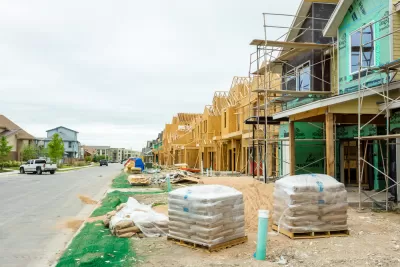
The Urban Land Institute’s (ULI) Terwilliger Center for Housing and real estate consulting firm RCLCO released a new report exploring the "shortage of housing affordable to moderate-income home buyers, including first-time buyers, and offers solutions to increase the supply," according to an article by Brenda Richardson.
The report defines "attainable housing" as "non-subsidized, for-sale housing that is affordable to households with incomes between 80 and 120 percent of the area median income." Given that definition, the report finds that "very little non-subsidized home-building activity is geared toward the middle-class price point."
Still, there are signs that the market is starting to respond to demand at the "attainable" price point. "Innovations are coming from publicly held home builders, developers of master-planned communities, neighborhood-based real estate investors and a new breed of entrepreneurs from other industries, the report states," according to Richardson.
The new report joins recent analysis from Brookings that examines housing stress in the middle class of the United States in providing new insights into the post-Recession housing market for earners historically primed to enter the home buying market.
FULL STORY: Affordable Housing Is Doable For Builders And Buyers, But Here's The Problem


Checking in With the Wild Pandemic-Era Housing Market
Bidding wars, TikToks, and disparate impacts—every day there's more evidence that the pandemic has only worsened the nation's housing affordability crisis.

Double-Digit Housing Price Increases Tied to Supply Imbalance in Denver
Expensive homes dominated the metro Denver real estate market in 2020.
New Market-Rate Housing Lowers Rents for Everyone, According to New Research
A study published by a German researcher adds ammunition to the cause of improving housing affordability by legalizing and building new supply.

The state-sanctioned urbicide of Austin
People don’t kill cities. Freeways do.

US to reduce Colorado River water deliveries to Mexico
A new Colorado Treaty amendment reduces Mexico’s Colorado River water allocation by 250,000 acre feet.

New Jersey’s second-largest city bans standalone data centers
Jersey City will continue to allow co-location facilities, such as those meant for research institutions that store their own data.

Amtrak not solely to blame for New Jersey commuter rail's unreliability, report finds
A new study from the Garden State Initiative found that NJ Transit’s budget grew 20% across a 4 year period, but reliability declined significantly over the same period.

EPA erases limits on planet-warming pollution from power plants
Under Monday’s plan, power plants would still have some limits on how much mercury, arsenic and other contaminants they can emit.

Phoenix announces new on-demand transit service, more frequent RAPID buses
Both new services will launch in October, and are part of Phoenix's Project Effective Access Solutions for Easing Congestion.

FREE Course: Walkable City 1: Why Walkability?
After describing his path towards focusing on walkability as the essence of good planning, Jeff Speck marches through his five principal reasons for making more walkable places.
Reinventing Malls: Planning Alchemy—Turning Gray Fields Into Gold
The course focuses on the opportunities and imperatives that shape reinvention of mall sites.

Eagle County Government
Harvard University Graduate School of Design
Nashville Planning Department
The Architects Foundation
University of Cincinnati Online
The Pocatello Development Authority
The Urban Renewal Agency of the City of Pocatello
Journal of the American Planning Association