The metamorphoses of suburban commercial buildings reflect a story of the urban landscape waiting to be told.


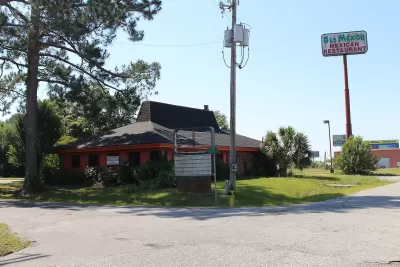
Addison Del Mastro writes about the repurposing of suburban architecture, which changes buildings but also often leaves their former identities recognizable:
Uncovering the history of a building or commercial strip is like a mix of archaeology and detective work. The remnants of these old buildings are like fossils, revealing the geographic reach of shuttered chains, and the history of the buildings themselves. Sometimes, that history is preserved rather tackily, and is therefore easy to identify.
His article includes many images of these sites: the Dairy Queen that is now a pizza restaurant, a car loan office claiming the Arby’s cowboy hat sign, the Roy Rogers converted into an Enterprise Rent-A-Car branch.
Del Mastro points out that many of these buildings are found in less upscale parts of suburbs. "Most chains purchasing an existing building can afford to demolish it or revamp it to at least resemble their own trademark decor and architecture. Most small businesses in depressed neighborhoods cannot."
These places have histories and cultures of their own that deserve recognition, argues Del Mastro. "In some ways, a repurposed McDonald’s or leftover supermarket signage is about as boring, mundane, and ultimately meaningless a thing as one can ponder. Yet it is also an immediate and highly visible example of vibrant, churning culture-making taking place right under our noses."
FULL STORY: Suburban Archaeology and America’s Architectural Commons

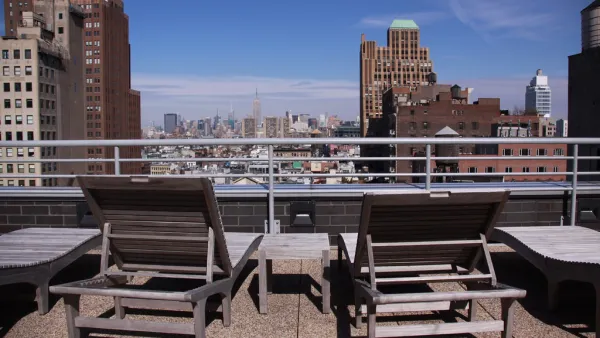
Creating Suburban Exclusivity in the City
City life is being sold as a convenient version of the suburbs, with similar amenities minus the time-consuming commute.
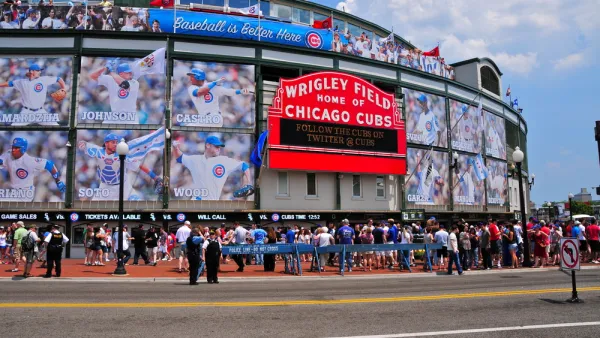
The Story of Ballparks Is the Story of American Cities
A new book looks at the evolution of American ballparks and the changes that have mirrored urbanism.
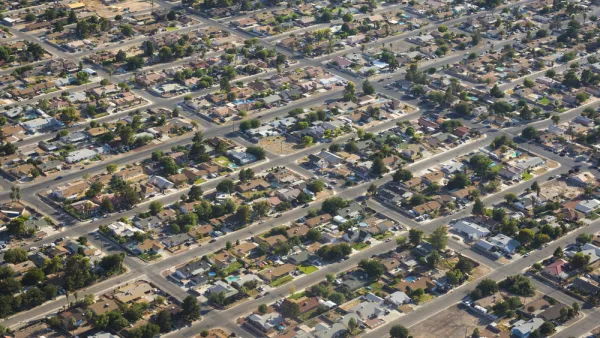
The Problems With Suburbs Are Numerous. Is a Change of Course Possible?
American suburbs are growing, and understanding the evolution of suburban sprawl is a useful guide for the future.

The state-sanctioned urbicide of Austin
People don’t kill cities. Freeways do.

US to reduce Colorado River water deliveries to Mexico
A new Colorado Treaty amendment reduces Mexico’s Colorado River water allocation by 250,000 acre feet.

New Jersey’s second-largest city bans standalone data centers
Jersey City will continue to allow co-location facilities, such as those meant for research institutions that store their own data.

Amtrak not solely to blame for New Jersey commuter rail's unreliability, report finds
A new study from the Garden State Initiative found that NJ Transit’s budget grew 20% across a 4 year period, but reliability declined significantly over the same period.

EPA erases limits on planet-warming pollution from power plants
Under Monday’s plan, power plants would still have some limits on how much mercury, arsenic and other contaminants they can emit.

Phoenix announces new on-demand transit service, more frequent RAPID buses
Both new services will launch in October, and are part of Phoenix's Project Effective Access Solutions for Easing Congestion.

FREE Course: Walkable City 1: Why Walkability?
After describing his path towards focusing on walkability as the essence of good planning, Jeff Speck marches through his five principal reasons for making more walkable places.
Reinventing Malls: Planning Alchemy—Turning Gray Fields Into Gold
The course focuses on the opportunities and imperatives that shape reinvention of mall sites.


Eagle County Government
Harvard University Graduate School of Design
Nashville Planning Department
The Architects Foundation
University of Cincinnati Online
The Pocatello Development Authority
The Urban Renewal Agency of the City of Pocatello
Journal of the American Planning Association