In "America's Eviction Badlands," universities are developing web apps to help tenants stay in their homes.


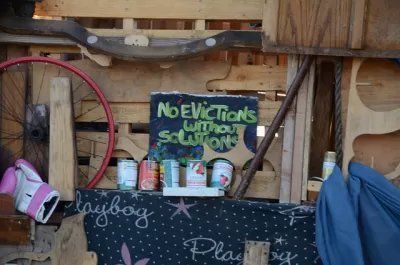
In "legal design labs" at Brigham Young University and the University of Arizona, law students are building software to provide automated legal aid to tenants facing eviction.
Virtually no tenants have legal representation in eviction cases; by contrast, most landlords do. In Utah and Arizona, Kriston Capps reports in CityLab, the process is further weighted by "strict laws" that leave tenants little time to plan a defense after receiving an eviction notice, and the incentive to evict is high: "One-sided laws that favor landlords offer a tempting money-making opportunity for property owners, since even a single day’s stay beyond the terms of a notice can result in triple per-diem rent plus any court costs."
The LawX Lab curriculum is part of a trend toward "legal innovation built on design thinking," Capps writes. In a previous semester, the class at BYU created SoloSuit, an app that helps users respond to debt collection notices; in New York, JustFix.nyc guides tenants through the process of getting repairs for habitability problems.
FULL STORY: Is There a Better Way to Battle Evictions?


No Evictions for Less Than $600, Says New D.C. Law
As part of a bill that made many COVID-era tenant protections permanent, the District voted to ban eviction filings for households owing less than $600 in back rent.

California Won't Extend Eviction Moratorium
State lawmakers did not extend the state's eviction ban, which ends on September 30, putting the future of hundreds of thousands of households in jeopardy.

While California Fires Burn On, Residents Take on Rent Gouging
Residents have already seen online listings skyrocketing in price—despite laws against such hikes. With fires still raging, LA and Pasadena tenants are demanding protections against rent raises and eviction.

Planetizen Federal Action Tracker
A weekly monitor of how Trump’s orders and actions are impacting planners and planning in America.

The state-sanctioned urbicide of Austin
People don’t kill cities. Freeways do.

US to reduce Colorado River water deliveries to Mexico
A new Colorado Treaty amendment reduces Mexico’s Colorado River water allocation by 250,000 acre feet.

Baltimore to break ground on $50 million Transit Priority Project
The project will bring faster bus trips, safer streets and better bike connections to Baltimore.

Airbnb launches $250 million 'last-dollar financing' housing accelerator, makes first investment in Austin
The company will put $6.4 million towards affordable housing development in Texas’ capital.

Guerilla urbanists are building DIY bus stop benches in Chicago
A before-and-after of one of the bus stops with a new bench. The new benches are not officially sanctioned or permitted, but the residents who placed them hope they will be the start of a network of DIY benches across the city.

FREE Course: Walkable City 1: Why Walkability?
After describing his path towards focusing on walkability as the essence of good planning, Jeff Speck marches through his five principal reasons for making more walkable places.
Reinventing Malls: Planning Alchemy—Turning Gray Fields Into Gold
The course focuses on the opportunities and imperatives that shape reinvention of mall sites.

Eagle County Government
Harvard University Graduate School of Design
Nashville Planning Department
The Architects Foundation
University of Cincinnati Online
The Pocatello Development Authority
The Urban Renewal Agency of the City of Pocatello
Journal of the American Planning Association