Wendy's has been updating the look and design of their restaurants since last year, but now a new layout will shrink the footprint and add efficiency to the fast food spot.


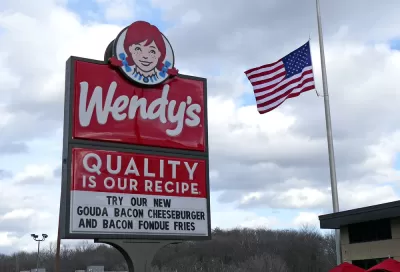
Wendy's new store layouts are smaller and orient the business toward its drive-thrus. "Having a smaller footprint is a fairly new trend in quick-service restaurants, considering about 70% of the segment’s traffic comes from the drive-thru, surprisingly so," Alicia Kelso writes for Forbes. This emphasis on drive-thrus is taking place even as some urbanists look to limit drive-thrus, which can be hazards to pedestrians, and discourage walking.
Besides the smaller format, the buildings are also more environmentally friendly. "The Smart design prototype features recycled materials and LED lighting, as well as Energy Star equipment, including high efficiency HVAC systems, which yield a 20% reduction in costs," Kelso reports.
Wendy's argues that their stores’ new designs are more attractive and take in more revenue than restaurants that have yet to update their layout.
Read the full story: Wendy's Smart Design Restaurants Reflect Trend Toward Smaller Footprints

Dallas Extends Permit for Downtown Drive-Thru
The city has indicated this is the last time it will extend a permit for a drive-thru at a McDonald’s restaurant as it transitions to supporting a denser, more walkable downtown environment.
The Resurgence of Drive-Throughs
Dining areas in many fast food restaurants are being replaced with added drive-thru lanes, another post-pandemic impact on our lives benefiting those with four wheels (or more).

Faster Food
Responding to pandemic-era shifts in customer demand, fast food and fast-casual chains are stripping away dining rooms, restrooms, and human cashiers in favor of drive-through and automated pickup options.

Planetizen Federal Action Tracker
A weekly monitor of how Trump’s orders and actions are impacting planners and planning in America.

California plans to bury El Niño’s downpour
If the state plays its cards right, it may be able to store a billion acre-feet of El Niño’s water in aquifers.

Chicago breaks ground on $3 billion megadevelopment
The new neighborhood, titled Foundry Park, will one day host 3,700 residences.

California High-Speed Rail Authority CEO resigns after $600,000 scandal
Under Ian Choudri, the authority used taxpayer dollars to fund first class flights and trips to nightclubs.

Want to study the Missouri River? Soon, you may need unanimous approval from 10 states
Legislation would require 10 governors’ permission to study or build projects moving water outside the basin.

Desperate measures: Advocates weigh draining Lake Powell to fill Colorado River
Draining the reservoir could reduce evaporation losses by a couple hundred thousand acre-feet.

FREE Course: Walkable City 1: Why Walkability?
After describing his path towards focusing on walkability as the essence of good planning, Jeff Speck marches through his five principal reasons for making more walkable places.
Reinventing Malls: Planning Alchemy—Turning Gray Fields Into Gold
The course focuses on the opportunities and imperatives that shape reinvention of mall sites.

City of Rosemead
Rutgers University, Edward J. Bloustein School of Planning and Public Policy
One Hundred Miles
Hunter College, City University of New York (CUNY)
The Architects Foundation
University of Cincinnati Online
City of Cambridge
Montrose County
The Pocatello Development Authority