The Boston Planning & Development Agency released a powerful new map of the entire city—complete with layers like shadows, flood plains, and zoning districts—to the public.


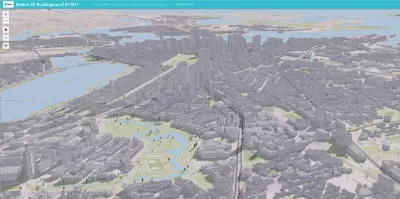
Tim Logan reports on a new digital 3D map produced by the Boston Planning & Development Agency (BDPA) that models the entire city.
The map is "the latest step in the BPDA’s push to be more transparent, and to spark conversations about planning for the city’s future," according to Logan. Previously, BDPA housed a wooden scale model on the ninth floor of City Hall. The new digital map is public, and the hope is that it will inspire the public to engage with the city's development in new ways.
The map maps 129,000 buildings from East Boston to Mottapan, explains Logan. "The map is pannable and scannable, and detailed enough to capture backyard sheds, rooftop furniture, and lots of trees. And it comes with tools that allow anyone to layer on zoning maps, schools, MBTA stops, and even flood-prone areas."
Read the full story: You can see your home from here. A new 3D map covers the entire city


Boston to Launch New Downtown Plan
The Boston Planning & Development Agency will hire consultants to craft a vision for its rapidly changing downtown.

Boston Gets a New Planning Department
After 67 years since its formation, the Boston Planning and Development Agency is no more.
Boston to Begin Zoning Code Update, Mayor Announces
It’s been nearly 60 years, but the city of Boston is finally ready to do a comprehensive rewrite of its zoning code.

Planetizen Federal Action Tracker
A weekly monitor of how Trump’s orders and actions are impacting planners and planning in America.

Amtrak, CN end decades-long dispute with eight-year agreement
The new operating agreement establishes an updated framework for the companies to work together, including processes to resolve disputes.

Judges permit Denver to divert 77,000 acre feet from the Colorado River for reservoir expansion
Overuse and climate change have caused the Colorado River’s water levels to plummet.

NYC DOT wants faster, more permanent street upgrades
The city is examining ways to build more concrete infrastructure without getting entangled in 'decades-long' projects.

'Something we’ve never seen before:' rising utility rates could strain city finances nationwide
Data centers, climate change and other factors have caused utility rates in the United States to increase by 38% since 2020.

Trump to overrule local leaders, lease millions of acres of America’s Pacific Island territories’ seafloors to mining companies
International law says that the Indigenous people of America’s territories have a right to prior and informed consent regarding projects that impact their countries.

FREE Course: Walkable City 1: Why Walkability?
After describing his path towards focusing on walkability as the essence of good planning, Jeff Speck marches through his five principal reasons for making more walkable places.
Reinventing Malls: Planning Alchemy—Turning Gray Fields Into Gold
The course focuses on the opportunities and imperatives that shape reinvention of mall sites.

Harvard University Graduate School of Design
KFH Group Inc.
Greater Baltimore Committee
The Architects Foundation
University of Cincinnati Online
The Pocatello Development Authority
The Urban Renewal Agency of the City of Pocatello