A recent debate in Washington, D.C. echoed common concerns about the planning process in cities around the country.



Greater Greater Washington's David Whitehead reports on the frustrations aired at a recent oversight hearing for D.C.'s Office of Planning and Office of Zoning.
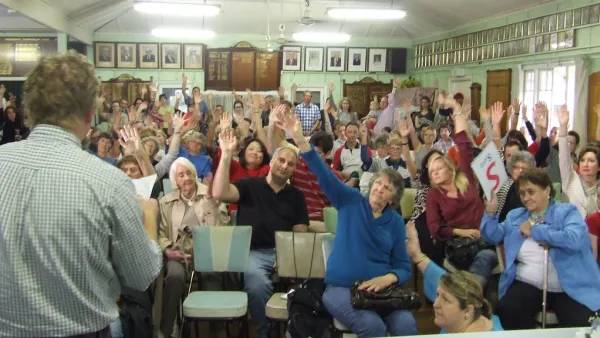
Criticism from both residents and councilmembers was wide-ranging—encompassing the planning process, the content of planning decisions, and the implementation of plans. The Office of Zoning was called a "rubber stamp machine" for its high rate of approved variance requests, while one councilmember suggested that the DC Comprehensive Plan was out of touch with priorities like affordability and displacement. Much of the meeting focused on new amendments to that plan's Framework Element, prepared by the Office of Planning.
Whitehead provides further detail and context in his piece, with the takeaway that what the public wants from planners is "more clarity, more trust, and simply more planning."
Read the full story: “Who is steering the ship?” The DC Council debates planning and zoning for six hours


Are Virtual Public Meetings Here For Good?
Online public hearings and other meetings have become commonplace. A case can be made to continue virtual meetings even in the post-COVID-19 era.
Collecting Comments on a PDF Planning Document on the Web?
How do you collect public comments on a web-based PDF planning document? It should be simple. But it isn't.

A Historic Texas Beach Town Faces Existential Growth Questions
Galveston, Texas is growing — and so are questions about its land use strategy.

Planetizen Federal Action Tracker
A weekly monitor of how Trump’s orders and actions are impacting planners and planning in America.

California plans to bury El Niño’s downpour
If the state plays its cards right, it may be able to store a billion acre-feet of El Niño’s water in aquifers.

Desperate measures: Advocates weigh draining Lake Powell to fill Colorado River
Draining the reservoir could reduce evaporation losses by a couple hundred thousand acre-feet.

MTA gives itself 30 days to transform pit into basketball court
The site has been under construction since 2022; the city originally estimated it would finish the court in 2024.

Non-stop party: Chicago voters weigh permanent festival grounds
A stable place for bleachers, stages and drainage may streamline the setup and teardown of large events.

Metra may invest $9.1 billion in regional rail
The agency released a draft of a study examining potential ways to offer more frequent train service.

FREE Course: Walkable City 1: Why Walkability?
After describing his path towards focusing on walkability as the essence of good planning, Jeff Speck marches through his five principal reasons for making more walkable places.
Reinventing Malls: Planning Alchemy—Turning Gray Fields Into Gold
The course focuses on the opportunities and imperatives that shape reinvention of mall sites.

City of Rosemead
Rutgers University, Edward J. Bloustein School of Planning and Public Policy
One Hundred Miles
Hunter College, City University of New York (CUNY)
The Architects Foundation
University of Cincinnati Online
City of Cambridge
Montrose County
The Pocatello Development Authority