Community leaders say a design district in Westlake could pave the way for the erasure of L.A's Historic Filipinotown.


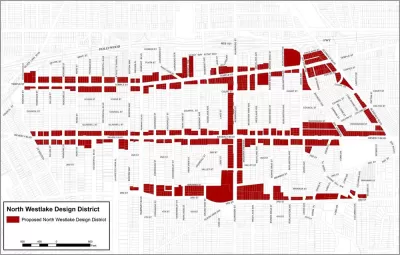
Design standards recently drafted by the Los Angeles Planning Department are meant to promote mixed-use and pedestrian-oriented development along four major corridors in the Westlake area.
But community leaders worry that new aesthetic guidelines will encourage the sort of speculative investment that, without tenant protections, they say can lead to rising rents and evictions of low-income residents. The Coalition to Defend Westlake, led by the LA Tenants Union, called the proposal an entrée into "fancy galleries and expensive micro pubs and over-priced lofts."
Already, the Westlake/MacArthur Park area—recently thought to be gentrification-resistant—is anticipating a slate of high-profile projects that the coalition believes could jeopardize the community of Historic Filipinotown, whose official recognition was hard-won by local leaders in 2002.
The design ordinance is still subject to revision. But it "gets very detailed," Bianca Barragan notes, "going so far as to prohibit certain types of signs" and to require that large walls feature original murals or green coverings.
Read the full story: Creating a ‘design district’ in Westlake is bound to cause displacement, activists say

Judge Tosses Area Planning Commission Decision on Controversial South L.A. Project
The California Housing Accountability Act, approved by the State Legislature in 2017, is cited in a court ruling that soundly rebuffs the decision by the South Los Angeles Area Planning Commission to veto a controversial project.
Developer Sues L.A. After Area Planning Commissioners Reject Multi-Family Project
A development controversy also now an expanding legal controversy, after a local planning commission rejected a controversial development proposal allowed by zoning.
Controversial Housing Development Nixed in South L.A.
The local planning commission for South Los Angeles rejected a controversial multi-family housing development proposed for a location adjacent to a future light rail station.

Planetizen Federal Action Tracker
A weekly monitor of how Trump’s orders and actions are impacting planners and planning in America.

California plans to bury El Niño’s downpour
If the state plays its cards right, it may be able to store a billion acre-feet of El Niño’s water in aquifers.

Desperate measures: Advocates weigh draining Lake Powell to fill Colorado River
Draining the reservoir could reduce evaporation losses by a couple hundred thousand acre-feet.

In Texas, data centers are swallowing promised parkland
Residents who moved to Taylor, Texas for a rural community now have to contend with three data centers in their backyard.

How a Chicago-sized wind farm beat the odds and powered on
The project spanned five presidential administrations and a standoff with a U.S. military base.

MTA gives itself 30 days to transform pit into basketball court
The site has been under construction since 2022; the city originally estimated it would finish the court in 2024.

FREE Course: Walkable City 1: Why Walkability?
After describing his path towards focusing on walkability as the essence of good planning, Jeff Speck marches through his five principal reasons for making more walkable places.
Reinventing Malls: Planning Alchemy—Turning Gray Fields Into Gold
The course focuses on the opportunities and imperatives that shape reinvention of mall sites.

City of Rosemead
Rutgers University, Edward J. Bloustein School of Planning and Public Policy
One Hundred Miles
Hunter College, City University of New York (CUNY)
The Architects Foundation
University of Cincinnati Online
City of Cambridge
Montrose County
The Pocatello Development Authority