Nashville stakeholders are increasingly concerned by a post-Recession wave of real estate investment trusts buying up all the housing stock in neighborhoods gutted by the foreclosure crisis. The trend extends to other Sun Belt cities as well.


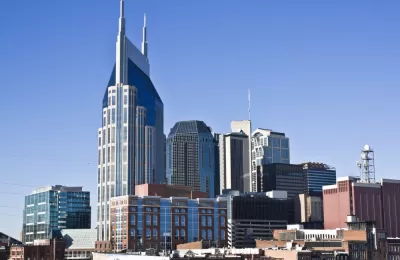
Researchers in Nashville have noticed the increasing reach of real estate investment trusts (REITs) in Nashville, and have decided to study the effects of such large-scale investments on the city's neighborhoods.
Mike Reicher reports on the big question from the Nashville real estate market:
They want to figure out whether these real estate investment trusts, or REITs, drive up sales prices because of increased competition and worsen the region’s affordable housing crisis. In the neighborhoods they target, do fewer people own their own homes? Do REITs increase rents at a faster pace than others? And what type of neighborhoods do the companies pick in the first place?
The research project is under the direction of Ken Chilton, associate professor in the Department of Public Administration at Tennessee State University, and Robert Silverman, a professor in the Department of Urban and Regional Planning at the University at Buffalo in New York.
The research follows analysis from August by the Tennessean, which "found that six out-of-state investment groups own at least 4,900 homes in Smyrna, Murfreesboro, Antioch, Spring Hill, Mt. Juliet and several other fast-growing neighborhoods."
Read the full story: Is Wall Street upending Nashville neighborhoods? These professors want to know

Effects of the Foreclosure Crisis Still Felt in Parts of Cleveland
Call it a tale of two housing markets.
Institutional Investors Gaining a Larger Footprint in the Housing Market, Report Says
The locations with the fastest growing populations are seeing the most dramatic increase in investor-owned single-family housing rentals.

Wall Street Suddenly Buying Fewer Single-Family Homes
Rising interest rates are having a major effect in the housing market—including on the large institutional investors who spent much of the past couple of years buying up single-family homes.

Planetizen Federal Action Tracker
A weekly monitor of how Trump’s orders and actions are impacting planners and planning in America.

California plans to bury El Niño’s downpour
If the state plays its cards right, it may be able to store a billion acre-feet of El Niño’s water in aquifers.

Desperate measures: Advocates weigh draining Lake Powell to fill Colorado River
Draining the reservoir could reduce evaporation losses by a couple hundred thousand acre-feet.

US buildings threatened, destroyed by fires set to triple by 2060
Researchers found a high fire risk for socioeconomically vulnerable neighborhoods in the American West.

LA residents may be allowed to paint their own crosswalks
Councilwoman Katy Yaroslavsky put out a motion instructing the Los Angeles Department of Public Transportation to study the feasibility of allowing volunteers to paint crosswalks.

Dallas moves to overhaul its zoning code
The city's zoning reform will allow more multi-family and mixed-use developments.

FREE Course: Walkable City 1: Why Walkability?
After describing his path towards focusing on walkability as the essence of good planning, Jeff Speck marches through his five principal reasons for making more walkable places.
Reinventing Malls: Planning Alchemy—Turning Gray Fields Into Gold
The course focuses on the opportunities and imperatives that shape reinvention of mall sites.

City of Rosemead
Rutgers University, Edward J. Bloustein School of Planning and Public Policy
One Hundred Miles
Hunter College, City University of New York (CUNY)
The Architects Foundation
University of Cincinnati Online
City of Cambridge
Montrose County
The Pocatello Development Authority