San Francisco may move to protect teachers from "no-fault" evictions during the school year.


The proposed ordinance would protect teachers from evictions for reasons beyond their control, providing they've resided in the unit for at least a year.
Critics have suggested that the law could backfire by disincentivizing landlords to rent to teachers, exacerbating the hostility of a market that is already unfriendly to the average educator income—whether they’re looking to rent or to buy.
More than 40 percent of educators in public schools said they feared losing their homes in the near future, in a survey by San Francisco's teachers' union.
As the city's teacher turnover rate grows, thanks in large part to housing prices, San Francisco has taken a suite of steps over the last few years hoping to help teachers stay in the city. Loan-forgiveness, mortgage-assistance, and partial subsidy programs especially encourage homeownership. Mayor Ed Lee and the SFUSD also announced plans last year for a 100-unit affordable-housing complex for public school teachers.
Read the full story: Teachers could be exempt from no-fault evictions during school year
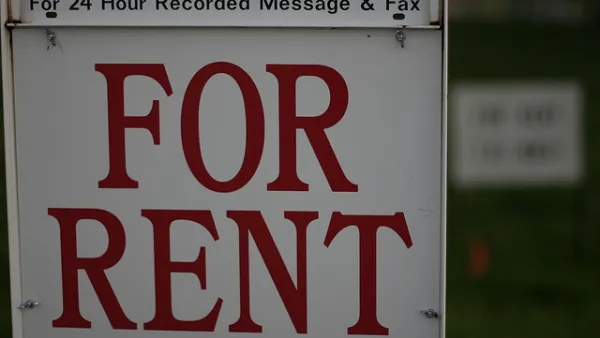
As Luxury Rents Drop, Low-Income Tenants Pay More
With increasing pressure on the nation's supply of affordable housing, low- and middle-income renters are seeing their rents go up while higher-quality apartments drop prices to lure back remote workers.

Maps: Where Teachers Can Afford Housing in California
Teachers can't afford to live in the neighborhoods where they teach in California—the biggest gap between teachers' wages and the cost of housing is found in the Bay Area.

San Jose Proposes Turning Schools into Teacher Housing, Faces Outcry
A San Jose Unified School District plan to relocate several schools and build affordable housing in their place has sparked controversy. The district says teachers increasingly can't afford to live in the area.

Planetizen Federal Action Tracker
A weekly monitor of how Trump’s orders and actions are impacting planners and planning in America.

California plans to bury El Niño’s downpour
If the state plays its cards right, it may be able to store a billion acre-feet of El Niño’s water in aquifers.

Desperate measures: Advocates weigh draining Lake Powell to fill Colorado River
Draining the reservoir could reduce evaporation losses by a couple hundred thousand acre-feet.

Mamdani’s pied-à-terre tax survives legal challenge
A panel of judges found that the plaintiffs failed to demonstrate injury as a result of New York City's implementation of the tax.

Eastern Nebraska is running out of electricity
Data centers and electrification are straining eastern Nebraska’s grid, throttling economic development.

Seattle passes record-breaking transit services expansion
Proposition 1 will double the city’s transit tax to add 95,000 more bus trips and preserve 180,000 bus trips annually.

FREE Course: Walkable City 1: Why Walkability?
After describing his path towards focusing on walkability as the essence of good planning, Jeff Speck marches through his five principal reasons for making more walkable places.
Reinventing Malls: Planning Alchemy—Turning Gray Fields Into Gold
The course focuses on the opportunities and imperatives that shape reinvention of mall sites.

City of Rosemead
Rutgers University, Edward J. Bloustein School of Planning and Public Policy
One Hundred Miles
University of Michigan School for Environment and Sustainability (SEAS)
Hunter College, City University of New York (CUNY)
The Architects Foundation
City of Cambridge
Montrose County
The Pocatello Development Authority