The wastewater well from the process of hydraulic fracturing, or fracking, triggered 167 earthquakes in and around Youngstown, Ohio, during a single year of operation, according to research in the Journal of Geophysical Research.


"One of the most profitable areas for fracking lies over the geological formation known as the Marcellus Shale, which reaches deep underground from Ohio and West Virginia northeast into Pennsylvania and southern New York", writes Charles Q. Choi in NBC News.
"The discovery builds on a growing body of scientific evidence linking the use of fracking wastewater injection wells to earthquakes. That includes a string of quakes in central Oklahoma in late 2011, including the most powerful ever recorded in the state, a frightening magnitude 5.7," writes John Upton in Grist Magazine.
"The researchers noted that of the 177 wastewater disposal wells of this size active in Ohio during 2011, only the Northstar 1 well was linked with this kind of seismic activity, suggesting this ability to cause earthquakes was rare."
From the abstract of the study, "Induced seismicity associated with fluid injection into a deep well in Youngstown, Ohio", published in the Journal of Geophysical Research: Solid Earth:
"Over 109 small earthquakes (Mw 0.4–3.9) were detected during January 2011 to February 2012 in the Youngstown, Ohio area, where there were no known earthquakes in the past. These shocks were close to a deep fluid injection well. The 14 month seismicity included six felt earthquakes and culminated with a Mw 3.9 shock on 31 December 2011. ... We conclude that the recent earthquakes in Youngstown, Ohio were induced by the fluid injection at a deep injection well due to increased pore pressure along the preexisting subsurface faults located close to the wellbore. We found that the seismicity initiated at the eastern end of the subsurface fault—close to the injection point, and migrated toward the west—away from the wellbore, indicating that the expanding high fluid pressure front increased the pore pressure along its path and progressively triggered the earthquakes. We observe that several periods of quiescence of seismicity follow the minima in injection volumes and pressure, which may indicate that the earthquakes were directly caused by the pressure buildup and stopped when pressure dropped."
Read the full story: Confirmed: Fracking practices to blame for Ohio earthquakes

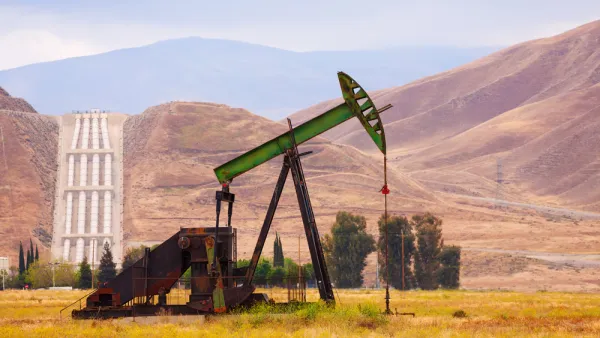
New Oil and Gas Drilling in California May Be Subject to Moratorium
Gov. Gavin Newsom pleased environmentalists by doing what his predecessor, Gov. Jerry Brown, refused – halting all new oil and gas fracking and placing a moratorium on another extraction method linked to a massive oil spill in Kern County.
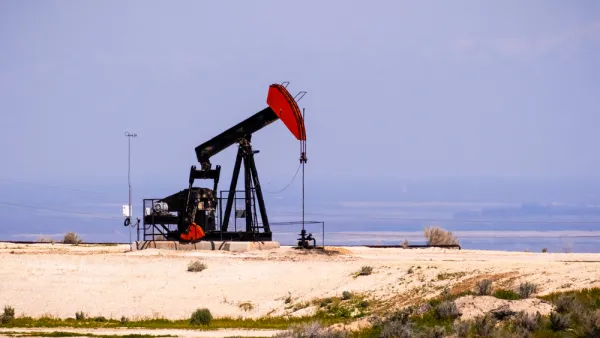
Department of Interior Plans to Open 1 Million Acres in California to Fracking
The Bakersfield Office of the Bureau of Land Management released an environmental study that is the basis for undoing a 2013 de facto moratorium on fracking on federal lands in California. The Supplemental EIS triggers a 45-day public comment period.
What's Driving the Economic Turnaround in Youngstown and Canton, Ohio?
Youngstown had been one of those Rust Belt, "shrinking" cities long noted in Planetizen, but thanks in part to fracking and its location on the Utica shale formation, manufacturing has returned and unemployment has dropped by half since 2010.

Planetizen Federal Action Tracker
A weekly monitor of how Trump’s orders and actions are impacting planners and planning in America.

Amtrak, CN end decades-long dispute with eight-year agreement
The new operating agreement establishes an updated framework for the companies to work together, including processes to resolve disputes.

Judges permit Denver to divert 77,000 acre feet from the Colorado River for reservoir expansion
Overuse and climate change have caused the Colorado River’s water levels to plummet.

NYC DOT wants faster, more permanent street upgrades
The city is examining ways to build more concrete infrastructure without getting entangled in 'decades-long' projects.

'Something we’ve never seen before:' rising utility rates could strain city finances nationwide
Data centers, climate change and other factors have caused utility rates in the United States to increase by 38% since 2020.

Trump to overrule local leaders, lease millions of acres of America’s Pacific Island territories’ seafloors to mining companies
International law says that the Indigenous people of America’s territories have a right to prior and informed consent regarding projects that impact their countries.

FREE Course: Walkable City 1: Why Walkability?
After describing his path towards focusing on walkability as the essence of good planning, Jeff Speck marches through his five principal reasons for making more walkable places.
Reinventing Malls: Planning Alchemy—Turning Gray Fields Into Gold
The course focuses on the opportunities and imperatives that shape reinvention of mall sites.

Harvard University Graduate School of Design
KFH Group Inc.
Greater Baltimore Committee
The Architects Foundation
University of Cincinnati Online
The Pocatello Development Authority
The Urban Renewal Agency of the City of Pocatello