Like the iPhone, Charlotte's Blue Line represents a missed opportunity for the public to recoup the value it created.


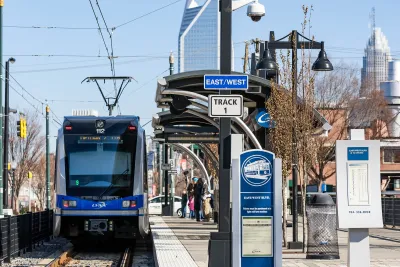
Charlotte, North Carolina’s light rail line has unfurled a ribbon of density across the sprawling landscape, proving that high-quality transit can have a transformative impact on even the most car-dependent American cities. Since the Blue Line opened in 2007, millions of square feet of office space and tens of thousands of homes have risen around its stations. The line has effectively extended the city’s downtown — or Uptown, in Queen City parlance — to the north and south, conjuring a new collection of walkable neighborhoods in the heart of the city.
Yet the triumph of light rail in Charlotte is tinged with tragedy.
The city’s investment in light rail created an increase in real estate values orders of magnitude greater than what it put in. But beyond growing property tax revenues (at the same rate every property owner in the city pays) the public saw no additional financial benefit from its transit investment. The Blue Line is an urban planning version of the iPhone, to borrow from economist Mariana Mazzucato: a missed opportunity for the public to recoup some of the value it created through its entrepreneurial efforts.
In the transit world, this concept is known as "value capture." The idea is that when the public funds a new transit line, it can skim off some of the property value it created for public goods: affordable housing, safe streets or even the transit line that produced all of that value in the first place. In fact, this has been a central principle of transit financing since the emergence of railroads nearly two centuries ago. But in Charlotte — and many other American cities — we’ve somehow lost track of that principle. Take a ride on the Blue Line and see for yourself.
A brief history of transit financing
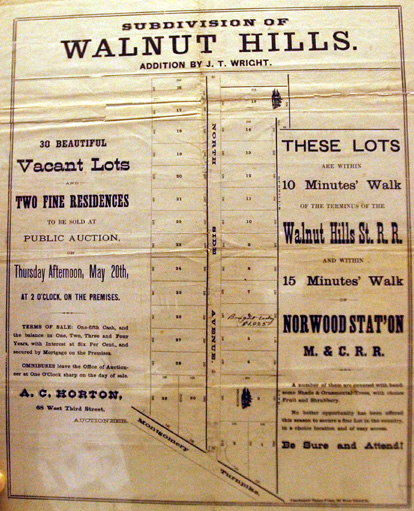
The streetcar networks that served every major American city between the 1890s and the mid-20th century were, at their core, real estate ventures. Streetcar barons like Henry Huntington in Los Angeles laid lines far into the hinterlands so that he could develop the newly valuable property alongside them. In fact, streetcar companies’ focus on real estate — as opposed to transportation — was one reason for their ultimate decline.
For decades after the old streetcar lines were ripped out, public transportation in cities like Charlotte was viewed more like a bare-bones government benefit than a driver of economic development and real estate value. With the streetcar renaissance of the 21st century, city leaders hoped to bring real estate back into the transit equation.
While the Blue Line was being planned, there were still questions as to whether this formula could work in such a sprawling, car-dependent city. Before the line’s debut in 2007, a chorus of political leaders and anti-transit activists warned the line would be a "white elephant" with few riders and little impact on the city. The line’s $463 million cost was a bad deal, critics said. They would make the same argument about the $1.1 billion extension that opened in 2018.
It turns out the naysayers were dead wrong. In its first year of service, ridership on the Blue Line exceeded projections of about 9,000 weekday riders by more than 50%. When the 9-mile Blue Line extension opened in 2018, ridership surged again, reaching a pre-pandemic high of more than 27,000 weekday riders, making it one of the most-used modern light rail lines in the United States. Today, ridership hovers around 15,000 weekday riders, and frequency remains much lower than before the pandemic, with 15- or 20-minute headways.
The Blue Line owes a lot of its success to its design. It’s not a showpiece "placemaking" streetcar, like far too many 21st century American rail lines. It's a useful, convenient transportation option that goes where people want to go, traveling straight through the center of Uptown and reaching other important destinations like UNC Charlotte. It almost always operates in its own dedicated right-of-way, and there are relatively few at-grade street crossings. It has full signal preemption so it only stops at stations, and it reaches an impressive maximum speed of 55 miles per hour along many stretches. A walking and biking trail parallels the tracks through the urban core, making it easy and pleasant to access stations.
When transit truly drives development
But the most remarkable feature of the Blue Line is the transit-oriented development that has sprung up around it. The line connected Uptown Charlotte with the adjacent South End neighborhood, a once-industrial area that has become a high-density residential and office district. The NoDa neighborhood, on the other side of Uptown along the 2018 extension, is currently a forest of cranes, as is N. Tryon Street, the arterial leading to UNC Charlotte. In 2019, areas within a quarter mile of the Blue Line extension accounted for about 10% of total housing production in fast-growing Mecklenburg County, demonstrating how transit can help concentrate growth.
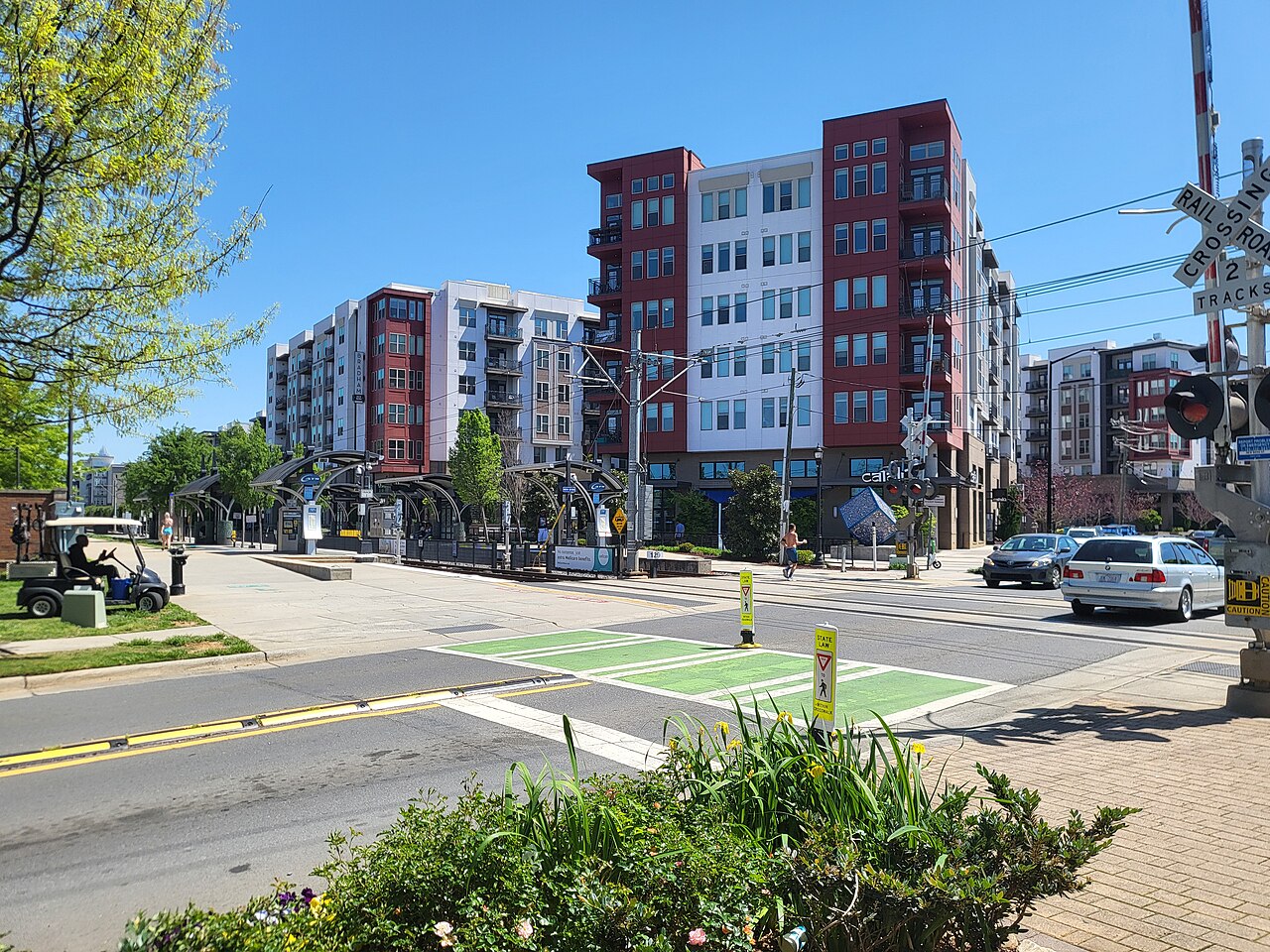
All told, areas near the Blue Line have seen $7.6 billion of new development, including 34,000 homes and 8.3 million square feet of office and other non-residential space, according to the Charlotte Area Transit System. By 2035, CATS predicts that development along the line will have an economic impact of $44 billion.
This is a remarkable achievement. Far too many cities and states invest in high-quality transit, but then refuse to allow significant amounts of transit-oriented development. Reversing this trend has been a key premise of recent housing legislation in New York, California, Washington and other states.
Welcoming transit-oriented development is not Charlotte’s problem. Its problem is recognizing — and utilizing — the tremendous value it unleashed.
A missed opportunity
The Blue Line could have paid for itself — not in some metaphorical, economic development sense — it could have actually generated the funds for its own construction or a significant portion of it. The project also could have generated significant amounts of affordable housing. But that’s not what happened.
The properties surrounding the Blue Line brought in no additional property taxes or a tax increment financing district to channel and bond growing property tax revenues to public projects without increasing the tax rate. There is no inclusionary zoning policy requiring developers to dedicate a certain percentage of new homes as affordable housing, nor development impact fees or real estate transfer taxes. There has been minimal affordable housing development along the line, and no land banking to preserve space for future development.
Essentially, the city’s fiscal and housing policies treat the areas surrounding the Blue Line just like the rest of the city, despite the fact that the former saw a dramatic increase in value thanks to the city’s transit investments. In the South End, the epicenter of transit-oriented development in Charlotte, property values increased from $412 million in 2004 to $14 billion in 2012, according to CATS. The city’s share of that windfall? $16 million in additional property tax revenue.
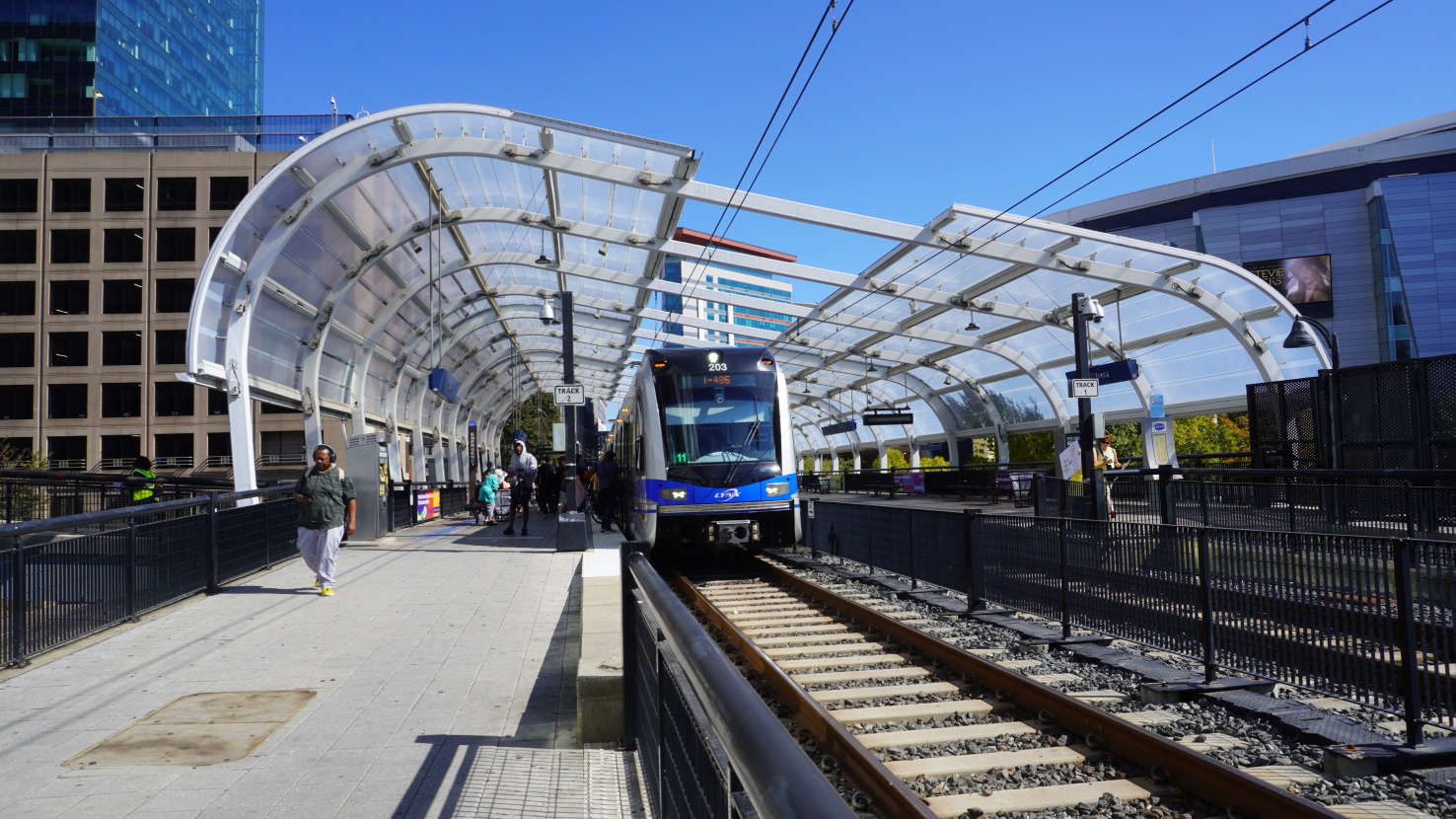
This missed opportunity is not all, or even mostly, the city’s fault. State legislatures play a major role in enabling or prohibiting value capture policies. I don’t purport to know all of the ins and outs of what’s politically, legally and economically feasible in Charlotte. But Charlotte offers a striking example where transit produced an astonishing amount of value that went largely uncaptured by the public sector that funded it.
Though North Carolina does not explicitly ban inclusionary zoning, it does not explicitly allow it either, Eric Zaverl of the advocacy group Sustain Charlotte explained to me. Thus, any such policy would likely face expensive legal challenges. And because the state prohibits rent control, any theoretical inclusionary zoning policy could not impact rental units, rendering it of limited utility.
In 2019, Charlotte enacted a transit-oriented density bonus program that could be viewed as a type of inclusionary zoning, but it has had little impact so far. Developers get a massive increase in height and density — from 130 feet in height to 300 feet in some areas, or from 90 feet to 130 feet in others — in exchange for dedicating 10% of the building area to housing affordable to those making below 80% of the area median income — which is more like middle-income housing than low-income housing. Zoning is already generous enough that the bonus has barely been invoked, Zaverl said. In its first three years, the program produced just 8 units of affordable housing.
Special property tax districts and tax increment financing districts (TIFs) often involve state authorization, making them a tough sell in Republican-controlled state legislatures. In other states, these policies have played a major role in financing transit projects. A TIF in San Francisco generated $1.4 billion for the Transbay Transit Center. A special property tax district in Northern Virginia contributed $730 million to the Silver Line extension to Dulles. The Atlanta Belt Line, which may include a streetcar someday, has both a TIF district and a special inclusionary zoning district.
Charlotte has big plans to expand its transit system. The city is planning another light rail line running east to west across the city, connecting Uptown to the airport and other important destinations. There’s also a consolidated downtown train station in the works that would house light rail, commuter rail, Amtrak and, perhaps someday, Southeastern High-Speed Rail, all under one roof. But for now, the city isn’t planning to use any form of value capture financing on its next light rail line, a CATS spokesperson told me, although the city is considering land banking for affordable housing along future transit corridors.
Charlotte is a model of transit-oriented development, showing how a car-centric city can urbanize and densify. Its ambitious future transit plans could make it even more so. But it would be a shame if Charlotte, and other cities that follow in its footsteps, keep leaving so much money on the table. Good transit makes neighborhoods more desirable and increases land values. Cities should recognize their own worth and stop selling themselves short.


New Plans for Transit Oriented Development in South Central L.A.
Los Angeles County recently adopted the Florence-Firestone Transit Oriented District Specific Plan.
In Canada, Suburban Transit-Oriented Development on the Rise
Transit expansions are providing incentives to companies to locate outside of city centers, upending traditional housing, work, and commute patterns.

Plans for TOD Housing at Berkeley BART Station
The city is behind plans to turn parking lots around the North Berkeley BART station into much-needed housing.

Planetizen Federal Action Tracker
A weekly monitor of how Trump’s orders and actions are impacting planners and planning in America.

‘Going backwards:’ Baltimore mayor, students rally against state's transit funding plan
Maryland's proposed six-year plan provides no funding for Baltimore’s BMORE bus program and reduces its road maintenance funding.

Detroit to transform waterfront with $2.2 billion investment
Developers will convert about 18 acres of unused parking lot space into civic spaces.

HUD modernizes 50-year-old manufactured housing framework
The Next Generation Manufactured Housing Action Plan establishes new energy-efficiency standards for manufactured homes, and new guidelines for anchoring them.

New CA housing laws tear down development red tape
Recently-signed legislation makes building starter homes and ADUs cheaper and faster in California.

Metrolink finishes first expansion in 20 years
The transit agency is now one of very few in the United States to connect two major airports.

FREE Course: Walkable City 1: Why Walkability?
After describing his path towards focusing on walkability as the essence of good planning, Jeff Speck marches through his five principal reasons for making more walkable places.
Reinventing Malls: Planning Alchemy—Turning Gray Fields Into Gold
The course focuses on the opportunities and imperatives that shape reinvention of mall sites.

One Hundred Miles
County of Mendocino
planning NEXT
The Architects Foundation
University of Cincinnati Online
Montrose County
Northern Illinois Transit Authority (NITA)
The Pocatello Development Authority

