Want to know if a city is thriving? Start with a bathroom break.


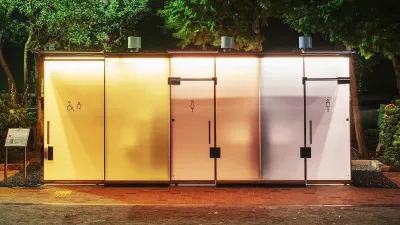
Let’s be honest: public restrooms are not glamorous spaces. They are rarely the highlight of any new urban master plan, and many cities treat them as a utilitarian necessity instead of an amenity in parks, public transit hubs, and other shared spaces. But these facilities actually have a major impact on how residents and visitors alike perceive urban areas—they play a large role in making people feel welcome, and sometimes even act as their own draw to a destination, inviting users to linger for longer periods of time.
Public restrooms are actually one of the most underutilized tools in urban planning, as well as one of the easiest pulse checks for urban vitality. If a city can maintain its bathrooms as clean, safe, and functional, chances are it’s doing a lot of other things right, too. On the other hand, neglected restrooms send a clear message that public spaces are not a priority; or signal to inhabitants that they shouldn’t spend time there at all.
At a time when cities across the United States are grappling with prioritizing investments in revitalization, walkability, and placemaking, we believe that the humble public restroom deserves a renewed spotlight.
The power of signals
In our project work developing parks, entertainment districts, and other public destinations across the country, we’ve seen one consistent lesson over and over: bathrooms can send powerful messages to users. If a restroom is well-managed and usable, it signals to visitors and residents alike that the surrounding area is safe, dignified, and regularly cared for.
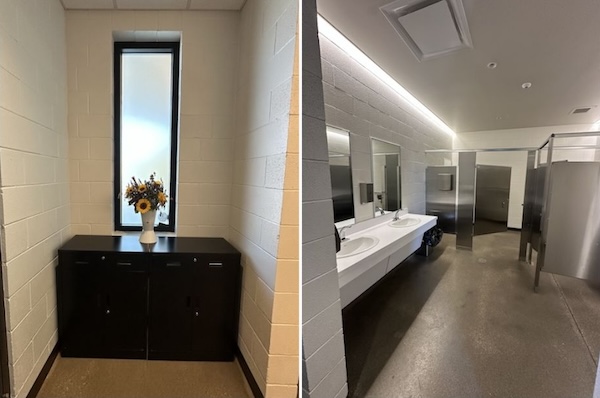
Restrooms create strong first impressions. They are just as important, if not more important, in new projects as they are in repositioning existing destinations. The newly opened Gatton Park on the Town Branch in Lexington, Kentucky, for example, intentionally set out to create the best public restrooms of any park in the region to signal that visitors would have an elevated park experience.
Another case study centered on repositioning an existing public space is New York City’s Bryant Park. This previously troubled, underutilized Midtown Manhattan park is now one of the most successful urban green spaces in the country. While much of this can be attributed to broader efforts surrounding its redesign, programming, and management strategies, its restrooms have also played a key role in catalyzing and sustaining this revitalization long term.
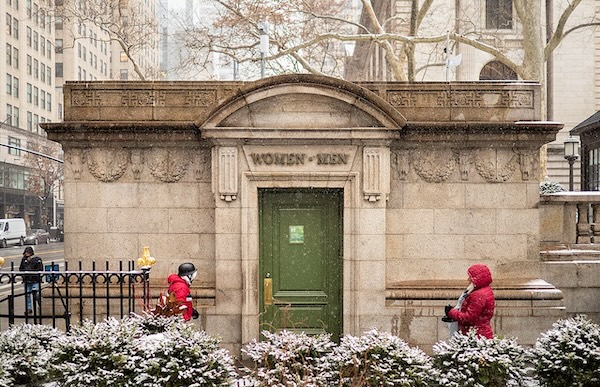
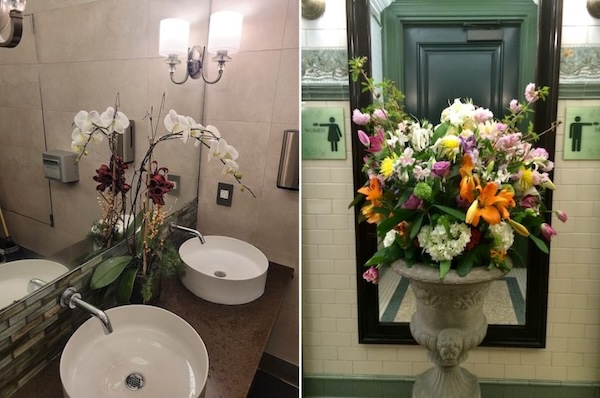
Visitors to Bryant Park find restrooms that are consistently clean, stocked, and regularly decorated with fresh flowers. Attendants are on hand to ensure conditions are maintained, as well as to manage overflow and occupancy to create a smooth experience for users. The result has been profound: people go to the park specifically to use its restroom facilities and often linger afterward, connecting to the park’s free Wi-Fi or enjoying the park’s amenities and programming. The park’s restrooms are routinely listed on “best public bathrooms in America” roundups and discussions on public forums.
This case study isn’t just a trivial example: it’s a blueprint that demonstrates how essential services, when properly managed and handled with care, can meaningfully shift public perception and transform spaces to keep people coming back again and again.
Fostering (or losing) public trust
But not all strategies for public restrooms are as successful or cost effective. In San Francisco, the city made headlines for spending nearly $2 million on a single public toilet. Despite these good intentions, the initiative went viral and sparked outlash from both taxpayers and commentators across the country. This initiative is a perfect cautionary tale—overengineering or overbudgeting infrastructure can actually erode public confidence/trust instead of inspiring it. In this case the skepticism was too much, and despite the city’s successful efforts to bring the cost down to somewhere around $300,000, the damage was done.
The lesson here is clear: creating and effectively maintaining public restrooms doesn’t have to be overly extravagant. This is key because full-time restroom attendants and fresh-cut flowers will never be affordable in most places. City leaders and planners should focus on crafting functional, easily maintainable restrooms that feel safe and welcoming with clear operating and management plans. Without these components, even the shiniest facilities will fall short.
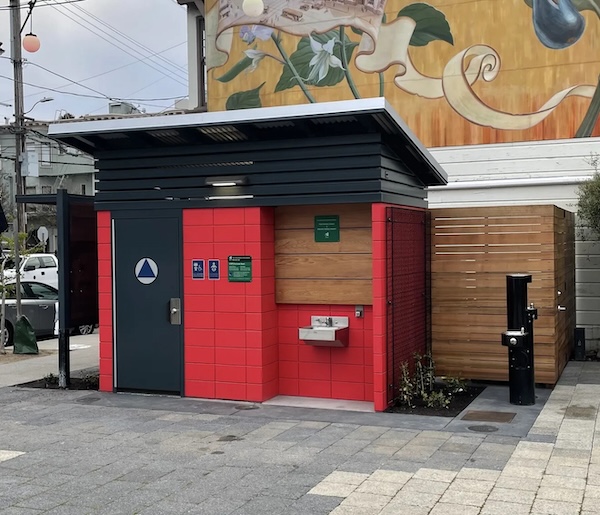
A great example of how more modest but thoughtful investments can succeed is Los Angeles’ Westwood Park, located near UCLA’s campus. City leaders faced the challenge of accommodating the need for restrooms near a popular playground and soccer fields, but struggled with public concern related to the homeless population and ongoing maintenance. The city made the choice to install an automated public restroom, which in this case was not only affordable and accessible, but also sustainable for the park’s staff to maintain. The facility balances community needs with the operational realities of long-term maintenance, yielding a space that has received positive community feedback.
Looking abroad, countries like Japan also offer innovative models for public restroom design that foster greater trust. In Tokyo, restrooms are treated as critical public infrastructure, and receive the same attention relegated to other civic infrastructure like public transit or streetscapes. Facilities are meticulously cared for, and feature convenient amenities and sensory considerations alongside high-tech features that set a global standard for cleanliness and ease of use. These precedents highlight the important benefits of treating restrooms as a shared public good, not a liability.
Lessons from Sacramento
Examining a project a bit closer to home, Agora Partners recently collaborated with city leaders in Sacramento’s primary tourist district, Old Sacramento, to reevaluate restroom strategies. This initiative was part of a broader effort to reposition City-owned real estate, including retail buildings and open space, to better support the retail ecosystem within Old Sacramento and also advance larger citywide economic development goals.
The project underscored the belief that bathrooms are not standalone facilities—they are truly opportunities to extend dwell times and create greater engagement with a destination. Ensuring tourists and residents have access to clean, safe bathrooms and public facilities, the City by proxy encourages people to spend more time exploring local shops, dining, and exploring cultural attractions.
This early work with Sacramento also demonstrates the importance of aligning design, operations, and strategies for governance. It’s not that restrooms alone can solve public space issues—the physical properties of a restroom are only one piece of the puzzle. Staffing, maintenance, and regular monitoring to ensure consistent standards are met are also critical considerations, alongside materials and fixtures, to create an elevated restroom experience. But this initiative provides a strong reminder that planners should internalize: sustainable operations should be baked into design decisions from the outset to ensure success.
Designing for trust & dignity
The above examples are united in that they recognize that creating successful public restrooms is about more than just convenience. It’s about building and maintaining civic trust. When cities dignify public spaces with the respect and attention they deserve, it sends a message that the people using these spaces are valued.
This has a few primary implications for planners:
- Restrooms as Placemakers: In the same way that free WiFi has become a ubiquitous amenity for many in public spaces, restrooms can influence whether people decide to spend time in public spaces. Well-executed versions can turn a space into a destination and contribute to the overall character of a park or district.
- Design + Operations Should Be Interconnected: Even the most beautiful facility will not yield the intended results if it can’t be maintained properly. Planners hoping to revitalize restrooms should coordinate with operational partners from the outset to align on budgets, staffing needs, and maintenance plans.
- Right-Sizing Investments: Cities don’t need to spend millions of dollars on facilities to make an impact. Practical, scalable approaches deliver more consistent and significant benefits, and by prioritizing the design elements and fixtures that matter most for users, planners can engage in true value engineering.
- Taking Global Inspiration: Examining approaches of countries like Japan provides inspiration for a new standard of restroom excellence, which planners in the United States can work to adapt to their own community realities and operational feasibility. (Anyone with any interest in public restrooms should watch Wim Wenders' artful film, Perfect Days (2023), which was inspired by The Tokyo Toilet (TTT) project.)
- Equity & Inclusion: The role of public infrastructure in fostering greater equity and inclusion cannot be understated. For families, aging residents, and those with medical conditions, investing in infrastructure like usable public restrooms can make cities more welcoming and accessible for all.
A final call for reframing
Public restrooms have for too long fallen to the wayside in contemporary urban planning conversations, seen as a burden rather than a crucial civic asset. But as cities compete to attract residents, workers, and visitors, restrooms present a form of infrastructure that can be used strategically to create trust, enhance safety, and even promote economic growth.
The cities that invest in clean, safe, and thoughtful bathrooms are doing more than just providing basic amenities—they’re creating the conditions for thriving public spaces, allowing users to linger, make connections, and participate more meaningfully in public life.
The truth is a simple one: if you want to know if a city is thriving, it might make sense to start by visiting its public restrooms.
Ben Donsky and Howard Kozloff are principals at Agora Partners.

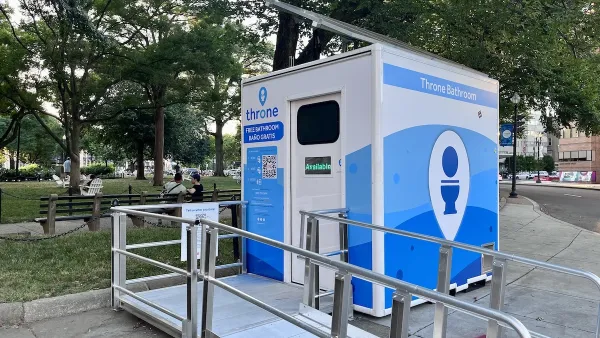
DC to Invest $1 Million in Public Restrooms in 2026
After residents protested the closing of six Throne restrooms, the District is creating a position to manage public bathrooms and plans to fund 10 bathrooms in the next year.
This Thai city is the 'global capital of toilet access'
The Global Public Toilet Index ranks cities by per capita public restrooms.
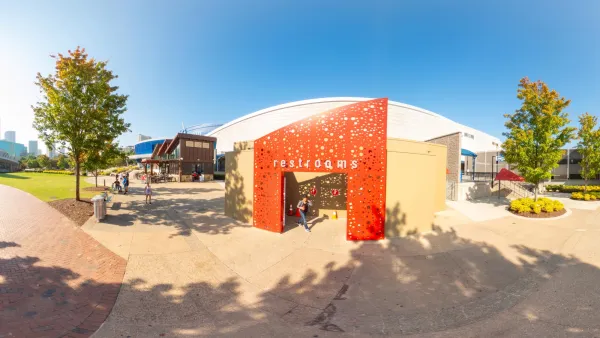
Study: 55% of Atlanta restrooms are inaccessible to the public
More than half of bathrooms that should be publicly accessible are not available, according to a study from Georgia State University.

Planetizen Federal Action Tracker
A weekly monitor of how Trump’s orders and actions are impacting planners and planning in America.

Amtrak, CN end decades-long dispute with eight-year agreement
The new operating agreement establishes an updated framework for the companies to work together, including processes to resolve disputes.

Northwest rail fans eager for Sept. 30 debut of Amtrak’s Airo fleet
Get ready for that new train smell and more seats. But they won’t go faster or run more frequently on the Cascades route in Washington and Oregon.

Eating, littering on Singapore buses now a fineable offense
Passengers who put other riders in danger may be charged thousands of Singapore dollars.

This rural Oklahoma town doesn’t want a data center. It may not be able to stop the project
With the project outside city limits and little county oversight of unincorporated land, officials are considering measures to gain local control.

Trump administration unlawfully slashed $7 billion in clean energy grants, judge rules
The Environmental Protection Agency ended the Solar For All program, which provided the grants, after President Donald Trump’s inauguration.

FREE Course: Walkable City 1: Why Walkability?
After describing his path towards focusing on walkability as the essence of good planning, Jeff Speck marches through his five principal reasons for making more walkable places.
Reinventing Malls: Planning Alchemy—Turning Gray Fields Into Gold
The course focuses on the opportunities and imperatives that shape reinvention of mall sites.

City of Thousand Oaks
City of Wisconsin Rapids
Harvard University Graduate School of Design
The Architects Foundation
University of Cincinnati Online
The Pocatello Development Authority
The Urban Renewal Agency of the City of Pocatello

