Education & Careers

Top 10 Books - 2016
Planetizen is pleased to release its list of the ten best books in urban planning, design, and development published in 2015.

Ask the Ethicist: Conflict of Interest and Constitutional Rights
Planetizen resident ethicist Carol D. Barrett, FAICP, images a scenario that highlights the distinction between citizen and planner, and where sometimes it's inappropriate to cross the line between the two.

Ten Key 2016 Conferences for Urban Design Professionals
Ten key conferences in 2016 for planners, architects, and urban design professionals, summarized by Clement Lau, a Los Angeles County planner.
Critics Find Diversity Setbacks in New Planning Accreditation Board Standards
The Planning Accreditation Board, the body tasked with the accreditation process of planning programs at both the graduate and undergraduate level, will update its standards over the next month.
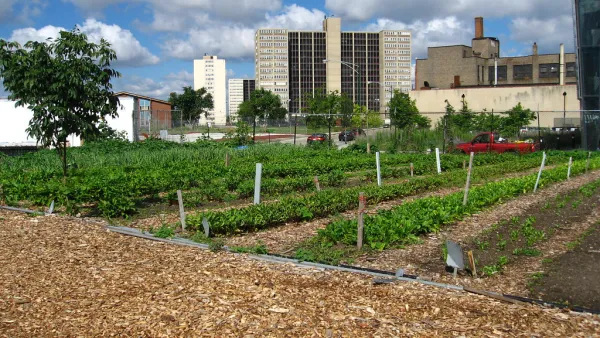
Guidebook: Lowering Barriers to Urban Farming
Urban agriculture has long been a staple of sustainable urbanism—in theory. Can policy changes help it become much more than that? This guidebook offers tactics and policies that planners can use to promote urban farms.

The Greening of Planning Credentials
As sustainability initiatives gain momentum, planners have a growing number of options for credentialing their green skills.
Ultimate Tech Guide to Boston
Whether you're a lifelong resident of Boston, just moving there, or simply passing through, this guide has 18 apps and services for navigating and enjoying the city life to its fullest.
GAO Study Highlights Need for Geography Education Funding
K-12 geography proficiency has not improved since 1994.
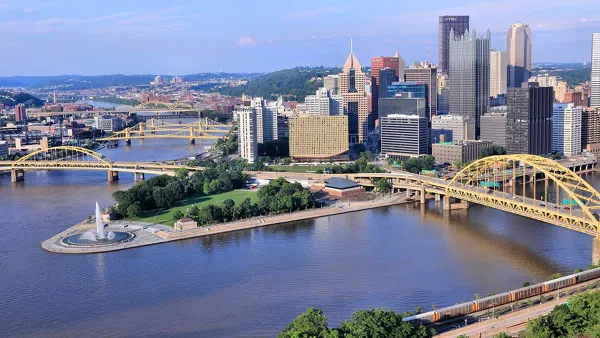
Making the Case for Planning
Planetizen Managing Editor James Brasuell recently gave the Pitkin Lecture at the Pennsylvania state chapter of the American Planning Association's annual conference. An adapted and excerpted version of that lecture follows.
High-Tech Lego Model Provides Interactive Transit Planning Test Bed
The process of building tactile models of neighborhoods as tools for planning outreach just got an upgrade with a high-tech, interactive Lego model built for the Boston area.
Teaching Students the Power of GIS
Ninth graders in Soldotna, Alaska, were introduced to geographic information systems (GIS) by a team of volunteers who spent two days illustrating how GIS technology is used in analyzing complex systems.
Innovative Programs to Teach Planning to Young People
An exhibit at the National Building Museum showcases the work of teens in city planning and design. It's just one recent example of innovative programs to get youth involved in the process of engaging with their communities.

Exclusionary Schooling: The Forces that Widen the Achievement Gap
Sixty years after Brown v. Board, exclusionary zoning and school district rules still promote the economic and racial segregation of public schools.
The Pioneers of Huntsville, Alabama
For some STEM-intensive firms, the cost of living in Silicon Valley is a deal-breaker.
On the Role of University Presses in the Urbanism Conversation
After enjoying a strong run of prominence and success, the new economy is taking its toll on university presses.

The Importance of Geographic Literacy
Maps are still an important tool in teaching kids to be global citizens.

I Use the Word 'Vibrant' (and You Can Too)
Planners and designers should not be afraid to reclaim overused and misused words—as long as they know what they're doing.
The 'Disparate Impact' of Funding Schools with Property Taxes
Laura Bliss argues that implicit discrimination in the boundary-shaping policies of school districts necessitates reform of the property-tax funding system.
Students Design and Build Downtown Portland's First Parklet
The newest addition to the city of Portland's Street Seats program is the result of a student team of designers and builders from Portland State University.
Use Positive Storytelling to Change the Message for Alternative Transportation
Until advocates and agencies find positive stories to tell about multi-modal decision-making the car will continue to dominate the messaging and branding of contemporary culture.

FREE Course: Walkable City 1: Why Walkability?
After describing his path towards focusing on walkability as the essence of good planning, Jeff Speck marches through his five principal reasons for making more walkable places.
Reinventing Malls: Planning Alchemy—Turning Gray Fields Into Gold
The course focuses on the opportunities and imperatives that shape reinvention of mall sites.

City of Charlotte
City of Rosemead
Rutgers University, Edward J. Bloustein School of Planning and Public Policy
University of Michigan School for Environment and Sustainability (SEAS)
Hunter College, City University of New York (CUNY)
The Architects Foundation
University District Partnership









