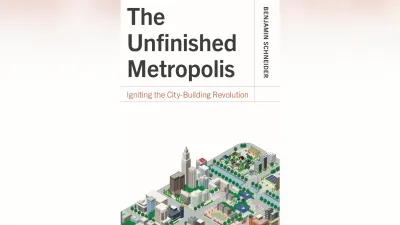
Review: In “The Unfinished Metropolis," Benjamin Schneider argues for us to look abroad for help in returning to a long-lost American art: city-building.



This review is part of a special collaboration between Planetizen and Booked on Planning, a biweekly podcast where AICP planner Stephanie Rouse and Jennifer Hiatt chat with authors of the latest books shaping urban planning today.
Listen to the episode with today’s author in the player below, and check out their virtual Book Summit, happening in October.
A wealth of literature has been published in recent years on housing, transportation, and urban design with entire books dedicated to a specific subset of the topic. Books such as Michael Eliason’s “Building for People” on eco districts, Nolan Gray’s “Arbitrary Lines” about ridding cities of zoning codes, Wes Marshall’s “Killed by a Traffic Engineer” on the harms caused by traffic manuals and many more help us understand the nuances and details of the built world. All of these ideas and more are brought together in Benjamin Schneider’s “The Unfinished Metropolis: Igniting the City-Building Revolution.”
The term "city-building" evokes ideas of western settlement in the pioneer days, the massive rebuilding efforts of the urban renewal era, or even suburban expansion, although the latter is less "city-building," save a few more holistic developments of the new urbanist variety. Schneider’s premise is that city-building drove these past eras of American history, but highlights “how profoundly absent it is from our own.” But the book doesn’t just harp on the lack of city-building efforts today. Instead, it highlights how we can do better and learn from cities that are moving in the right direction, many from outside the U.S.
Canadian cities, for example, are leading the way in transit development that provides reliable, fast service without the staggering price tag that accompanies nearly all US rail projects. These types of projects lead to the “sense in Vancouver that the project of city-building never ended.” Meanwhile many US cities are struggling to avoid the transit death spiral that has become more challenging since the pandemic. Social housing projects are starting to make their way over from European countries to states like Hawaii that are struggling to provide affordable housing. Building more districts in the German baugruppen urban cohousing style creates more livable, walkable communities, but to do so our building codes need to modernize.
Key to catching up to other countries in these efforts, according to Schneider, is a more active, rather than reactive government role in urban development. This may have some readers questioning the approach given what we know about the urban renewal days of heavy government involvement in urban development. But his approach differs by charging the government to lead coordination, consensus building and funding at a scale only the government can facilitate. In our current climate, this is more likely facilitated by cities that can “be laboratories that pilot the larger-scale changes that will ultimately be necessary to solve the nation’s biggest urban problems.”
“The Unfinished Metropolis” is the perfect read for a generalist planner who wants to know a little bit about a lot of topics. It’s also a great read to start someone down the path to more discovering in targeted topic books like mentioned above. Schneider combines historic trends and development eras to show where we’ve come from alongside examples of modern day efforts to revive our city-building mentality. It provides motivation to return to our roots of growth and improvement without falling prey to the harmful way past eras built.

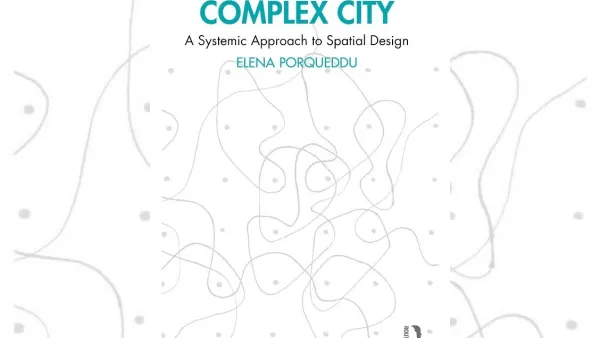
A much-needed revamp of the best way to approach design
Book review: “Designing the Complex City: A Systemic Approach to Spatial Design” translates complex theory into actionable tools for planners, architects and more.
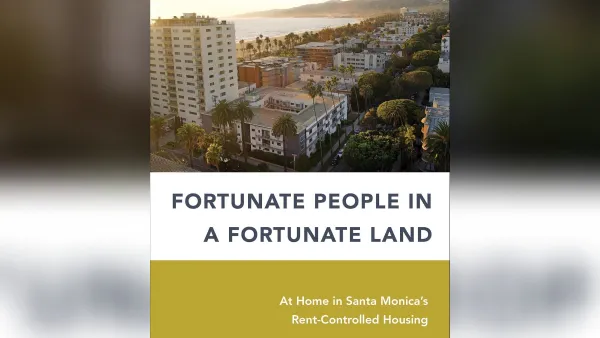
A masterful, human-centered defense of rent control
Book Review: "Fortunate People in a Fortunate Land" offers a human look at how rent control is more than just numbers and data in a spreadsheet.

Are cities at risk of losing squirrels?
Book review: A common backyard forager could be in decline, but without the proper data we may not know until it’s too late. Nancy Castaldo’s "Squirrel" urges us to find out.

Planetizen Federal Action Tracker
A weekly monitor of how Trump’s orders and actions are impacting planners and planning in America.

Chicago breaks ground on $3 billion megadevelopment
The new neighborhood, titled Foundry Park, will one day host 3,700 residences.

This MA town is drowning in its own sewage — and residents like it that way
Susan Murcott, a waste water expert, said if Carlisle didn't address their leaking sewage, the problem could turn “deadly.”

Iowa taxpayers are paying thousands to clean manure out of their water
While the Clean Water Act makes states responsible for regulating factory farms that discharge pollutants, Iowa has turned a blind eye to the polluting farms.

Amtrak cuts ribbon on Seattle Airo maintenance facility
The $250 million, nearly 100,000-square-foot building can house an entire Cascades Airo trainset.

To power data centers, Google seeks autonomous control of thousands of homes’ electricity
The tech company has signed a deal to indirectly pay Mid-Atlantic residents to reduce their power demand when the grid is strained.

FREE Course: Walkable City 1: Why Walkability?
After describing his path towards focusing on walkability as the essence of good planning, Jeff Speck marches through his five principal reasons for making more walkable places.
Reinventing Malls: Planning Alchemy—Turning Gray Fields Into Gold
The course focuses on the opportunities and imperatives that shape reinvention of mall sites.

City of Rosemead
Rutgers University, Edward J. Bloustein School of Planning and Public Policy
One Hundred Miles
The Architects Foundation
University of Cincinnati Online
Montrose County
The Pocatello Development Authority
The Urban Renewal Agency of the City of Pocatello

