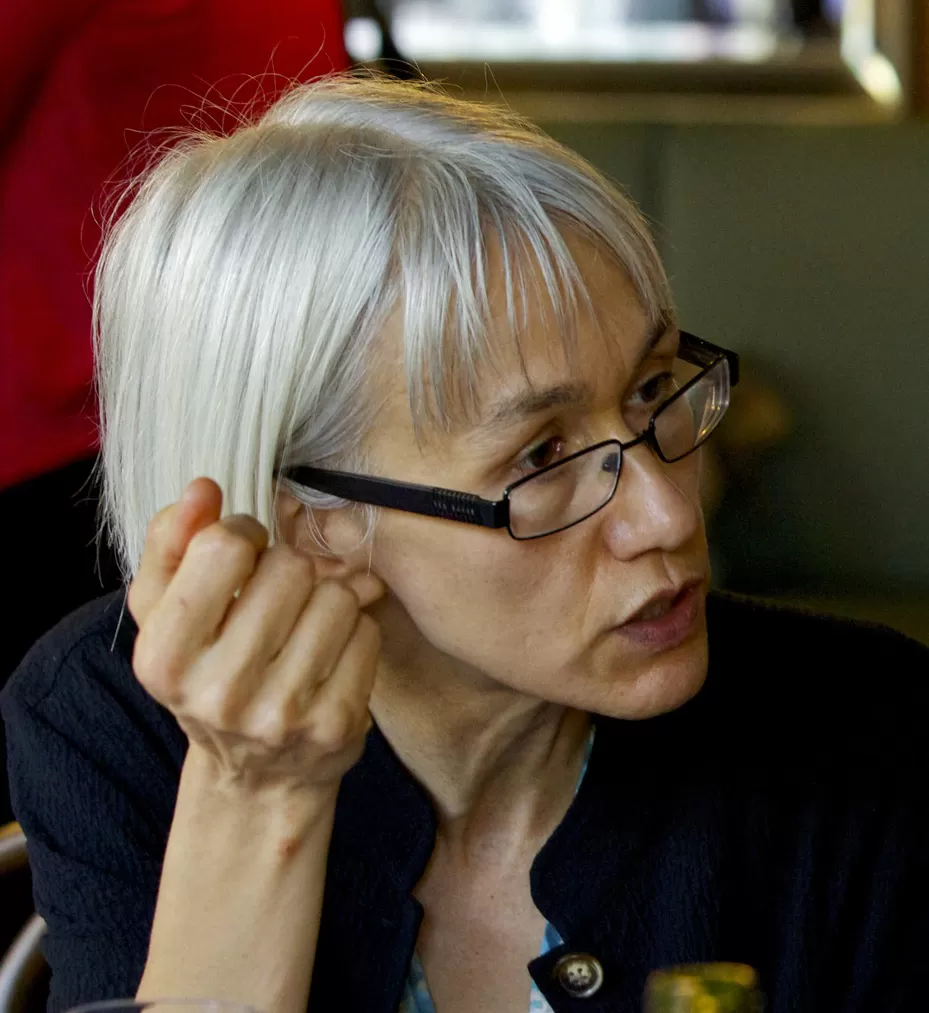
Ann Forsyth
Ann Forsyth is professor of Urban Planning at Harvard University.
Contributed 85 posts
Trained in planning and architecture, Ann Forsyth is a The Halloran Professor of Urban Planning and Design at the University of Sydney and Research Professor of Urban Planning at the Harvard Graduate School of Design where she taught full time from 2012-2026. From 2007-2012 she was a professor of city and regional planning at Cornell. She taught previously at at the University of Minnesota, directing the Metropolitan Design Center (2002-2007), Harvard (1999-2002), and the University of Massachusetts (1993-1999) where she was co-director of a small community design center, the Urban Places Project. She has held short-term positions at Columbia, Macquarie, and Sydney Universities. Her work focuses on the social aspects of physical planning and urban development. The big question behind her research and practice is how to make cities more sustainable and healthy. Forsyth’s contributions have been to analyze the success of planned alternatives to sprawl, particularly exploring the tensions between social and ecological values in urban design. Several issues prove to be the most difficult to deal with in planning better places and provide a focus for some of her more detailed investigations: suburban design more generally (sense of place, overall layout) and other aspects of healthy places (aging, walkability, housing, green space, food). Forsyth received her B.Sc. in Architecture from the University of Sydney, an M.A. in Urban Planning from UCLA, and a Ph.D. in City and Regional Planning from Cornell.
Finding Information about Planning: What Do Faculty Do?
<span style="color: black"><span style="font-size: small"><span style="font-family: Times New Roman">Planning students are often told to find good information. How to do that is becoming both simpler, due to various search engines and databases, and more complex, given the amount of information available.
Planning Papers and Reports: Some Tips for Students
<p class="MsoNormal"><span>For most planning programs in the U.S. this is the end of the semester. Having read literally hundreds of papers over the past few months I have reflected on the lessons of better papers for writing in planning.</span></p>
Planning History: The Basics
<p class="MsoNormal"> Planning history is often taught in the first semester of planning programs. However, many students find that their interest increases with time and that with more knowledge they have more questions. Below I list some basic books and journals for finding out about planning history. In an upcoming entry I will discuss important plans, places, and programs that the historically literate urban planner should at least recognize. </p> <p class="MsoNormal"> Two books typically set in planning history introductory courses in the United States are an easy place to start: </p>
Looking for Employment: Tips from A Recent Graduate
<p class="MsoNormal"> Students nearing graduation are wondering about employment. Some already have jobs lined but many do not. While it is good to start looking, best advice is to graduate first as finishing up after you have a job almost always creates a lot of stress and bother. Previous blogs have covered <a href="/node/37736" target="_blank">Finding a First Job in Planning</a>, <a href="/node/38516" target="_blank">Tips on Gainful Unemployment for New Planners</a>, and <a href="/node/34807" target="_blank">Defining the Planning Skill Set </a>based on surveys of employers and graduates. <strong>Anna Read</strong>, a recent graduate from Cornell’s MRP program who found employment right away last year, has passed along these tips from her own experience: </p>
Images for Planners: More Resources
<p class="MsoNormal"> Some time ago I noted a number of terrific<a href="/node/34290" target="_blank"> image resources</a> for urban planners. This blog highlights some additional sources. </p>