Advertise with us
Home Planetizen
  • News
  • Exclusives
  • Jobs
  • Training
  • Schools
  • Events
  • RFPS
  • Store
  • Advertise
  • Log in
  • Join
  • user login
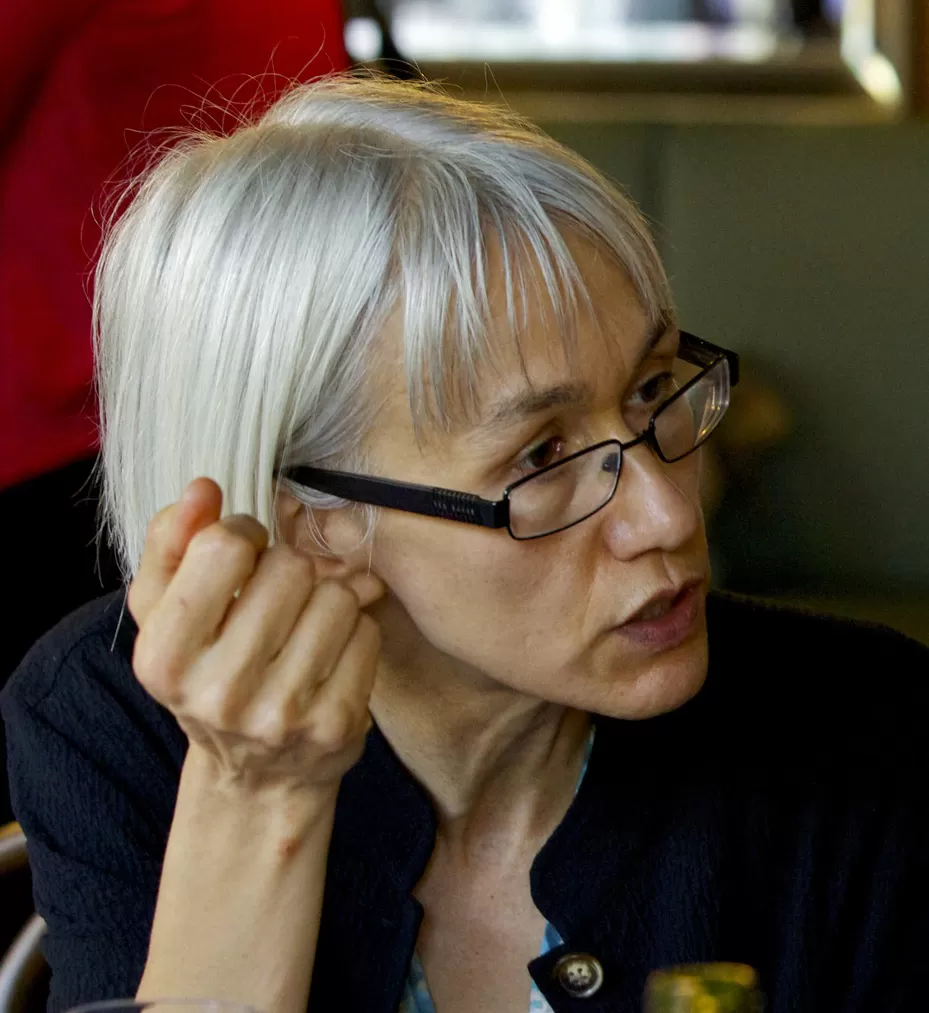
Profile picture for user Ann Forsyth

Ann Forsyth

Ann Forsyth is professor of Urban Planning at Harvard University.

Member for

19 years 7 months

Contributed 85 posts

Linkedin

Full Bio

Trained in planning and architecture, Ann Forsyth is a The Halloran Professor of Urban Planning and Design at the University of Sydney and Research Professor of Urban Planning at the Harvard Graduate School of Design where she taught full time from 2012-2026. From 2007-2012 she was a professor of city and regional planning at Cornell. She taught previously at at the University of Minnesota, directing the Metropolitan Design Center (2002-2007), Harvard (1999-2002), and the University of Massachusetts (1993-1999) where she was co-director of a small community design center, the Urban Places Project. She has held short-term positions at Columbia, Macquarie, and Sydney Universities. Her work focuses on the social aspects of physical planning and urban development. The big question behind her research and practice is how to make cities more sustainable and healthy. Forsyth’s contributions have been to analyze the success of planned alternatives to sprawl, particularly exploring the tensions between social and ecological values in urban design. Several issues prove to be the most difficult to deal with in planning better places and provide a focus for some of her more detailed investigations: suburban design more generally (sense of place, overall layout) and other aspects of healthy places (aging, walkability, housing, green space, food). Forsyth received her B.Sc. in Architecture from the University of Sydney, an M.A. in Urban Planning from UCLA, and a Ph.D. in City and Regional Planning from Cornell.

So You Want to Change the World, Part 1: Networking for Students (and Others)

<p class="MsoNormal">Some people choose to work in planning because they see it as a relatively interesting and stable job. Others have dreams of being the equivalent of an all-powerful SimCity-style mayor. However, many choose planning as a career because they want to make a difference in the world. They want to do good and to help those who are the least advantaged. They are attracted by the potential, if limited, for planning to foster environmental justice and social equity.</p>

Summer Academics: Finding Faculty Blogs

<p class="MsoNormal">With the coming of summer, students finish courses, faculty head off to do research, and practitioners think about vacations. However, for those interested in keeping up to date with academic issues in planning, a number of bloggists provide useful insights into the politics and hot issues in planning education. For students they are a window into the work of educators and for practicing planners they are an easy way to keep up to date with what’s happening in the schools.</p>

Moving Pictures of Planning History: Education Online

<p>Constantly updated, the internet has created an important tool for accessing up-to date information—text, still images, and video. Increasingly it also provides a window into aspects of history, including planning history, that have previously been difficult to find. Documents, indexes to archival materials, and the photographic and map collections of historical societies are accessible online. Less well known are film and video resources—resources that can be played online or downloaded. The Library of Congress, Motion Picture, Broadcasting and Recorded Sound Division now boasts an outstanding collection of hundreds of videos relevant to urban issues. </p><p>Some examples illustrate the range: </p>

If Paul Davidoff has Email Should I Write?

<p class="MsoNormal"><strong>Information Strategies for Answering Fundamental Planning Questions</strong></p> <p class="MsoNormal">In universities in the northern hemisphere, April and May are months for completing work and moving closer to graduation. Assignments are due. Exams are looming. Students are too tired to write well and professors are too tired to notice. In the crunch for time, enterprising students look to the power of new information and communication technologies to reach out beyond their harried contexts to experts who can help them answer important questions. If Paul Davidoff (now dead) had email, they reason, he would have been happy to respond.</p>

Decision Time for (Prospective) Graduate Students

<p>For those admitted to graduate planning programs in the U.S., March is the season of choices and decisions. Offers appear. Decision deadlines approach. Wait lists are formed. Even those who thought they knew what they wanted may be tempted to change their minds. Having been affiliated with seven vastly different planning programs, and having worked both as a faculty member and practitioner, I can attest that the choices aren’t simple. </p>

Pagination

  • « First First page
  • ‹ Previous Previous page
  • …
  • 9
  • 10
  • 11
  • 12
  • 13
  • 14
  • 15
  • 16
  • 17

Search

  • News
  • Exclusives
  • Jobs
  • Schools Directory
  • Events
  • RFPs
  • Write for Planetizen
  • Planetizen Courses
  • AICP Exam Prep
  • Planetizen Store
  • Planetizen Press
  • Planopedia

Planning: The professional practice and academic study of the future of built and natural environments — from the smallest towns to the largest cities and everything in between.

  • News
  • Exclusives
  • Jobs
  • Schools Directory
  • Events
  • RFPs
  • Write for Planetizen
  • Planetizen Courses
  • AICP Exam Prep
  • Planetizen Store
  • Planetizen Press
  • Planopedia
  • About
  • Support
  • Newsletter
  • Contact Us
  • Login
  • Careers
  • Privacy Policy
  • Terms
  • Advertise With Us
twitter facebook linkedin planetizen

Copyright Planetizen, Inc. © 2000 - 2026. All rights reserved. Your Privacy Choices