Mexico City is considering a novel transit idea: two-person gondolas gliding along an aerial track. The costs of such a system may be far lower than extending the subway system.


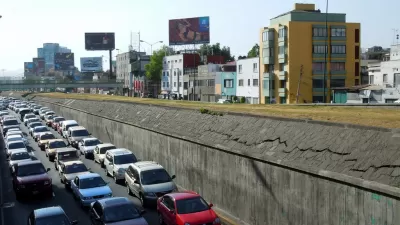
Despite very high transit ridership, Mexico City's streets are still clogged. In response, "the city's science, technology and innovation department, known as Seciti, on Nov. 26 unveiled a prototype of an aerial transportation system that would float over the sea of cars, potholes and street protests that regularly disrupt life in the enormous metropolis."
"The solution is a kind of elevated monorail, with gondolas that run on a horizontal track, and it could really help unload the city's crowded streets, officials say. A 5km (3 mile) line could move 37 million people a year—and up to 200 million if it were extended another 10 km. For perspective, the busiest subway line transports around 290 million passengers a year." And it's not a cable car system; individual gondolas will propel themselves.
While it's still just an idea, the upside is low costs: "officials estimate the price tag for a kilometer of line would be between $9 million and $19 million, compared with $190 million for a kilometer of subway."
Read the full story: Mexico City hopes floating gondolas will beat its appalling traffic


Mexico City Aerial ‘Cablebus’ Provides Key Connection to Peripheral Neighborhoods
Unlike many aerial gondolas, Mexico City’s Cablebus is largely used by commuters and residents from communities farther from the city center.
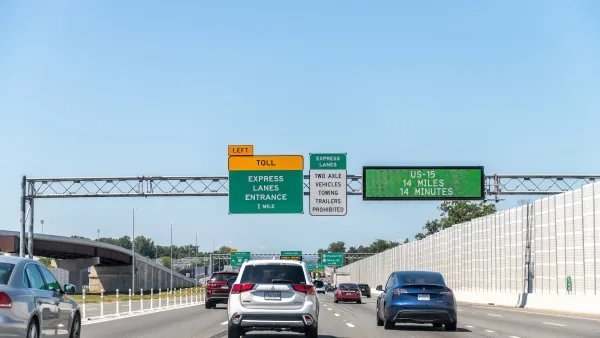
Congestion Costing Reality Check, Part 2: A congestion costing critique
There are good reasons to be skeptical of highway industry claims that traffic congestion is a growing problem. Their analysis is often incomplete and biased. Let’s pull back the curtain on some major congestion cost studies.
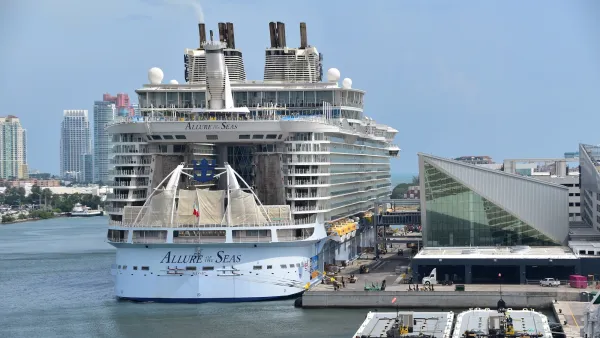
Miami Considers Airport-to-Port Train to Ease Cruise Ship Traffic
Miami’s port is one of the world’s busiest cruise ship terminals.

Planetizen Federal Action Tracker
A weekly monitor of how Trump’s orders and actions are impacting planners and planning in America.

Amtrak, CN end decades-long dispute with eight-year agreement
The new operating agreement establishes an updated framework for the companies to work together, including processes to resolve disputes.

Northwest rail fans eager for Sept. 30 debut of Amtrak’s Airo fleet
Get ready for that new train smell and more seats. But they won’t go faster or run more frequently on the Cascades route in Washington and Oregon.

St. Louis Metro to test if single-car trains can reduce operating costs, maintain rider satisfaction
The pilot program will run from October to spring 2027, and begin with one single-car train operating on Metrolink’s Red and Blue lines.

Pennsylvania is building data centers in abandoned mines
Housing data centers in mines provides an alternative to destroying local forests and may spare residents from data centers’ noise and air pollution.

If Corpus Christi can’t revive desalination plant project, it may owe Texas $235 million
Earlier this month, city officials declined to pursue developing the plant for the second time in a year.

FREE Course: Walkable City 1: Why Walkability?
After describing his path towards focusing on walkability as the essence of good planning, Jeff Speck marches through his five principal reasons for making more walkable places.
Reinventing Malls: Planning Alchemy—Turning Gray Fields Into Gold
The course focuses on the opportunities and imperatives that shape reinvention of mall sites.

City of Thousand Oaks
City of Wisconsin Rapids
Harvard University Graduate School of Design
The Architects Foundation
University of Cincinnati Online
The Pocatello Development Authority
The Urban Renewal Agency of the City of Pocatello