Matthew Garbet contributes a guest column to the SaportaReport wherein he debunks the "Tipping Point Theory of Transit"—that cities should continue to support cars until a complete transit system is realized.


Matthew Garbet responds to what he calls the "Tipping Point Theory of Transit," described thusly: "If we keep building the BeltLine, expanding the Streetcar, and growing MARTA, one day there will come a Tipping Point, when people will begin abandoning their cars for our finally completed system." Added to which, is the key: "Until we get there, however, we need to recognize reality and continue to build for cars, especially via parking."
Garbet cries foul on that theory, instead arguing that for as long as cities, like Atlanta, make planning decisions to support the car, people will continue to drive. "At some point we will need to choose to make driving more costly. The easiest and most efficient way to do so, with the most benefits, is to dramatically reduce the amount of parking while increasing its cost."
Read the full story: Making parking scarce and expensive is the best way to encourage people to walk, take transit and ride bicycles


Atlanta City Council unanimously backs $3.5 billion Beltline light rail project
The resolution was drafted after Atlanta Mayor Andre Dickens pulled support for the Atlanta Streetcar extension last year.
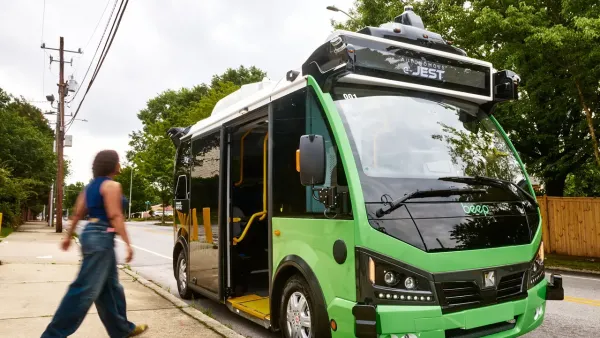
Atlanta Beltline’s free automated shuttle expands service
A $1.75 million grant funded the autonomous shuttle service’s growth.

Study: 55% of Atlanta restrooms are inaccessible to the public
More than half of bathrooms that should be publicly accessible are not available, according to a study from Georgia State University.

Planetizen Federal Action Tracker
A weekly monitor of how Trump’s orders and actions are impacting planners and planning in America.

HUD modernizes 50-year-old manufactured housing framework
The Next Generation Manufactured Housing Action Plan establishes new energy-efficiency standards for manufactured homes, and new guidelines for anchoring them.

Data reveals that NYC’s bet on congestion pricing has paid off
After almost two years of the program, reports show positive impacts on traffic and air quality and no disruptions to parking.

How Chicago, New York and Seattle are funding transit projects amid tough times
Notes from the American Public Transportation Association's TransForm conference in Chicago.

Transport for London tackles hate crime spike with free bystander training
Recorded hate crime offences on the London's transport network have increased by 36 per cent.

Denver is solving homelessness. Why aren't the rest of us?
Since 2023, Denver's street homeless population has decreased by 64%, proving that effective tools exist to support those in need of housing.

FREE Course: Walkable City 1: Why Walkability?
After describing his path towards focusing on walkability as the essence of good planning, Jeff Speck marches through his five principal reasons for making more walkable places.
Reinventing Malls: Planning Alchemy—Turning Gray Fields Into Gold
The course focuses on the opportunities and imperatives that shape reinvention of mall sites.

One Hundred Miles
County of Mendocino
planning NEXT
The Architects Foundation
University of Cincinnati Online
Montrose County
Northern Illinois Transit Authority (NITA)
The Pocatello Development Authority