Over the next decade, $1 billion will be spent to repair the state's deteriorating roads. Like many states unwilling to raise gas taxes, most will come from transfers from the general fund, though $41.4 million per year will be from car sales taxes.


Adam Beam writes that the two contentious aspects of South Carolina's new transportation bill are that it relies heavily on borrowing and that the amount is insufficient to address the state's transportation needs. In fact, the bill was written by state Senate Minority Leader Nikki Setzler, D-Lexington, as many of the governor's fellow Republicans objected to the borrowing.
The bill allows the Transportation Department to transfer $50 million per year of state surplus funds to the State Infrastructure Bank "to borrow at least $500 million to repair interstates and primary roads." The $41.4 million per year to repair secondary roads would come from reallocating half the state's auto sales tax revenue. "An additional transfer of $50 million in one-time money to repair bridges" would be used to accept up to $250 million in federal funds.
Beam writes that according to the state transportation officials, there will be a $29 billion deficit to address road repairs over the next 20 years. Business groups had been lobbying strongly for increased road funding.
The passage of the bill is significant. Two years ago the state's DOT was in dire financial straits and "had to turn to the federal government for its cash flow problem", as noted here.
Also in The State, Associated Press reporter Jeffrey Collins writes that the 16-cents a gallon state gas tax hasn't been raised since 1987. According to the Tax Foundation, the state has the 47th lowest gas tax in the U.S., though they will be #48 after July 1.
Wyoming, another red state with a 14-cent gas tax, will see a 10-cent increase after Gov. Matt Mead signed legislation last February. Upon signing, he stated that "... the state can no longer afford to subsidize the transportation department from general funds." Like South Carolina's business community, he noted that "the state's highway system is vital to economic development."
Read the full story: SC Gov. Haley signs $1 billion roads bill

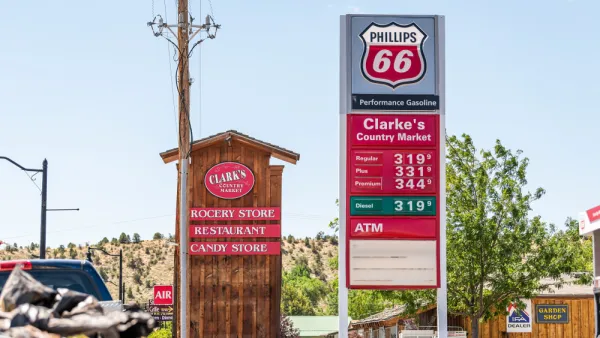
Utah Officials Want to Replace the State Gas Tax
The state auditor and the transportation chief argue that the gas tax is an unsustainable funding source caused by a projected increase in electric vehicle adoption and an increase in fuel efficiency of gas-powered vehicles.
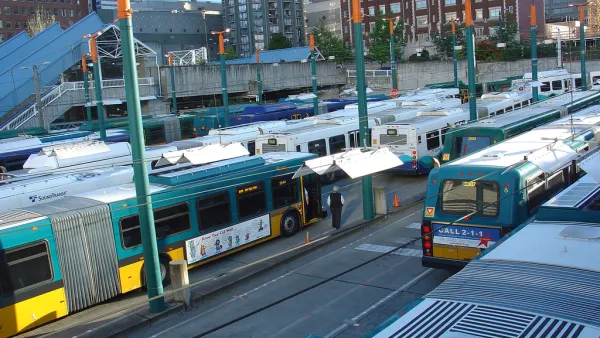
Charting a Better Transportation Future for Washington State
The state gas tax cannot provide the funding that Washington needs for its transportation system, according to a recent opinion piece published by the Seattle Times. But state legislators can look to bold, progressive revenue options for the future.
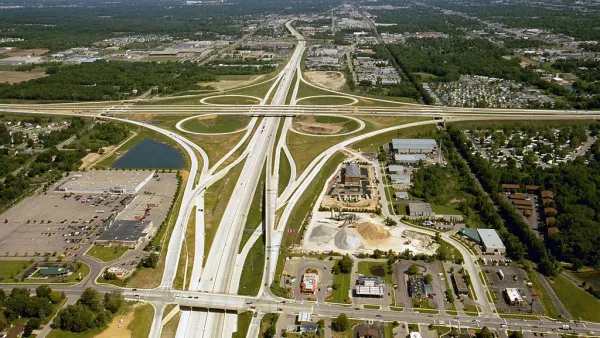
Where Gas Taxes Only Serve the Needs of More Sprawl
The gas tax, suburban highway spending cycle is both self-serving and self-destructive, according to this article.

Planetizen Federal Action Tracker
A weekly monitor of how Trump’s orders and actions are impacting planners and planning in America.

Amtrak, CN end decades-long dispute with eight-year agreement
The new operating agreement establishes an updated framework for the companies to work together, including processes to resolve disputes.

Judges permit Denver to divert 77,000 acre feet from the Colorado River for reservoir expansion
Overuse and climate change have caused the Colorado River’s water levels to plummet.

NYC DOT wants faster, more permanent street upgrades
The city is examining ways to build more concrete infrastructure without getting entangled in 'decades-long' projects.

'Something we’ve never seen before:' rising utility rates could strain city finances nationwide
Data centers, climate change and other factors have caused utility rates in the United States to increase by 38% since 2020.

Trump to overrule local leaders, lease millions of acres of America’s Pacific Island territories’ seafloors to mining companies
International law says that the Indigenous people of America’s territories have a right to prior and informed consent regarding projects that impact their countries.

FREE Course: Walkable City 1: Why Walkability?
After describing his path towards focusing on walkability as the essence of good planning, Jeff Speck marches through his five principal reasons for making more walkable places.
Reinventing Malls: Planning Alchemy—Turning Gray Fields Into Gold
The course focuses on the opportunities and imperatives that shape reinvention of mall sites.

Harvard University Graduate School of Design
KFH Group Inc.
Greater Baltimore Committee
The Architects Foundation
University of Cincinnati Online
The Pocatello Development Authority
The Urban Renewal Agency of the City of Pocatello