


























To keep its slowing economy humming, China continues to pump colossal funds into infrastructure projects. With massive stimulus spending comes massive inefficiencies. Naomi Rovnick selects China's most wasteful infrastructure projects of 2012.


Since 2008, stimulus spending on infrastructure has been one of China's key policies intended to kickstart job creation and boost GDP growth, while continuing the country's rapid urbanization and modernization. While some efforts, such as the rapid expansion of urban and intercity transit, have been laudable, there's also been some truly head-scratching initiatives such as the ghost cities of Ordos in Inner Mongolia and Chenggong, in the southwestern province of Kunming.
Despite these notable missteps, "the bizarre hilarity of Chinese overbuilding never stops," says Rovnick. "City governments have GDP targets to hit and social projects to pay for. So they sell land to property developers to build skyscrapers, and the construction keeps citizens employed. Lots of cities believe they too can be the next Shanghai. And the easiest way to upset a planning official is to suggest that if every province in China has a new financial centre, there may not be enough investment banks and law firms to fill all the space."
From a $4.8 billion propaganda theme park in Tibet to a $3.5 billion Chinese-built housing development in Angola, Rovnick highlights four projects from the last year that demonstrate the "neverending vaudeville show" continues.
FULL STORY: China's 4 Most Wasteful Infrastructure Projects of 2012


Sand: Another Victim of Global Urbanization
Headlined by vertical (and horizontal) sprawl in China, India, and elsewhere, the global building boom requires vast quantities of concrete and asphalt. And to get those materials, sand must be taken from the environment.
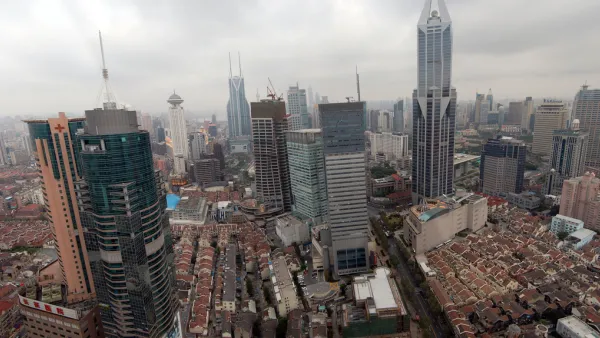
China's Urbanization Boom May Be Slowing
After a period of modernization and urban growth unrivaled in human history, several forces promise a slump, or at least a slowing. Maybe it's time to improve existing cities, not keep building new ones.
Visualizing Global Urban Growth Through 2030
Geographer Duncan Smith mapped the predicted trajectory of worldwide urban growth from 1950 through 2030. Concentric circles of different shades show where and when growth was (or will be) the most dramatic.

Planetizen Federal Action Tracker
A weekly monitor of how Trump’s orders and actions are impacting planners and planning in America.
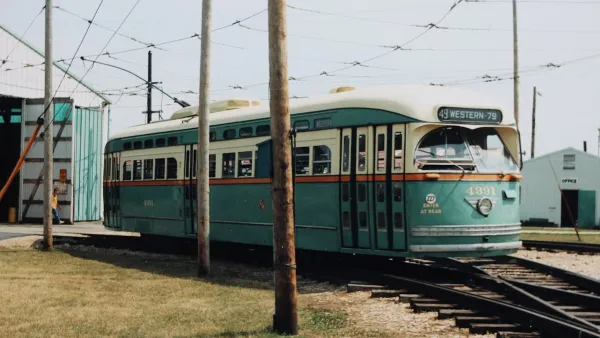
Chicago’s Ghost Rails
Just beneath the surface of the modern city lie the remnants of its expansive early 20th-century streetcar system.

Amtrak Cutting Jobs, Funding to High-Speed Rail
The agency plans to cut 10 percent of its workforce and has confirmed it will not fund new high-speed rail projects.

Ohio Forces Data Centers to Prepay for Power
Utilities are calling on states to hold data center operators responsible for new energy demands to prevent leaving consumers on the hook for their bills.

MARTA CEO Steps Down Amid Citizenship Concerns
MARTA’s board announced Thursday that its chief, who is from Canada, is resigning due to questions about his immigration status.

Silicon Valley ‘Bike Superhighway’ Awarded $14M State Grant
A Caltrans grant brings the 10-mile Central Bikeway project connecting Santa Clara and East San Jose closer to fruition.

Urban Design for Planners 1: Software Tools
This six-course series explores essential urban design concepts using open source software and equips planners with the tools they need to participate fully in the urban design process.
Planning for Universal Design
Learn the tools for implementing Universal Design in planning regulations.

Caltrans
City of Fort Worth
Mpact (founded as Rail~Volution)
City of Camden Redevelopment Agency
City of Astoria
City of Portland
City of Laramie