























Put the chief planners of seven of North America's most progressive cities in a room and ask about their challenges, they inevitably point to the overriding role of the political leaders they serve. Expanding public open space also was raised.


During Urban Land Institute's annual expo (Nov. 3-6) in San Francisco, the San Francisco Planning and Urban Research Association hosted a discussion in City Hall with the planning heads from SF, New York, Portland, Seattle, Vancouver, Minneapolis and San Diego.
"Because of the failure of the planning profession in the past, we've gotten quiet, we've gotten a little too meek," said Brent Toderian, Vancouver's planning director. "We serve at the will of politicians, and are often unwilling to speak truth to power loudly and persuasively and in public. I think that's really been an absolving of our leadership responsibilities in the profession.
New York's planning director, Amanda Burden, also argued strongly for expanding open spaces. "Great public open spaces - and that means public open spaces that are used intensively and are magnets for people - are the great mixing chambers of cities," said Burden. "It's where all classes, all ethnicities, all economic strata, come together and really create energy that makes the cities we want to be in."
"When you have a small amount of public resources, put them in great public open spaces, because they will trigger private investment."
Thanks to Streetsblog San Francisco
FULL STORY: Planning Chiefs: Urban Planning Still Hindered by Politics, Past Mistakes

11,000 Housing Units Possible with S.F. Office Conversions, Study Says
A new study by SPUR and the Urban Land Institute’s San Francisco chapter estimates a specific number of apartment units that could be built from vacant office units in the city.

How to Treat Housing as a Human Right
SPUR's housing report, "What Will it Really Take to Create an Affordable Bay Area," found that it will take 2.2 million units in the next 50 years to avoid worsening housing inequality.
A New Planning Director in San Francisco
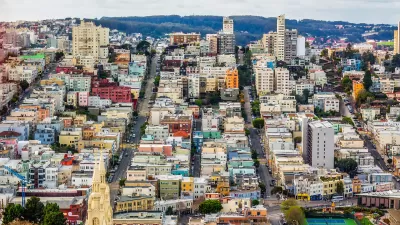
Outgoing San Francisco Planning Director John Rahaim announced his departure in September. Rich Hillis will be the next to have the job.
Planetizen Federal Action Tracker
A weekly monitor of how Trump’s orders and actions are impacting planners and planning in America.
Map: Where Senate Republicans Want to Sell Your Public Lands
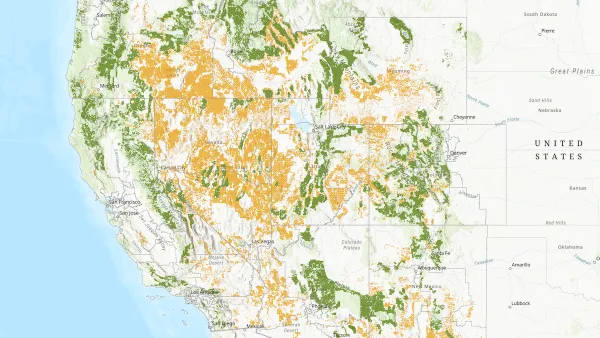
For public land advocates, the Senate Republicans’ proposal to sell millions of acres of public land in the West is “the biggest fight of their careers.”
Restaurant Patios Were a Pandemic Win — Why Were They so Hard to Keep?
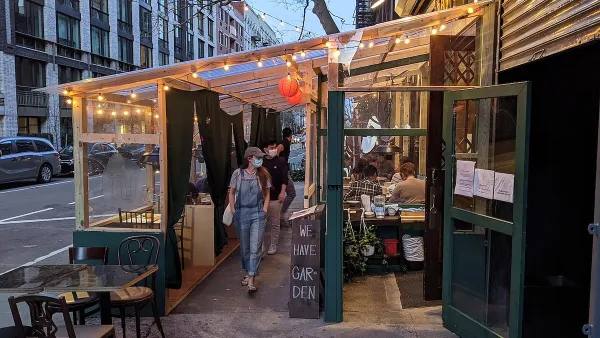
Social distancing requirements and changes in travel patterns prompted cities to pilot new uses for street and sidewalk space. Then it got complicated.

Platform Pilsner: Vancouver Transit Agency Releases... a Beer?
TransLink will receive a portion of every sale of the four-pack.

Toronto Weighs Cheaper Transit, Parking Hikes for Major Events
Special event rates would take effect during large festivals, sports games and concerts to ‘discourage driving, manage congestion and free up space for transit.”

Berlin to Consider Car-Free Zone Larger Than Manhattan
The area bound by the 22-mile Ringbahn would still allow 12 uses of a private automobile per year per person, and several other exemptions.

Urban Design for Planners 1: Software Tools
This six-course series explores essential urban design concepts using open source software and equips planners with the tools they need to participate fully in the urban design process.
Planning for Universal Design
Learn the tools for implementing Universal Design in planning regulations.

Heyer Gruel & Associates PA
JM Goldson LLC
Custer County Colorado
City of Camden Redevelopment Agency
City of Astoria
Transportation Research & Education Center (TREC) at Portland State University
Camden Redevelopment Agency
City of Claremont
Municipality of Princeton (NJ)