Jon Zemke ponders the many possibilities for building a world-class transportation network throughout metro Detroit.


"Metro Detroiters have harbored metropolis jealousy for generations. The kind that manifests itself in statements like,'If only Detroit could be more like Chicago...' or Toronto or San Francisco.
These statements usually pop out when we're contrasting those city's bustling urban canyons to our Quickstop strip malls. But the comparison isn't set in stone. In fact, 20 years from now Woodward Avenue could become the envy of cities across the nation, a vibrant, dense and well-traveled corridor whose main feature is the 21-mile light rail line that connects Pontiac to Detroit.
Similarly, a commuter rail line connecting Motown to Tree Town (Detroit and Ann Arbor for the uninitiated) would connect U-M to WSU and Tiger Stadium to The Big House. Whether it was the exchange of academic ideas, weekend visitors trading cultural experiences or daily work migration, the proposed Detroit-Ann Arbor commuter line would transform both cities and all points in between. Local leaders from both public and private sectors are pushing forward these two projects in hopes of reversing Detroit's car-bound legacy.
Comprehensive mass transit has been essential to developing the density and vibrancy in New York, Boston and Portland. Even cities as unlikely as Phoenix and Salt Lake have begun to see what mass transit can mean for their communities. Metro Detroit, unfortunately, has been lacking since its leaders yanked the streetcars off Woodward 50 years ago."
Read the full story: The Future Of Metro Mass Transit

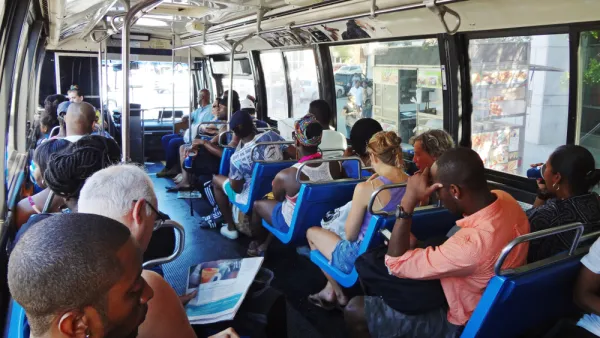
Racism Has Shaped Public Transit, and It’s Riddled with Inequities
Former Houston METRO Board Member Christof Spieler highlights the racism embedded even in the way transit agencies were created.
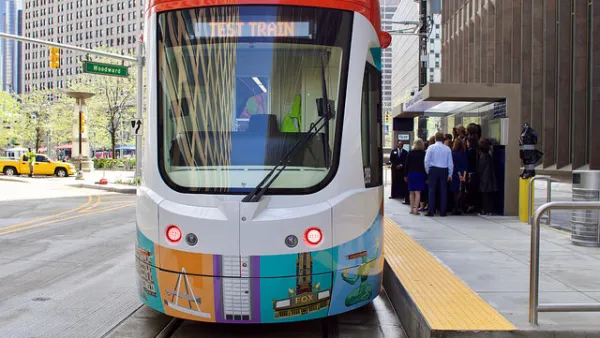
Op-Ed: Detroit's QLINE Is 'At Times an Embarrassment'
Randy Essex details why it is that "rely" isn't a word that comes to mind for many Detroiters when they think about downtown's QLINE streetcar system.
Ridership Drops As Detroit's QLine Streetcar Starts Charging
Since Detroit's new streetcar system started charging, ridership has dropped. Those who are riding aren't necessarily paying anyways.

Planetizen Federal Action Tracker
A weekly monitor of how Trump’s orders and actions are impacting planners and planning in America.

Data reveals that NYC’s bet on congestion pricing has paid off
After almost two years of the program, reports show positive impacts on traffic and air quality and no disruptions to parking.
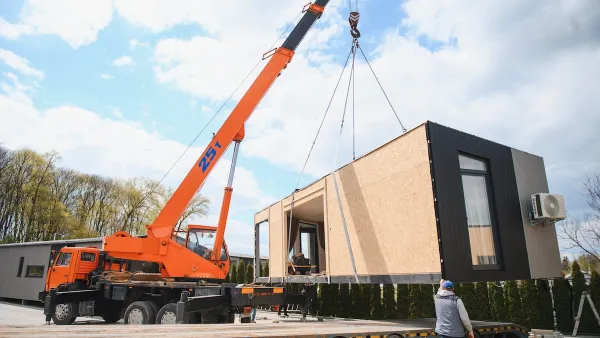
HUD modernizes 50-year-old manufactured housing framework
The Next Generation Manufactured Housing Action Plan establishes new energy-efficiency standards for manufactured homes, and new guidelines for anchoring them.

California voters weigh $11.25 billion housing bond
Prop. 1, combined with other funding, would support over 40,000 new rental units in California.

Connecticut is turning landfills into green infrastructure
Twenty-nine solar arrays have been built, or approved to be built, on top of Connecticut landfills.

Trump guts ‘win-win’ solar energy program for rural farmers
The U.S. Department of Agriculture’s changes have made virtually all solar power ineligible for funding through the Rural Energy for America Program.

FREE Course: Walkable City 1: Why Walkability?
After describing his path towards focusing on walkability as the essence of good planning, Jeff Speck marches through his five principal reasons for making more walkable places.
Reinventing Malls: Planning Alchemy—Turning Gray Fields Into Gold
The course focuses on the opportunities and imperatives that shape reinvention of mall sites.

One Hundred Miles
County of Mendocino
planning NEXT
The Architects Foundation
University of Cincinnati Online
Montrose County
Northern Illinois Transit Authority (NITA)
The Pocatello Development Authority