Community Identity
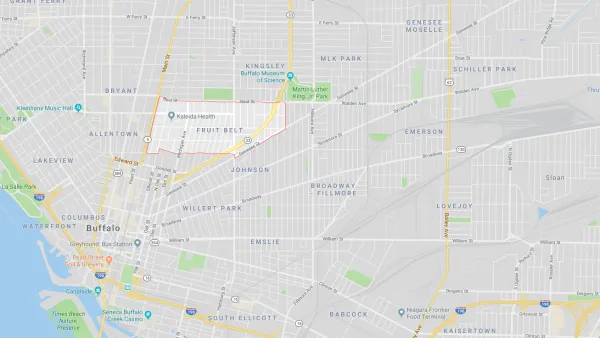
Google Maps' Digital Erasure Highlights Issues of Community Identity in Buffalo, NY
In the face of displacement and gentrification, residents of the Fruit Belt neighborhood of Buffalo, NY point to tech-giant Google's map service as one among many possible causes.
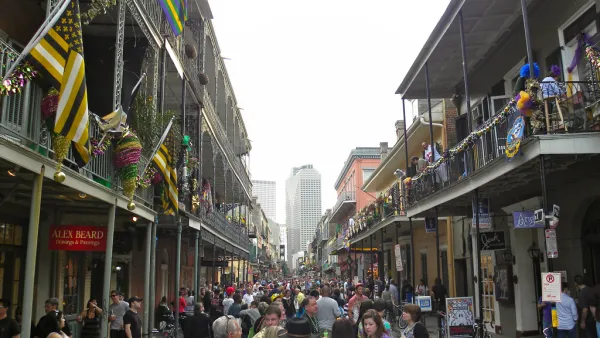
New Orleans Public Markets Make a Comeback
Plagued by supermarket chains and natural disasters, the public markets of New Orleans could help revive community identity. Here are some of the ways they're getting back in business.
What's in a Name?
"Detroit is the Paris of the Widwest", "Oakland is the Newark of the West Coast", "Chattanooga is the Cleveland of the Southeast" - a new website uses a navigable map of the world to catalog the many "X is the Y of Z" analogies found on Twitter.
Historically Inclined Richmond Brands Itself Anew
For a city known for its storied history, but whose burgeoning creative culture has gone less noticed, a recent branding campaign was charged with the challenge of merging both identities.
For Community Attachment, It's Love and Then Money
A new study shows that three qualities - social offerings, openness, and beauty - strengthen residents' level of community attachment more than other urban variables, and that passion for place may be a leading indicator of local economic growth.
Portland: A Rose By Any Other Name
Every real estate developer and urban planner knows that Portland, Oregon rocks. It is probably our best civic example in the United States of defining a comprehensive growth strategy for its citizens and staying true to the vision. The result is an authentic, creative, smart, home grown, artsy, sustainable, eco-friendly, colorful, self sufficient, vibrant, athletic, outdoorsy, walking, biking, multi-generational and experimental lifestyle downtown community where buildings, transit, waterfront festivals, park blocks, fountains, theaters, bookstores, galleries, music, crafts, food, wine, beer, coffee and people all blend together perfectly. It really works here. But one thing was never done properly and needs to be changed to capture this spirit – the name of the city.
Mr. City Rankings Answers Your Questions
Bert Sperling, who has earned recognition for his lists of "Best Places," responds to questions posed by the readers of the Freakonomics blog.

FREE Course: Walkable City 1: Why Walkability?
After describing his path towards focusing on walkability as the essence of good planning, Jeff Speck marches through his five principal reasons for making more walkable places.
Reinventing Malls: Planning Alchemy—Turning Gray Fields Into Gold
The course focuses on the opportunities and imperatives that shape reinvention of mall sites.

City of Charlotte
City of Rosemead
Rutgers University, Edward J. Bloustein School of Planning and Public Policy
University of Michigan School for Environment and Sustainability (SEAS)
Hunter College, City University of New York (CUNY)
The Architects Foundation
University District Partnership









