Bus Stop Balancing
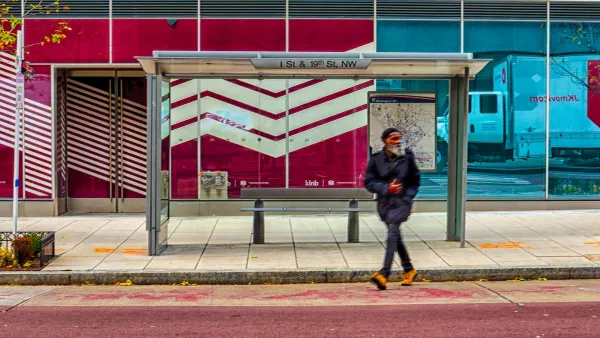
Commentary: Fewer Bus Stops Can Mean Better Service
Effective bus stop balancing can make buses faster while preserving accessibility.
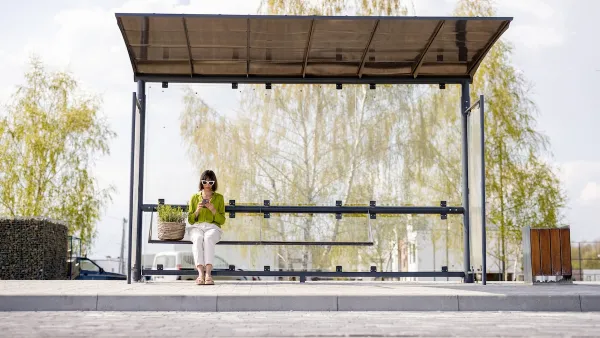
Wow, These Bus Stops are Close Together! The Case for Bus Stop Balancing.
Appropriate bus stop spacing keeps the bus moving and ensures people get where they need to be in a reliable amount of time.
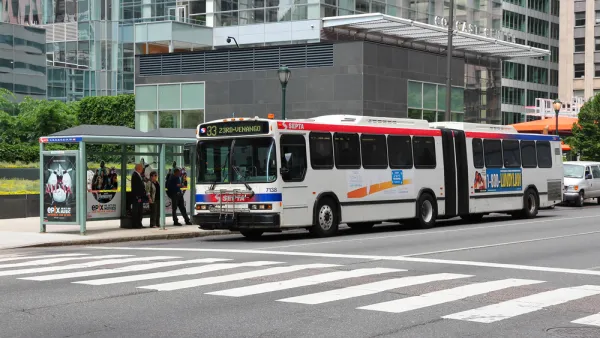
Calculating Bus Stop Spacing for 43 U.S. Cities
New research documents the distance between bus stops in U.S. cities—a key question for service designers that determines a lot about the public transit user experience.
Bus Stop Balancing, Explained
Pierce Transit, which serves Pierce County in Washington State, is undertaking a bus stop balancing project intended to speed up bus service. They're also doing the work of explaining why a reduction of bus stops is desirable, or even necessary.
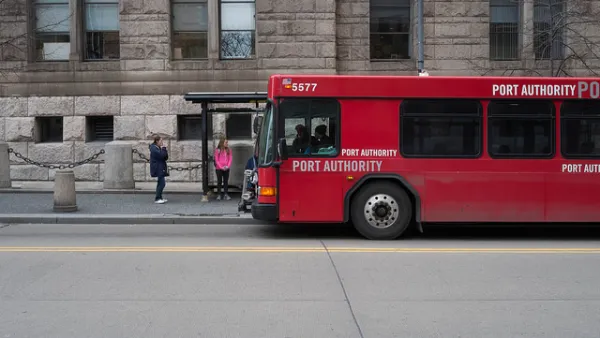
Bus Stop Consolidation Improving On-Time Performance in Pittsburgh
Pittsburgh-area buses operating on routes with a recently reduced number of stops are more likely to arrive on time than before the changes.
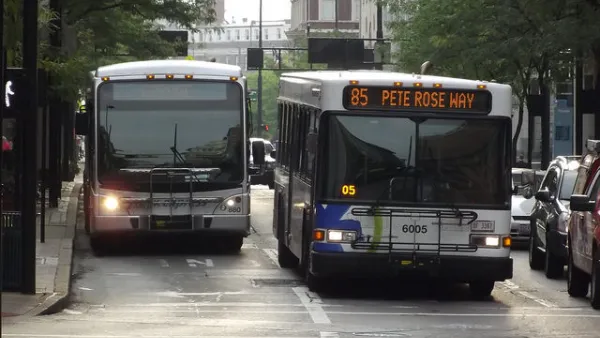
400 Stops Removed From the Cincinnati Metro Bus System
The process of reducing the number of stops on a transit line—known as bus stop thinning, consolidation, or balancing—took effect this week in Cincinnati. Reducing the number of stops is intended to speed up buses and improve reliability.
Culling Transit Stops to Improve System Performance
Bus stop balancing can help lines run much more smoothly. A new publication guides agencies through the process.

FREE Course: Walkable City 1: Why Walkability?
After describing his path towards focusing on walkability as the essence of good planning, Jeff Speck marches through his five principal reasons for making more walkable places.
Reinventing Malls: Planning Alchemy—Turning Gray Fields Into Gold
The course focuses on the opportunities and imperatives that shape reinvention of mall sites.

City of Rosemead
Rutgers University, Edward J. Bloustein School of Planning and Public Policy
One Hundred Miles
University of Michigan School for Environment and Sustainability (SEAS)
Hunter College, City University of New York (CUNY)
The Architects Foundation
City of Cambridge
Montrose County
The Pocatello Development Authority









