Traditional Development Patterns
Surveying the Results of 150 Years of Persistent Growth in Atlanta
The American Institute of Architects will visit Atlanta this year, a month after the 150th anniversary of the end of the Civil War. What should we know about the city as it exists today?
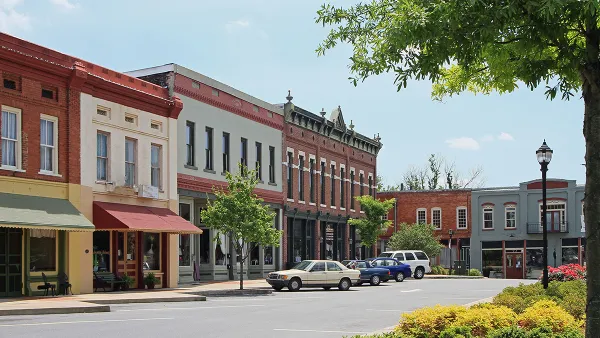
The Many Benefits of Traditional Development
Charles Marohn assesses some of the economic benefits of traditional commercial development as compared to those of auto-oriented commercial development.
How Can Planners Control the Outcome of Their Efforts?
Charles Marohn examines the role that chance plays in the successes and failures of our planning efforts and comes to the conclusion that traditional development patterns are a tried and true antidote to our lack of control.

FREE Course: Walkable City 1: Why Walkability?
After describing his path towards focusing on walkability as the essence of good planning, Jeff Speck marches through his five principal reasons for making more walkable places.
Reinventing Malls: Planning Alchemy—Turning Gray Fields Into Gold
The course focuses on the opportunities and imperatives that shape reinvention of mall sites.

City of Rosemead
Rutgers University, Edward J. Bloustein School of Planning and Public Policy
One Hundred Miles
University of Michigan School for Environment and Sustainability (SEAS)
Hunter College, City University of New York (CUNY)
The Architects Foundation
City of Cambridge
Montrose County
The Pocatello Development Authority









