Suburb
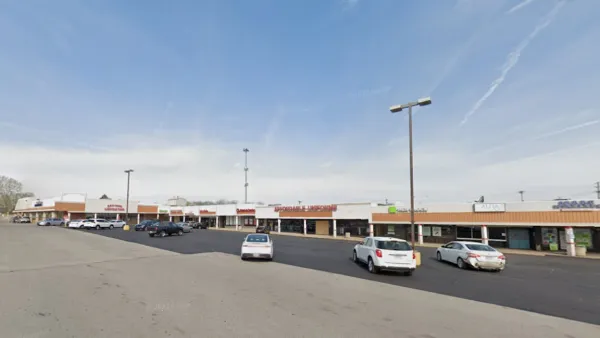
Ohio Suburb Reenvisions Car-Oriented Shopping Center
Garfield Heights wants to transform a 1960s complex nestled in a sea of surface parking into a walkable, mixed-use development.
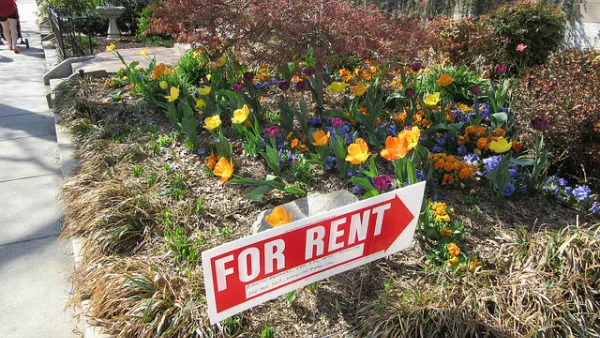
The 2010s: The Decade of the Suburban Rental
Census data reveal a growing number of suburbs are home to a majority of renters. The data challenges the "very definition of suburban living," according to this article.
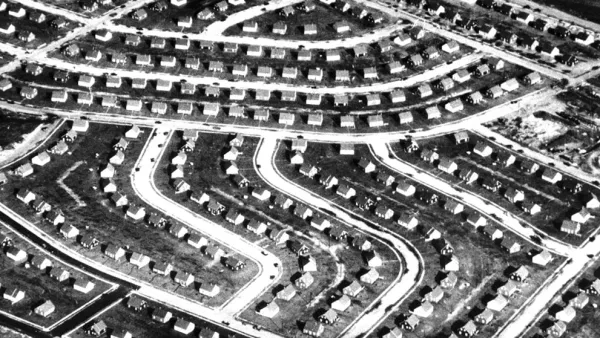
What Is a Suburb?
Another term lacking a consensus definition in the field of planning, "suburb" is usually deployed to describe residential communities outside central urban areas.
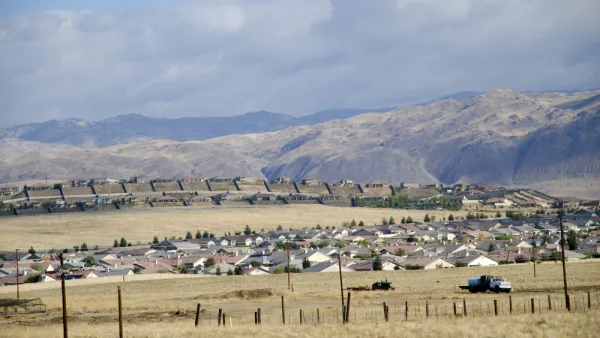
What Are Exurbs?
Farther out than suburbs but still connected to a major urban center, exurbs lie at the ever-shifting border between urban and rural spaces and are defined by economic ties to a city, low density housing, and high population growth.
Yes, Zoning Still Encourages Sprawl
A few weeks ago, Randall O’Toole (a leading anti-anti-sprawl commentator) and Matthew Yglesias (a Washington-based pundit who primarily writes about politics, but occasionally veers off into planning issues) had an interesting discussion about the extent to which sprawl is a result of land use regulation.(1)
From Edge-City to Real City
Its way of life no longer en vogue, the auto-centric suburb of Tysons Corner, VA plans to undergo a large-scale transformation into a walkable, "real" city over the course of the next 30 years.
Learning from my suburb
For nearly all of my adult life, I have lived in small towns or urban neighborhoods. But for the past two years, I have lived in sprawl. When I moved to Jacksonville two years ago, I moved to Mandarin, a basically suburban neighborhood about nine miles from downtown. As I looked for apartments in 2006, I noticed that in many ways, Mandarin is typical sprawl: our major commercial street (San Jose Boulevard) is as many as eight lanes in some places, and even most apartments are separated from San Jose’s commerce. [See http://atlantaphotos.fotopic.net/c872477.html for my photos of Mandarin and other Jacksonville neighborhoods.] I thought Mandarin would be a typical suburb: homogenously white and upper-middle class.

FREE Course: Walkable City 1: Why Walkability?
After describing his path towards focusing on walkability as the essence of good planning, Jeff Speck marches through his five principal reasons for making more walkable places.
Reinventing Malls: Planning Alchemy—Turning Gray Fields Into Gold
The course focuses on the opportunities and imperatives that shape reinvention of mall sites.

City of Rosemead
Rutgers University, Edward J. Bloustein School of Planning and Public Policy
One Hundred Miles
Hunter College, City University of New York (CUNY)
The Architects Foundation
University of Cincinnati Online
City of Cambridge
Montrose County
The Pocatello Development Authority









