Blight Reduction
Nothing to See Here: Detroit's Blockbuster Blight Bid Falls Through
Anna Clark has the scoop about the latest wrinkle in the blockbuster Detroit blight auction: the surprise, mysterious bid for 6,000 parcels if off the table.
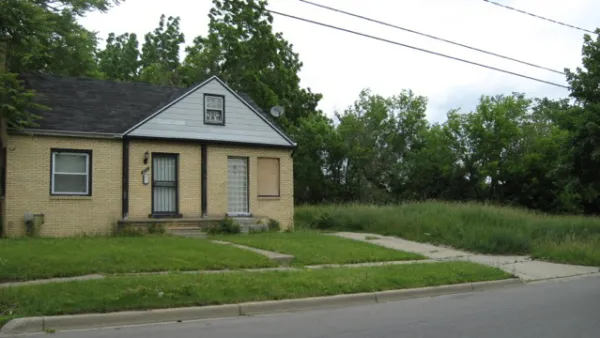
$3.2 Million Bid for 6,000 Foreclosed Properties in Detroit Auction
Karin Weise reports that an anonymous bidder will pay $3.2 million to purchase 6,000 foreclose homes in Detroit.
Massive Detroit Foreclosures Push Out Black Homeowners
A Detroit reborn sounds great, but what if the residents of “blighted” areas don’t want to leave? Many feel they have no choice in a process that has been compared to racial relocation. Meanwhile, activists scramble to give residents options.
Planning 'Beyond Blight' in Flint, Michigan
Luke Telendar updates the planning efforts of Flint, Michigan, which earlier this year released its first new master plan since 1960, "Imagine Flint," and has more recently released a blight
Reducing the Number of Abandoned Properties in Louisville
Louisville, like many other cities around the country, has been working hard to reduce the number of abandoned buildings. Recent efforts have provided the city with a new road map for blight reduction.
A Closer Look at Detroit's Blighted Properties
The New York Times has produced a pair of visualization tools to present the findings of the recent report by Detroit's Blight Removal Task Force.
Report Recommends $850 Million to Eradicate Detroit's Blight
The Detroit Blight Removal Task Force released its highly anticipated "Every neighborhood has a future...And it doesn't include blight" report today.
Preservation Concerns Raised Over Milwaukee’s Blight Reduction Plans
Although Milwaukee had been insulated from population loss compared to many other legacy cities, the Great Recession has required the city to launch an $11.6 million blight reduction program.
Detroit's Bankruptcy Plan Accelerates Blight Reduction
To drastically increase the rate of Detroit’s ongoing transformation, the city's bankruptcy plan, recently filed in U.S. Bankruptcy Court, would spend $520 million on its ongoing blight reduction efforts in the hopes of razing 400-500 homes a week.

FREE Course: Walkable City 1: Why Walkability?
After describing his path towards focusing on walkability as the essence of good planning, Jeff Speck marches through his five principal reasons for making more walkable places.
Reinventing Malls: Planning Alchemy—Turning Gray Fields Into Gold
The course focuses on the opportunities and imperatives that shape reinvention of mall sites.

City of Rosemead
Rutgers University, Edward J. Bloustein School of Planning and Public Policy
One Hundred Miles
University of Michigan School for Environment and Sustainability (SEAS)
Hunter College, City University of New York (CUNY)
The Architects Foundation
City of Cambridge
Montrose County
The Pocatello Development Authority









