Anna Clark has the scoop about the latest wrinkle in the blockbuster Detroit blight auction: the surprise, mysterious bid for 6,000 parcels if off the table.


Anna Clark writes: "You heard of the casino developer who scooped up 6,365 foreclosed Detroit properties in a single mysterious bid? Well, forget him: Herb Strather withdrew his eyebrow-raising bid this morning."
"Strather withdrew his $3.1 million bid for an enormous swath of Detroit buildings and lots today, scarcely a week after placing it and after inspiring dozens of headlines around the country." (Planetizen was one of the many outlets who picked up the news of the bid.)
Clark provides in depth analysis of how the bid almost wrecked Detroit's intentions for the auction: "Strather backing out is good news for Detroit. And rather than being a bizarro anecdote in the story of the city’s revitalization, the debacle reveals something important for cities with an over-abundance of neglected properties: Blight bundles work."
The article includes a lot more examples of how blight bundles and land banks work—especially when there are no untenable surprises like Detroit just experienced.
Read the full story: Detroit Magnate Decides He Doesn’t Want 6,000 Blighted Properties After All
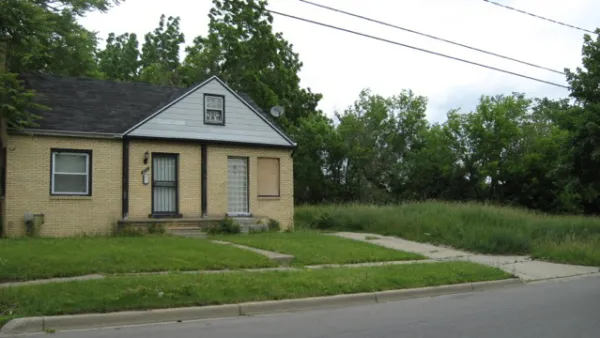
$3.2 Million Bid for 6,000 Foreclosed Properties in Detroit Auction
Karin Weise reports that an anonymous bidder will pay $3.2 million to purchase 6,000 foreclose homes in Detroit.

Pennsylvania Law Removes Obstacles to Blight Reduction
“We don’t need every old coal miner’s house” to stay standing, says Sen. David Argall (R-Schuylkill).
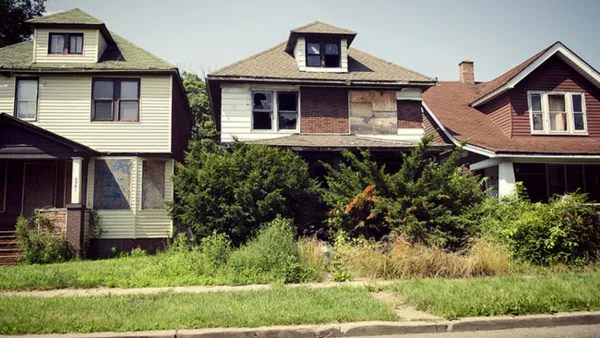
Detroit Residents Find it Hard to Access Land Bank Properties
Longtime residents say the city is not fulfilling its goal of keeping vacant parcels in the hands of locals as property values rise steeply.

Planetizen Federal Action Tracker
A weekly monitor of how Trump’s orders and actions are impacting planners and planning in America.

California plans to bury El Niño’s downpour
If the state plays its cards right, it may be able to store a billion acre-feet of El Niño’s water in aquifers.

Desperate measures: Advocates weigh draining Lake Powell to fill Colorado River
Draining the reservoir could reduce evaporation losses by a couple hundred thousand acre-feet.

Housing is the top priority of Seattle’s sole new councilmember
Jenks campaigned on building 1,000 new units of affordable housing.

New tax cuts may slash $1.5 billion in funding for Miami transit, public parks
Amendment 3 will save Miami-Dade homeowners $2,700 in 2028.

Arizona, Wisconsin, Pennsylvania hope to finally advance climate goals post-midterms
The three states have spent years under Republican or divided control.

FREE Course: Walkable City 1: Why Walkability?
After describing his path towards focusing on walkability as the essence of good planning, Jeff Speck marches through his five principal reasons for making more walkable places.
Reinventing Malls: Planning Alchemy—Turning Gray Fields Into Gold
The course focuses on the opportunities and imperatives that shape reinvention of mall sites.

City of Rosemead
Rutgers University, Edward J. Bloustein School of Planning and Public Policy
One Hundred Miles
University of Michigan School for Environment and Sustainability (SEAS)
Hunter College, City University of New York (CUNY)
The Architects Foundation
City of Cambridge
Montrose County
The Pocatello Development Authority