A writer collects evidence from pop culture, literature, and more in painting a portrait of the American relationship to front lawns—crabgrass and all.


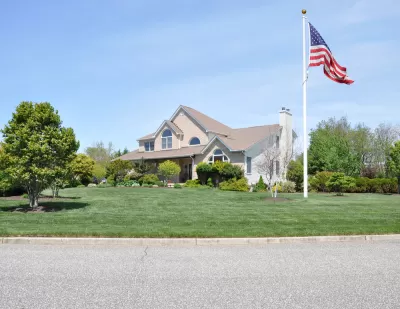
Christopher Borelli writes a long feature devoted to debunking the mythos of the American front lawn.
"The American front lawn, the postage stamp of grass spread before a set-back house, the stage upon which you display status, the frame inside which you project taste, that one-time signifier of leisure that came to suck up leisure time, is increasingly seen as a waste," writes Borelli.
In response to that premise, Borelli presents the following "modest proposal":
Since we’re already questioning the foundations of our nation, toppling monuments to institutions that no longer work for many, how about rethinking another cultural icon?
The front lawn.
As evidence in the argument against front lawns, Borelli cites the huge amount of time that goes into lawns, the falling popularity of front lawns, the obsolete cultural meaning of lawns (by way of an example from The Great Gatsby, by F. Scott Fitzgerald), and the wastefulness of lawns.
Read the full story: How about rethinking a cultural icon? The front lawn.
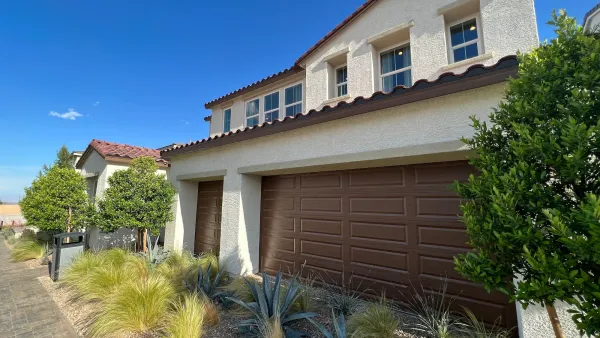
Nevada Law Requiring Removal of ‘Useless’ Grass Has Killed 100,000 Las Vegas Trees, Lawsuit Claims
The lawsuit alleges that the removal of ornamental grass has damaged the city’s tree canopy.
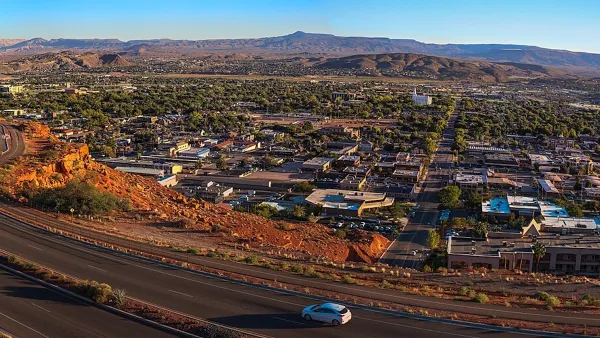
Southwest Utah Lawn ‘Buyback’ Program Pays Off
Washington County has dramatically reduced per-capita water use, but the region’s explosive growth means increased demand for water.

California Agency Awards $38 Million for Turf Replacement
The grant funds grass replacement rebates for commercial and residential properties and water-saving devices for fire stations.

Planetizen Federal Action Tracker
A weekly monitor of how Trump’s orders and actions are impacting planners and planning in America.

California plans to bury El Niño’s downpour
If the state plays its cards right, it may be able to store a billion acre-feet of El Niño’s water in aquifers.

Desperate measures: Advocates weigh draining Lake Powell to fill Colorado River
Draining the reservoir could reduce evaporation losses by a couple hundred thousand acre-feet.

Housing is the top priority of Seattle’s sole new councilmember
Jenks campaigned on building 1,000 new units of affordable housing.

New tax cuts may slash $1.5 billion in funding for Miami transit, public parks
Amendment 3 will save Miami-Dade homeowners $2,700 in 2028.

Arizona, Wisconsin, Pennsylvania hope to finally advance climate goals post-midterms
The three states have spent years under Republican or divided control.

FREE Course: Walkable City 1: Why Walkability?
After describing his path towards focusing on walkability as the essence of good planning, Jeff Speck marches through his five principal reasons for making more walkable places.
Reinventing Malls: Planning Alchemy—Turning Gray Fields Into Gold
The course focuses on the opportunities and imperatives that shape reinvention of mall sites.

City of Rosemead
Rutgers University, Edward J. Bloustein School of Planning and Public Policy
One Hundred Miles
University of Michigan School for Environment and Sustainability (SEAS)
Hunter College, City University of New York (CUNY)
The Architects Foundation
City of Cambridge
Montrose County
The Pocatello Development Authority