Across the country, affordable housing projects depend on tax credits to encourage investment; the possibility of a lower tax rate has already affected their funding.


"Trump hasn’t yet acted on his plan to slash the business tax rate from 35 percent to 15 percent, but the campaign pledge alone is already reshaping how affordable housing developers fund their work," according to Josh Cohen in Next City. Much of the funding for affordable housing comes from Low-Income Housing Tax Credit (LIHTC), which incentivizes businesses to invest in affordable housing in order to get a lower corporate tax rate. These investments fund projects around the country. "For example, of the $23 million that Capitol Hill Housing spent on a recently built 88-unit rent-restricted apartment building, $5.6 million came from LIHTCs," Cohen writes.
If corporate taxes are slashed by more than half, there will be less incentive to invest in these projects. "With a significantly lower tax burden dangling on the horizon thanks to Trump, would-be investors have less incentive to pay top dollar for LIHTCs; developers have already dropped their “asking price” by 10 cents or more per tax credit to compensate," Cohen writes. According to National Low Income Housing Coalition President Diane Yentel, the effects of these proposed tax cuts can already be felt. "Either causing investors to hold off on investments altogether, or to provide less equity per dollar of the credit. In either case, it means less money available for the development of affordable housing," she tells Cohen.
FULL STORY: Trump Tax Promise Is Already Affecting Affordable Housing


Proposed Changes to LIHTC Approved by US House
If passed by the Senate, it would represent the most significant reform to the LIHTC in decades. Some say it’s still not enough.
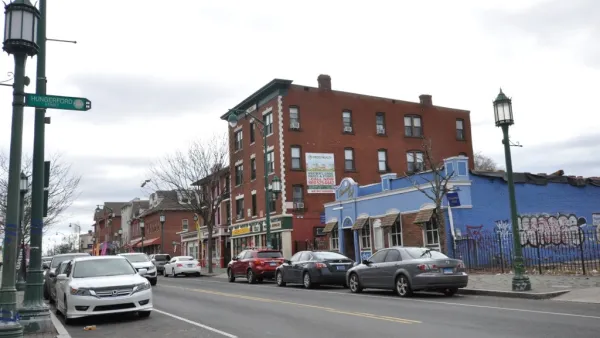
Low-Income Housing Tax Credits: 'Erecting Pockets of Poverty'
The state of Connecticut deploys almost all of its federal housing funding in impoverished communities, according to this bombshell investigatory report.

Low-Income Housing Tax Credits Lose Luster in the Post-GOP Tax Reform World
Fewer people investing in low-income housing tax credits means fewer affordable housing units being built—at a time when affordable units are in extremely short supply.

Planetizen Federal Action Tracker
A weekly monitor of how Trump’s orders and actions are impacting planners and planning in America.

The state-sanctioned urbicide of Austin
People don’t kill cities. Freeways do.

US to reduce Colorado River water deliveries to Mexico
A new Colorado Treaty amendment reduces Mexico’s Colorado River water allocation by 250,000 acre feet.

Mamdani overhauls NYC's Vision Zero plan with 100 new policy goals
The overhaul aims to reduce traffic deaths and make streets safer for pedestrians, cyclists and drivers through lower speed limits, new safety infrastructure and more.

Amtrak not solely to blame for New Jersey commuter rail's unreliability, report finds
A new study from the Garden State Initiative found that NJ Transit’s budget grew 20% across a 4 year period, but reliability declined significantly over the same period.

EPA erases limits on planet-warming pollution from power plants
Under Monday’s plan, power plants would still have some limits on how much mercury, arsenic and other contaminants they can emit.

FREE Course: Walkable City 1: Why Walkability?
After describing his path towards focusing on walkability as the essence of good planning, Jeff Speck marches through his five principal reasons for making more walkable places.
Reinventing Malls: Planning Alchemy—Turning Gray Fields Into Gold
The course focuses on the opportunities and imperatives that shape reinvention of mall sites.

Eagle County Government
Harvard University Graduate School of Design
Nashville Planning Department
The Architects Foundation
University of Cincinnati Online
The Pocatello Development Authority
The Urban Renewal Agency of the City of Pocatello
Journal of the American Planning Association