Andres Duany takes to the CNU's Public Square to argue for the critical need for codes in a built environment awash in mediocrity.


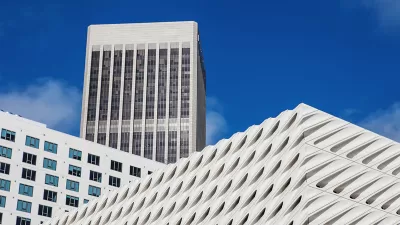
Within the last half-century, some 30 million buildings have degraded cities and reduced landscapes. Must we tolerate this comprehensive disaster in exchange for the, perhaps, three thousand great buildings that great architects have produced? Such a win-loss ratio is as unacceptable in architecture as it would be in any other field. We are compelled to intervene and have found that codes are the most effective instruments of reform.
So begins a recent opinion by Andres Duany, one of the founders of the Congress for New Urbanism and, as the article makes clear, a persistent provocateur of urbanism's status quo.
Duany's polemic acknowledges one of the arguments against what he calls urban design codes (he never calls them design guidelines, nor does he call them form-based codes): that they quell creativity and constrain the possibility of an architectural masterpiece. But consistently and at some length, Duany presents his case as a series of imperatives. It's a loud and clear policy manifesto from a figure famous for them.
Read the full story: Why we code


Meet CNU's New Executive Director
The Congress for the New Urbanism has announced the hiring of Rick Cole as the its new executive director, filling a role left vacant by the departure of Lynn Richards earlier this year.

Zoning Reform Skepticism
Ending single-family zoning, as more cities around the United States have begun to do, is too extreme a response to contemporary planning challenges, according to a recent opinion piece published by the East Bay Times.

Reconsidering the 'Special Area Plans' of Miami 21
Insider knowledge on one of the most controversial components of a groundbreaking plan.

Planetizen Federal Action Tracker
A weekly monitor of how Trump’s orders and actions are impacting planners and planning in America.

Northwest rail fans eager for Sept. 30 debut of Amtrak’s Airo fleet
Get ready for that new train smell and more seats. But they won’t go faster or run more frequently on the Cascades route in Washington and Oregon.
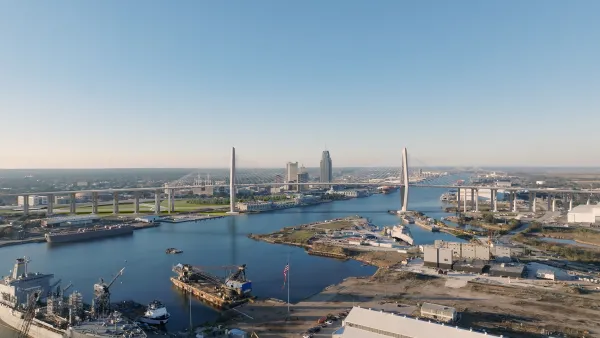
Alabama scores up to $2.5 billion federal loan for largest infrastructure project in state’s history
The Mobile River Bridge and Bayway Project aims to ease congestion at Alabama’s worst bottleneck.

Novel study finds extreme state-by-state disparity in housing construction timelines
The first comprehensive working paper on U.S. construction timelines also found that the permitting process for multi-family projects has slowed nationwide.

California may destroy its beaches trying to save homes from El Niño
Boulders and seawalls can protect homes from waves, but ultimately destroy sandy beaches.

California high-speed rail accomplishes only one legislative goal in 2026
The majority of the agency's failed pitches were never developed into written proposals.

FREE Course: Walkable City 1: Why Walkability?
After describing his path towards focusing on walkability as the essence of good planning, Jeff Speck marches through his five principal reasons for making more walkable places.
Reinventing Malls: Planning Alchemy—Turning Gray Fields Into Gold
The course focuses on the opportunities and imperatives that shape reinvention of mall sites.

City of Thousand Oaks
City of Wisconsin Rapids
Harvard University Graduate School of Design
The Architects Foundation
University of Cincinnati Online
Northern Illinois Transit Authority (NITA)
The Pocatello Development Authority
The Urban Renewal Agency of the City of Pocatello