The ease with which we make friends as adults matters. Not just on a personal level but to the communities that ensure our survival. Scott Doyon takes a crack at explaining.


"David Roberts over at Vox posted a new piece recently — 'How our housing choices make adult friendships more difficult' — that really got me thinking. Any time I read a persuasive piece that positions traditional, compact, walkable forms of human settlement as inherently better than the more isolated, single use patterns we’ve come to characterize as sprawl, I immediately start imagining the counter arguments of those who’ve found perfectly happy and fulfilling circumstances in a subdivision somewhere."
"I don’t know what you’re talking about, they’d likely say. I live on a cul-de-sac that’s exactly the kind of car-reliant place you’re talking about. And yet I’ve made a slew of new friends, our children play together, and we gather in all the ways neighbors do — watching the game, evening drinks, helping each other out."
Doyon talks about why friends we make as an adult not only shape our lives, but also shape our communities. And our democracy.
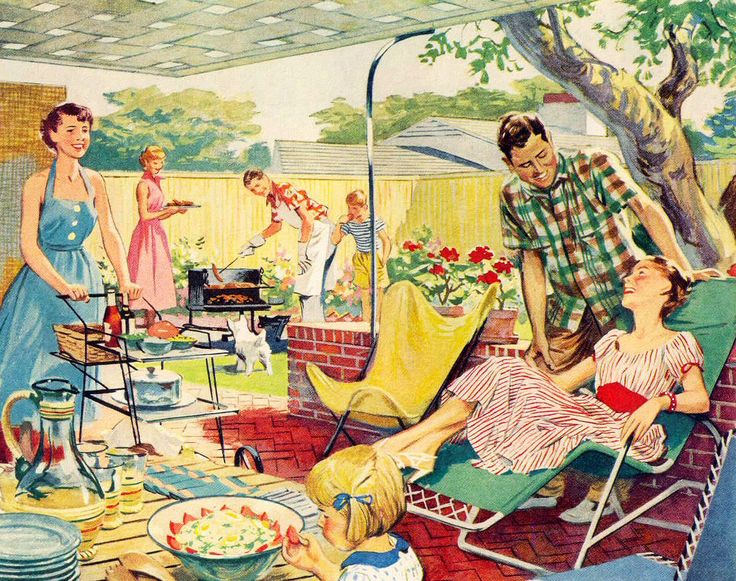
No one is saying these people don’t like each other. Source: Roger Wilkerson, the Suburban Legend.
Read the full story: Hey, Buddy: Adult friendships and the future of our communities

The Sidewalk to Hell is Paved with Good Intentions
When the vision's all right but the outcomes are all wrong, zoning's often the problem. And the public realm is left holding the bag.
Place Attachment as a Tool for Shaping Change
We fight for what we love. When we’re connected in affection, we’re both more inclined and more empowered to organize.
Here Today, Gone Tomorrow, Here the Day After That
Have NIMBYs and YIMBYs arguing in your neighborhood? Scott Doyon talks residential development.

Planetizen Federal Action Tracker
A weekly monitor of how Trump’s orders and actions are impacting planners and planning in America.

The state-sanctioned urbicide of Austin
People don’t kill cities. Freeways do.
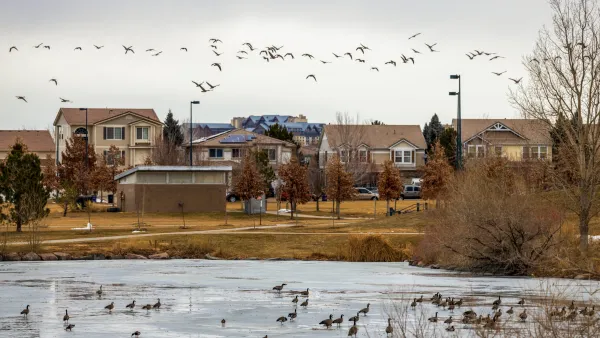
Colorado’s Largest Data Center Could Rise Next to Homes — Without a Public Hearing
The proposed campus would consume 11 times the power of Denver International Airport; as it has across the country, opposition mounts.

Nation's most wind-powered state turns to coal as data centers increase energy demand
For the first time in decades, Iowa has increased its generation of coal power.
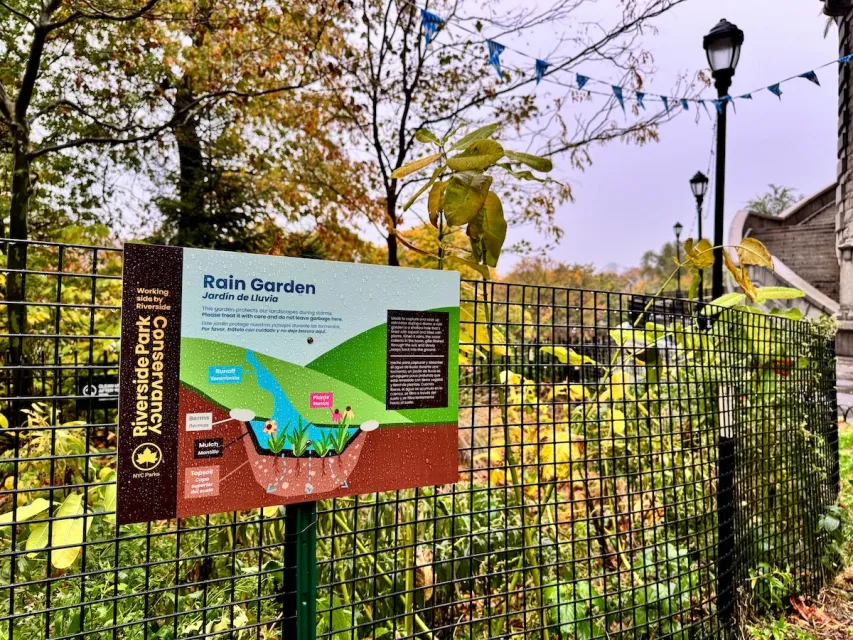
NYC cools commuters with city's first rain garden above a bus stop
New York City officials say the plants in the rain garden can absorb 16 gallons of rainwater during heavy storms.

Brightline West’s future may rely on $6 billion federal loan
The company has until Nov. 2 to make a $400 million equity investment into its proposed high-speed rail line.

FREE Course: Walkable City 1: Why Walkability?
After describing his path towards focusing on walkability as the essence of good planning, Jeff Speck marches through his five principal reasons for making more walkable places.
Reinventing Malls: Planning Alchemy—Turning Gray Fields Into Gold
The course focuses on the opportunities and imperatives that shape reinvention of mall sites.

Greater Baltimore Committee
Eagle County Government
Harvard University Graduate School of Design
The Architects Foundation
University of Cincinnati Online
The Pocatello Development Authority
The Urban Renewal Agency of the City of Pocatello
Journal of the American Planning Association