A new study of evictions in the city of Philadelphia reveals a problem that is more widespread than expected, while also affecting certain neighborhoods and racial groups more than others.


"Like pretty much every other city in America, Philadelphia suffers an eviction problem," writes Jake Blumgart.
According to new research from The Reinvestment Fund (TRF), "the scale of the city’s eviction crisis is greater than previously suspected," however.
Blumgart interview two of the new study's authors, Ira Goldstein and Al Parker, who have spent years measuring foreclosures as a result of the housing downtown of the Great Recession. "Goldstein and Parker anticipated roughly similar findings about eviction among renter households," explains Blumgart. "Instead they found Philadelphia’s eviction rate never fell below 7 percent in the six years of study—2010 to 2015—and which greatly outstripped the foreclosure rate, which hovers between 2.4 and 1.5 percent."
The study also found geographical and demographic disparities in the eviction rates around the city. For instance, "Philadelphia’s black neighborhoods are hit hardest by the eviction epidemic. In 2015 census tracts that were at least 80 percent had eviction rates of 10.2 percent, whereas those which were less than 10 percent black saw eviction rates of 3.3 percent," writes Blumgart.
Read the full story: New research reveals depth of Philadelphia’s eviction crisis

Mapping Eviction Risk
Millions of renters are at risk of eviction as federal support runs out and the economic realities of the pandemic take hold.
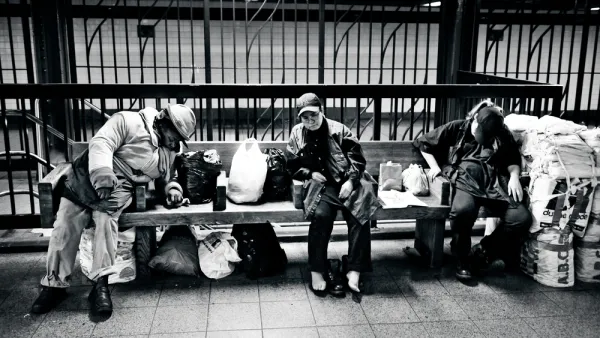
The Crisis Within the Crisis: Homelessness and Housing Pushed to the Brink by COVID-19
Cities, states, and the federal government are trying to prevent a repeat of 2008 while still facing the challenges of inequality and poverty that grew out of the previous recession.
Evictions Increase as Renters Struggle to Compete
Shaila Dewan details the increasing rates at which renters all over the country forced from their homes by eviction.

Planetizen Federal Action Tracker
A weekly monitor of how Trump’s orders and actions are impacting planners and planning in America.

Washington state to charge fee to drivers with fuel-efficient cars
Revenue from the fee will go towards supporting the state’s highways.
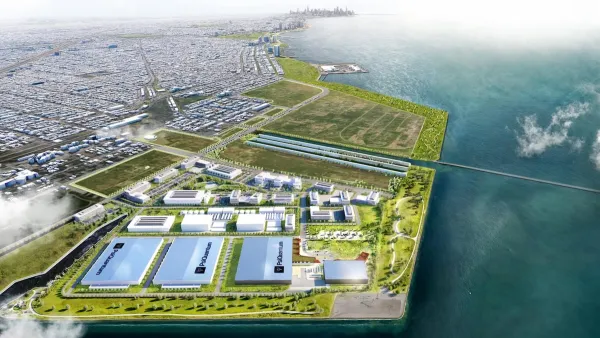
Illinois considers spending $1 billion in taxpayer money on data center
A quantum computing campus and data center are currently under construction in Chicago.

Did data centers change how voters cast their ballots?
Texas, Ohio, and Georgia all flipped party control. But in rural counties, the effect of local data centers was mixed.

Amtrak invests in eight new Airo trainsets
The new trainsets will begin serving passengers in 2031.

HUD to end aid for mixed-immigration-status households
The new rule is projected to impact 80,000 people, nearly half of whom are children.

FREE Course: Walkable City 1: Why Walkability?
After describing his path towards focusing on walkability as the essence of good planning, Jeff Speck marches through his five principal reasons for making more walkable places.
Reinventing Malls: Planning Alchemy—Turning Gray Fields Into Gold
The course focuses on the opportunities and imperatives that shape reinvention of mall sites.

City of Charlotte
City of Rosemead
Rutgers University, Edward J. Bloustein School of Planning and Public Policy
University of Michigan School for Environment and Sustainability (SEAS)
Hunter College, City University of New York (CUNY)
The Architects Foundation
University District Partnership