Struggling with zoning that thwarts the construction of new hamlets, villages, towns, and cities? Susan Henderson has a bit of place type inspiration from across the pond.


"Planners frequently use the place type framework to identify different issues, challenges, and assets throughout a municipality or a region. While there isn’t a standard used across the profession, it is generally accepted that the broadest range of places includes the hamlet, village, town and city. Historically, we intuitively understood how to build these places without regulation. Commerce and public spaces were located where the majority of residents could access them, and housing was both diverse and compact. This permitted the preservation of the landscape for agriculture and natural systems."
"However, the last decades have seen those clear types evolve into subdivisions, strip centers, malls and office parks. And unfortunately these new development types are virtually the same from region to region and country to country. This is the result of use-based zoning that separates rather than blends compatible uses."
Henderson uses three English examples for inspiration: the village of Castle Combe, the town of Tetbury, and the city of Bath. And points to our auto-centric zoning and subdivision regulations that keep delivering "placeless types" or "car types" or "suburb types," and how we can return to authentic places.
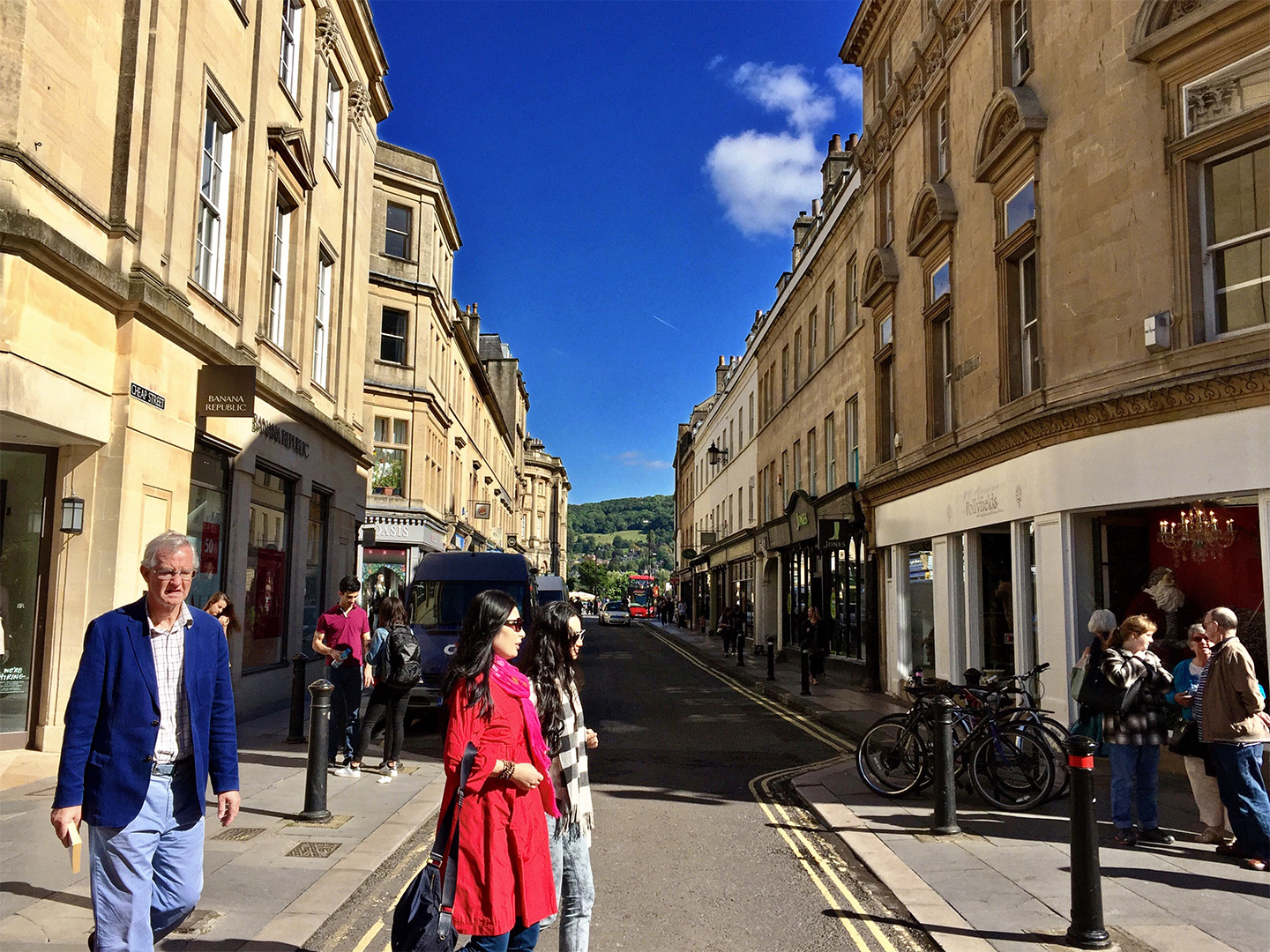
Bath, England; image credit: Susan Henderson
FULL STORY: Why Can’t My Zoning Create a Diversity of Places?

Code Hackathon: What Can Go Wrong With Form-Based Codes?
Top problems with form-based codes, and how to fix them.
A New Path to Code Reform
The Users’ Guide to Code Reform leads planners through the code reform process, providing tools for governments lacking the capacity to develop a full form-based code. Susan Henderson and Matt Lambert hit the high points.
Preserving the Rural Landscape with Agrarian Urbanism
We don't usually think zoning when considering farmland preservation, but Hazel Borys shares are a few thoughts that may help.

Planetizen Federal Action Tracker
A weekly monitor of how Trump’s orders and actions are impacting planners and planning in America.

The state-sanctioned urbicide of Austin
People don’t kill cities. Freeways do.

US to reduce Colorado River water deliveries to Mexico
A new Colorado Treaty amendment reduces Mexico’s Colorado River water allocation by 250,000 acre feet.

5 New England states march closer to 800 megawatt wind energy project
Securing federal approval for the project may be complicated under the Trump administration, which has historically been hostile towards domestic wind power.

Baltimore to break ground on $50 million Transit Priority Project
The project will bring faster bus trips, safer streets and better bike connections to Baltimore.

Airbnb launches $250 million 'last-dollar financing' housing accelerator, makes first investment in Austin
The company will put $6.4 million towards affordable housing development in Texas’ capital.

FREE Course: Walkable City 1: Why Walkability?
After describing his path towards focusing on walkability as the essence of good planning, Jeff Speck marches through his five principal reasons for making more walkable places.
Reinventing Malls: Planning Alchemy—Turning Gray Fields Into Gold
The course focuses on the opportunities and imperatives that shape reinvention of mall sites.

Eagle County Government
Harvard University Graduate School of Design
Nashville Planning Department
The Architects Foundation
University of Cincinnati Online
The Pocatello Development Authority
The Urban Renewal Agency of the City of Pocatello
Journal of the American Planning Association