A proposal by AECOM would transform the Red Hook waterfront with 25-45 million square feet of residential.


"One of the city's largest construction and engineering firms is floating a plan to transform a huge swath of the Red Hook waterfront into a residential neighborhood with a new subway connection, acres of parkland and waterfront-flood protections that would revitalize and protect the low-lying neighborhood from storms and future sea-level rise," according to an article by Daniel Geiger.
The firm behind the proposal is AECOM, and the plan will be revealed today at the NYU Rudin Center for Transportation. So far AECOM estimates the price tag for the subway expansion (which comes with three new stops) would be $3 billion. The proposal also envisions as many as 45,000 units of housing.
If the project comes to fruition, a new residential neighborhood almost double the size of Battery Park City and several times as large as Hudson Yards on Manhattan's far West Side—the biggest development project currently underway in the city—would be created.
Geiger also provides additional details about the plan would be financed and points out the admitted lack of detail for some portions of the proposal.
Read the full story: Construction and engineering firm proposes creating a new Brooklyn neighborhood the size of Battery Park City

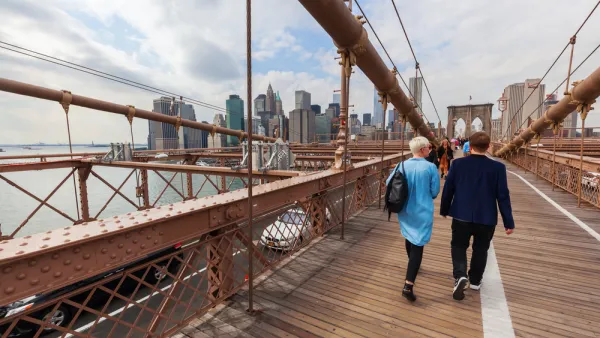
Modal Friction on the Brooklyn Bridge
The popularity of crossing New York City's second oldest bridge by foot and pedal is causing friction between the two modes on the promenade above six lanes of motor vehicle traffic. A report released for NYCDOT proposes recommendations.
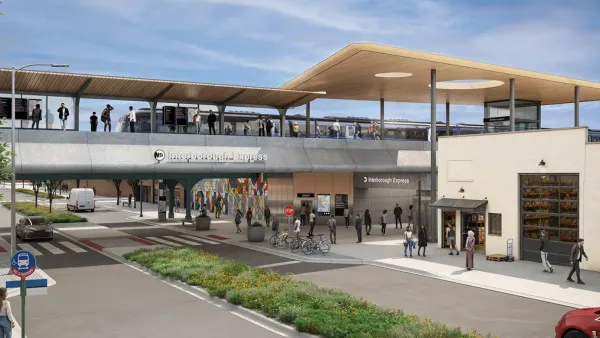
NYC releases new renderings for $5.5 billion Interborough Express
The slated stations will have a modern look, enhanced lighting and improved audio announcements.
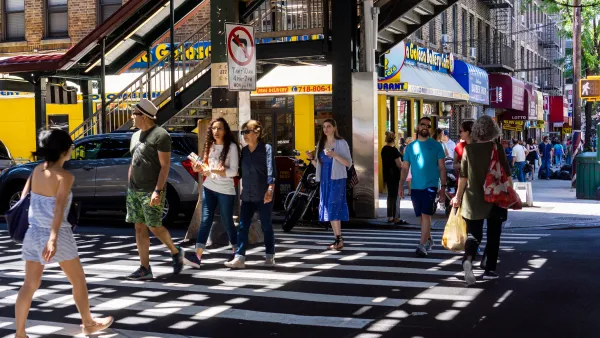
NYC needs 700,000 new homes to resolve housing crisis, report states
The report gave every neighborhood a non-binding development target.

Planetizen Federal Action Tracker
A weekly monitor of how Trump’s orders and actions are impacting planners and planning in America.

Amtrak, CN end decades-long dispute with eight-year agreement
The new operating agreement establishes an updated framework for the companies to work together, including processes to resolve disputes.

Judges permit Denver to divert 77,000 acre feet from the Colorado River for reservoir expansion
Overuse and climate change have caused the Colorado River’s water levels to plummet.

NYC DOT wants faster, more permanent street upgrades
The city is examining ways to build more concrete infrastructure without getting entangled in 'decades-long' projects.

'Something we’ve never seen before:' rising utility rates could strain city finances nationwide
Data centers, climate change and other factors have caused utility rates in the United States to increase by 38% since 2020.

Trump to overrule local leaders, lease millions of acres of America’s Pacific Island territories’ seafloors to mining companies
International law says that the Indigenous people of America’s territories have a right to prior and informed consent regarding projects that impact their countries.

FREE Course: Walkable City 1: Why Walkability?
After describing his path towards focusing on walkability as the essence of good planning, Jeff Speck marches through his five principal reasons for making more walkable places.
Reinventing Malls: Planning Alchemy—Turning Gray Fields Into Gold
The course focuses on the opportunities and imperatives that shape reinvention of mall sites.

Harvard University Graduate School of Design
KFH Group Inc.
Greater Baltimore Committee
The Architects Foundation
University of Cincinnati Online
The Pocatello Development Authority
The Urban Renewal Agency of the City of Pocatello