Do video games have anything to teach kids? Hazel Borys says yes, in moderation.


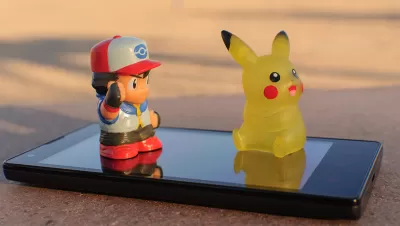
"'Mom, I need to walk 10k today,' coming from my 11-year old this morning almost gave me whiplash, as I turned to look at him to ensure an alien wasn’t inhabiting his body. In fact, there was one, if you view Pokémon as other-worldly. The playful new video game, Pokémon GO, is distracting kids and grown-ups alike with an augmented reality (AR) that requires walking with friends, visiting places of cultural and economic significance, and “capturing” Pokémon as they appear on the sidewalk by “hitting” them with virtual balls. By level five of the game, you’re able to join a team and visit local virtual “gyms” to practice or spar. The walking 10k comment was about hatching Pokémon eggs, each of which require walking either two, five, or ten kilometers."
"The reviews on this wildly popular one-month-old game are mixed, with some people complaining that kids are walking around like zombies, dogs are exhausted, grown-ups are invading private property and thronging parks in search of Pokémon, and one woman got hit by a car while being distracted by playing the game. All valid complaints, although in our household a few simple rules – like no looking at your phone while crossing the road and pausing to talk about the places of note that we find – do away with most of the issues. Except privacy, of course! Nonetheless, 100 million people have downloaded the game, are buying $10 million a day on the app, and are significantly increasing foot traffic in their home towns."
Borys goes on to talk about how PokéMon GO and Minecraft video games might be able to assist in city planning.
Read the full story: Summer Fun: Pokémon GO and Minecraft for young urbanists

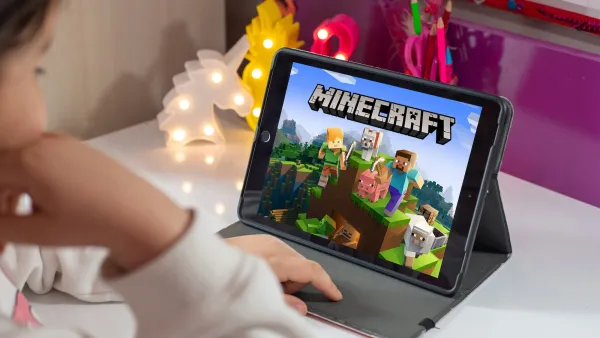
Children in 55 countries are redesigning their cities in Minecraft
A U.N.-backed program lets students and community members reimagine sites in their neighborhoods in the game — and translate them into real-life buildings.

Code Score: A New Aid for Aligning Policy and Vision With Outcomes
A compendium of benefits of walkable urban places, put together by Hazel Borys and Kaid Benfield.
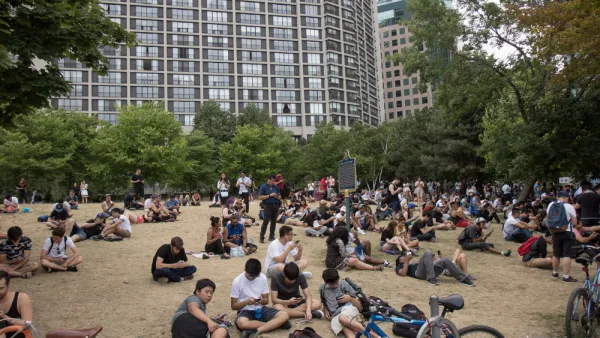
Pokémon Go to Expand its Reach in the Community
The makers of Pokémon Go, touted for its potential to activate sedentary Americans since its release last year, will take more initiative to participate in community-based events.

Planetizen Federal Action Tracker
A weekly monitor of how Trump’s orders and actions are impacting planners and planning in America.

The state-sanctioned urbicide of Austin
People don’t kill cities. Freeways do.

US to reduce Colorado River water deliveries to Mexico
A new Colorado Treaty amendment reduces Mexico’s Colorado River water allocation by 250,000 acre feet.

Nation's most wind-powered state turns to coal as data centers increase energy demand
For the first time in decades, Iowa has increased its generation of coal power.

NYC cools commuters with city's first rain garden above a bus stop
New York City officials say the plants in the rain garden can absorb 16 gallons of rainwater during heavy storms.

Brightline West’s future may rely on $6 billion federal loan
The company has until Nov. 2 to make a $400 million equity investment into its proposed high-speed rail line.

FREE Course: Walkable City 1: Why Walkability?
After describing his path towards focusing on walkability as the essence of good planning, Jeff Speck marches through his five principal reasons for making more walkable places.
Reinventing Malls: Planning Alchemy—Turning Gray Fields Into Gold
The course focuses on the opportunities and imperatives that shape reinvention of mall sites.

Greater Baltimore Committee
Eagle County Government
Harvard University Graduate School of Design
The Architects Foundation
University of Cincinnati Online
The Pocatello Development Authority
The Urban Renewal Agency of the City of Pocatello
Journal of the American Planning Association