An article in The Nation rejects the notion that the market will solve the country's current affordable housing crisis.



Mathew Gordon Lasner writes a history of public housing, while also making an impassioned plea for cities to build a coalition of support for new, "deep" subsidies for public housing in the future. Lasner weites of the housing affordability crisis that is striking cities and towns of all sizes and in all geographic areas of the country.
Tax credits, low-interest loans, land trusts, zoning, and other land-use regulations have all been deployed in the service of lowering the cost of housing for increasingly rent-burdened Americans. Yet amid these myriad offerings, the one remedy capable of providing the quantity and quality of affordable housing we need is not even on the menu: deep cash subsidies for construction and/or operation of buildings.
Lasner is essentially arguing for a return to a mode first implemented 140 years ago, with the first subsidized apartment complex in the country—Home Buildings in Cobble Hill, Brooklyn. The bulk of the article is devoted to tracing a details history of the rise and fall of subsidized housing.
That history all leads up to Lasner's present appeal: "what if people in cities suffering from housing inequality all over the country joined forces to begin pushing for this solution together?" Noting the understandable concern about the past failures of public housing, Lasner notes that "[p]Public housing could look and feel very different today than in the past, adding "[t]The key difference would be that we would have a lot more of this nonprofit-developed housing than now, and it would be a lot more affordable."
Read the full story: The Case for Public Housing


New Washington State Law Lets Cities Give Social Housing Developers City-owned Land
In its current form, HB 1687, which authorizes local governments to assist social housing agencies with land or other resources, only applies to Seattle.

New York Residents Support Affordable Housing, Survey Says
Contrary to the dominant narrative about the negative perceptions of affordable housing projects among the public, a recent survey reveals widespread support for affordable housing in the New York-New Jersey-Connecticut metropolitan region.
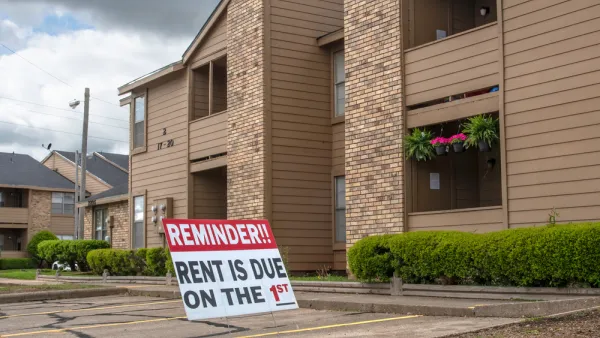
Federal Eviction Moratorium Expires This Week
The day that renters relying on public support to pay the bills have been dreading since March arrives tomorrow.

Planetizen Federal Action Tracker
A weekly monitor of how Trump’s orders and actions are impacting planners and planning in America.

Data reveals that NYC’s bet on congestion pricing has paid off
After almost two years of the program, reports show positive impacts on traffic and air quality and no disruptions to parking.

HUD modernizes 50-year-old manufactured housing framework
The Next Generation Manufactured Housing Action Plan establishes new energy-efficiency standards for manufactured homes, and new guidelines for anchoring them.

Small single-family homes are illegal in most of MA. Voters can change that
Most land zoned for single-family housing in Massachusetts requires at least 40,000 square feet of land per house.

Public steps inside U.S.’s first battery-powered train
Metra’s groundbreaking train feature modern seats and a futuristic battery car.

Companies show off AI technology, new innovation hubs at APTA Expo
Nearly 700 companies attended the American Public Transportation Association’s Expo last week, which happens once every three years.

FREE Course: Walkable City 1: Why Walkability?
After describing his path towards focusing on walkability as the essence of good planning, Jeff Speck marches through his five principal reasons for making more walkable places.
Reinventing Malls: Planning Alchemy—Turning Gray Fields Into Gold
The course focuses on the opportunities and imperatives that shape reinvention of mall sites.

One Hundred Miles
County of Mendocino
planning NEXT
The Architects Foundation
University of Cincinnati Online
Montrose County
Northern Illinois Transit Authority (NITA)
The Pocatello Development Authority