Eric Weiner's "The Geography of Genius" offers a delightful, if limited, analysis of cities throughout history where "genius" has arisen and offers inspiration for planners who want to make cities more than just places to live and do business.


"Taken seriously, 'Geography of Genius' is a troubling book, lauding a scant few individuals throughout history who, by a combination of talent, relative privilege, and good fortune qualify as 'geniuses.' Fortunately, we don’t have to take it that seriously. Its strength and weakness that it is not a rigorous scholarly review but rather a romp through human achievement – and the cities where it has taken place."
"Weiner explains the intuitive notion that most forms of genius require collaboration and, by extension, urban agglomeration. Tech entrepreneurs require programmers and funders. Philosophers require other philosophers. One of Weiner’s refrains is that genius emerges according to what a populace values. Weiner writes, “What is honored in a [place] will be cultivated there.” Viennese love their classical music the way San Franciscans love their convenience."
"The cluster of cities between San Jose and San Francisco 'is not a city,' Weiner writes; 'it is suburban sprawl, which all the California sunshine and digital pixie dust can't hide.' Its success seems to undermine all those nice notions of strolling and quaffing. Indeed, if drinking and walking are key to genius, most modern American cities are doomed."
Read the full story: Intellectual Tourism, Near and Far: Review of 'The Geography of Genius'
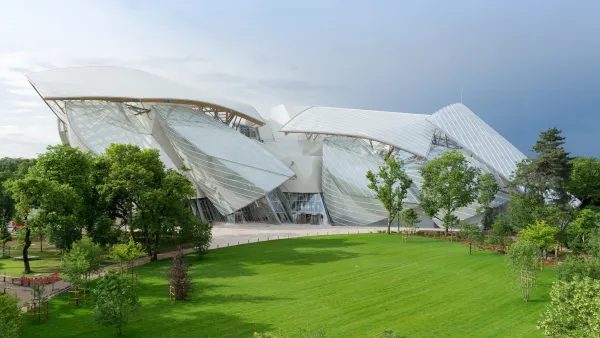
Foolish Utopianism in Today's Top Architecture
Reviewing Douglas Murphy's book "Last Futures: Nature, Technology and the End of Architecture," Jonathan Meades lays into the new utopianism of contemporary architecture. Silicon Valley gets portrayed as both foolish and hypocritical.
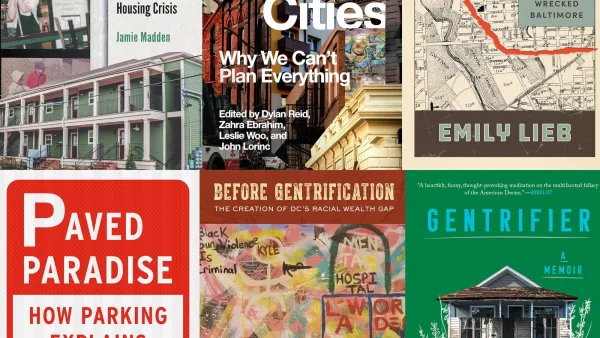
10 great urban planning summer reads
Wherever you're going (or staying) this summer, here are some suggestions for books to bring along.
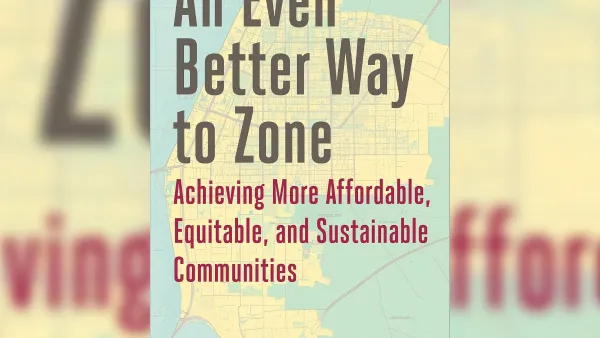
Review: "An Even Better Way to Zone"
Don Elliot’s sophisticated and much-anticipated follow up to "A Better Way to Zone" tackles equity, affordability and provides a better blueprint from theory to application.

Planetizen Federal Action Tracker
A weekly monitor of how Trump’s orders and actions are impacting planners and planning in America.

Eastern Nebraska is running out of electricity
Data centers and electrification are straining eastern Nebraska’s grid, throttling economic development.

Move over, LA: St. Louis gears up for Olympics, invests millions in downtown redevelopment
The Missouri city will host the 2028 Olympic soccer group stage and knockout matches.

Dallas releases zoning code overhaul to officials
The drafted overhaul is over 400 pages long.

NYC renovations for dangerous, ‘mercilessly crammed’ street delayed until 2027
Construction was supposed to begin this fall.

San Diego’s Midway Rising project gets greenlight from city council
The project looks to become the largest affordable housing development in California's history.

FREE Course: Walkable City 1: Why Walkability?
After describing his path towards focusing on walkability as the essence of good planning, Jeff Speck marches through his five principal reasons for making more walkable places.
Reinventing Malls: Planning Alchemy—Turning Gray Fields Into Gold
The course focuses on the opportunities and imperatives that shape reinvention of mall sites.

City of Rosemead
Rutgers University, Edward J. Bloustein School of Planning and Public Policy
One Hundred Miles
University of Michigan School for Environment and Sustainability (SEAS)
Hunter College, City University of New York (CUNY)
The Architects Foundation
City of Cambridge
The Pocatello Development Authority
The Urban Renewal Agency of the City of Pocatello