The Address Downtown hotel, a 63-story, mixed-use high-rise very close to the world's tallest building, went up in flames on Dec. 31, raising questions about other high-rises that use the same heavy cladding material building on the exterior.


Fortunately only 14 people suffered minor injuries, and the evacuation of the building was very orderly. The cause is still under investigation. People had gathered at the hotel to view the fireworks display at the nearby Burj Khalifa, the world's tallest building. It was the Emirate of Dubai's third high-rise fire in three years. [See below for February fire in the 79-story "Torch" residential high-rise.]
"Ultra-modern, flamboyant designs often involved heavy use of cladding - layers fixed to the outside of buildings for decoration, insulation or protection," writes Andrew Torchia, Middle East economics editor for Reuters. "(E)xperts are asking if the layers may in some cases make buildings more vulnerable to fire."
"The fires that have erupted in Dubai landmarks have raised concerns about the quality of material used to clad the emirate’s buildings," The National, a leading [United Arab Emirates] UAE newspaper, reported on Saturday.
Experts say most of Dubai’s approximately 250 high-rise buildings use cladding panels with thermoplastic cores, the newspaper said. Panels can consist of plastic or polyurethane fillings sandwiched between aluminium sheets.
In February last year, hundreds of people were evacuated from one of the world's tallest residential buildings when fire broke out at the Torch, a 79-storey skyscraper in Dubai. An investigation by the building's management found most of the damage was to the exterior cladding.
Dubai, with over 2 million residents, is the most populous city in the United Arab Emirates, according to Wikipedia.
FULL STORY: Dubai blaze raises questions over Gulf skyscraper design

On Top of the World: Looking Down from Dubai's Burj Khalifa
The world's tallest building is now open in Dubai. Christopher Corbett takes you up to the 124th floor.
Creating Urban Connections Between Dubai's Icons
The Burj Khalifa has opened in Dubai. Now, locals say, the development of the city's public life must begin.
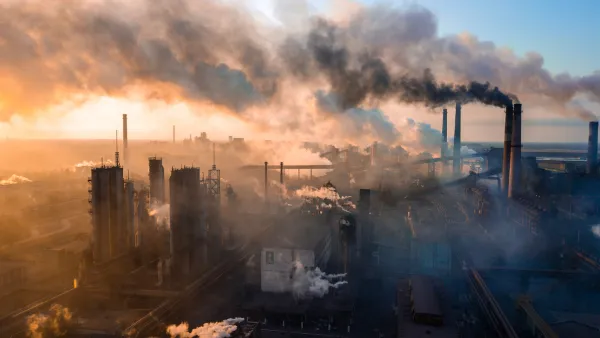
COP28: Will Developed Nations Reduce Emissions?
Tensions between developed and developing nations surfaced over emissions and energy, with the former focused on reducing fossil fuels and the latter pointing to unrealized emissions reductions from the nations most responsible for global warming.

The state-sanctioned urbicide of Austin
People don’t kill cities. Freeways do.

US to reduce Colorado River water deliveries to Mexico
A new Colorado Treaty amendment reduces Mexico’s Colorado River water allocation by 250,000 acre feet.

New Jersey’s second-largest city bans standalone data centers
Jersey City will continue to allow co-location facilities, such as those meant for research institutions that store their own data.

Amtrak not solely to blame for New Jersey commuter rail's unreliability, report finds
A new study from the Garden State Initiative found that NJ Transit’s budget grew 20% across a 4 year period, but reliability declined significantly over the same period.

EPA erases limits on planet-warming pollution from power plants
Under Monday’s plan, power plants would still have some limits on how much mercury, arsenic and other contaminants they can emit.

Phoenix announces new on-demand transit service, more frequent RAPID buses
Both new services will launch in October, and are part of Phoenix's Project Effective Access Solutions for Easing Congestion.

FREE Course: Walkable City 1: Why Walkability?
After describing his path towards focusing on walkability as the essence of good planning, Jeff Speck marches through his five principal reasons for making more walkable places.
Reinventing Malls: Planning Alchemy—Turning Gray Fields Into Gold
The course focuses on the opportunities and imperatives that shape reinvention of mall sites.

Eagle County Government
Harvard University Graduate School of Design
Nashville Planning Department
The Architects Foundation
University of Cincinnati Online
The Pocatello Development Authority
The Urban Renewal Agency of the City of Pocatello
Journal of the American Planning Association