This past week at the Association of Collegiate Schools of Planning conference, planning academics shared their research on planning for bicycles including bike sharing, bicycle education, and the use of cargo bicycles.



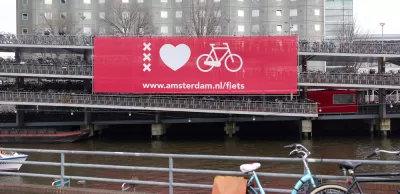
This week planning academic from across the globe came together for the Association of Collegiate Schools of Planning Conference. I sat in on a a few sessions on bicycle planning with key insights to inform planning practice. A few of my favorites are shared below.
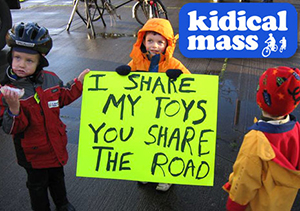 Bicycle Education - The Missing Link: In 2012, 726 cyclists were killed, and many of those were children. Mary Butcher at the University of Virginia undertook research to understand how bicycling education can be comprehensively introduced in the United States to reduce bicycling accidents. Europe has much stronger bicycling education culture, which integrates bicycle education throughout a child's development. Books targeted toward the ages 0 and 2 include cycling, and parents bike with their children in toe.
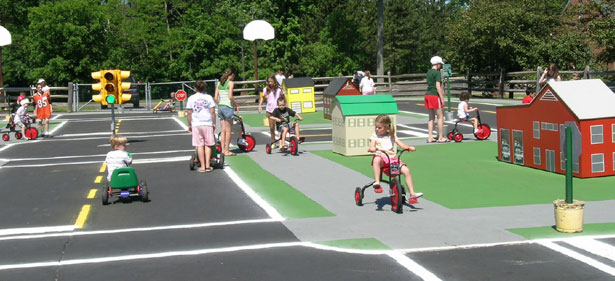
Between 3-6, children receive bicycles, and preschools provide bike parking. Also at that age, children learn to ride a school and receive with books about biking. Bike parks allow young children to learn how to ride a bike, how to say in their lane, and how to interact with other bikes. Between 7-10, children receive their second bike and begin education by police about how to to interact with traffic. Children are provided with a traffic garden, similar to the safety towns found in the United States, for learning how interact with other types of transportation. Between 11-14, children ride independently and continue learning bike skills, such as how to change a tire.
Bike education in the United States is very diverse, with hundreds of different programs. The key difference between the United States and Europe is that in the United States, bicycle education is not delivered consistently across communities, nor is it delivered in a holistic life cycle approach. The Europeans devote early focus to cycle safety and then later to traffic safety. The early culture of cycling, combined with an institutional commitment to cycling education in schools and public safety education has led to a safer behaviors and fewer cycling deaths among children.
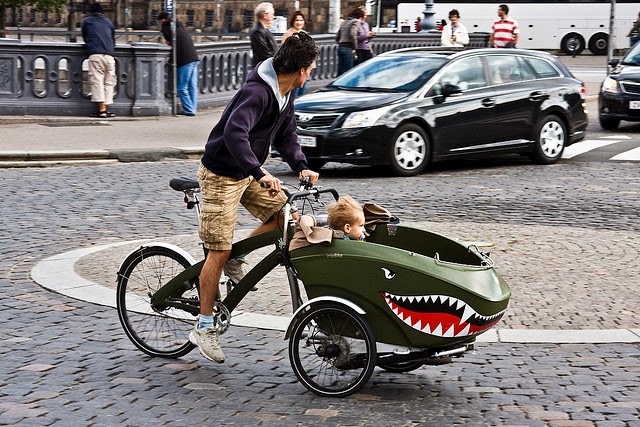
Cargo Bikes as a Growth Area for Bicycle vs. Auto Trips - Exploring the Potential for Mode Substitution Behavior: Billy Riggs, at Cal Poly at San Luis Obispo, noticed a significant increase in cargo bicycle usage across the United States. He wanted to understand how people's mode choice changes when they own a cargo bike. A cargo bike is a human powered bicycle that allows for carrying loads of groceries, children, or other items. Riggs thought that cargo bike owners would be likely to begin to substitute automobile trips for cargo bike trips. He found that of the 299 cargo bicycle owners surveyed, 68.9 percent changed their travel behavior after purchasing a cargo bike, reducing the number of automobile trips by 1-2 trips per day. Two key reasons cited for this change included the ability to get around with children and more gear. Those whose travel behavior did not change were already choosing their bicycle for most trips, and the cargo bike simply made some trips more convenient. Of the trips on the cargo bicycle, 57 percent included children. A majority of cargo bicycle owners, 62 percent, have considered giving up their automobile, but said better bicycle infrastructure and feeling safe in inclement weather would be needed. One challenge is that most cargo bicycle users are white and affluent. Cargo bicycles offer the opportunity to assist in active transportation across broader demographic groups. Based on these results, further research could include focus on overcoming weather-related and other elemental barriers (such as electric assist for heavy loads), which continue to be an obstacle to every day cycling. Further investigation could also focus on families modeling healthy behaviors to children with cargo bikes. Further details are available in Riggs's slides, available on Slideshare.
Does your community have a great bicycle education program? Have you noticed more cargo bikes in your community? Are you seeing changes in transit usage in your community? Let me know what you think of these research findings.

2025's 30 Most Bike-friendly Cities
Copenhagenize has released its list of top cities for cyclists. Spoiler alert: the United States doesn’t make the list.
Bicycles and Books — In Sacramento, Libraries Now Offer Both
Adult library card holders can check out e-bikes and e-trikes for up to one week.
The Most Bike-Friendly States in the Nation
The League of American Bicyclists ranks states based on bike infrastructure and safety efforts.

The state-sanctioned urbicide of Austin
People don’t kill cities. Freeways do.

US to reduce Colorado River water deliveries to Mexico
A new Colorado Treaty amendment reduces Mexico’s Colorado River water allocation by 250,000 acre feet.

New Jersey’s second-largest city bans standalone data centers
Jersey City will continue to allow co-location facilities, such as those meant for research institutions that store their own data.

Amtrak not solely to blame for New Jersey commuter rail's unreliability, report finds
A new study from the Garden State Initiative found that NJ Transit’s budget grew 20% across a 4 year period, but reliability declined significantly over the same period.

EPA erases limits on planet-warming pollution from power plants
Under Monday’s plan, power plants would still have some limits on how much mercury, arsenic and other contaminants they can emit.

Phoenix announces new on-demand transit service, more frequent RAPID buses
Both new services will launch in October, and are part of Phoenix's Project Effective Access Solutions for Easing Congestion.

FREE Course: Walkable City 1: Why Walkability?
After describing his path towards focusing on walkability as the essence of good planning, Jeff Speck marches through his five principal reasons for making more walkable places.
Reinventing Malls: Planning Alchemy—Turning Gray Fields Into Gold
The course focuses on the opportunities and imperatives that shape reinvention of mall sites.

Eagle County Government
Harvard University Graduate School of Design
Nashville Planning Department
The Architects Foundation
University of Cincinnati Online
The Pocatello Development Authority
The Urban Renewal Agency of the City of Pocatello
Journal of the American Planning Association

