As some areas of the country seek out new sources of water, other areas are trying to protect what they have.


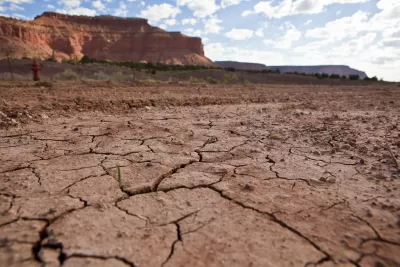
Lynn Broaddus and Robert Puentes report in The Avenue on the new world of water—where some drought stricken areas are striking deals to acquire other people's water and other areas are circling the wagons to preserve what they have. Waukesha, Wisconsin is seeking to pump water from Lake Michigan to its residents through a $200 million, 20-mile pipeline that requires approval (as part of a seven year-old agreement) from eight states bordering the Great Lakes. "The idea behind the Great Lakes-St. Lawrence River Basin Water Resources Compact is to prevent thirsty states in the West from tapping into the lakes."
The report goes on to questions the necessity of such a large infrastructure investment when trends show a general decline in water usage around the country and new technologies making water reuse and recovery easier. "For example, San Francisco now requires new buildings over a certain size to treat and re-use wastewater on-site, a move that will catalyze innovation and increase the availability of these technologies in other parts of the country. This scaling down of water technology gives customers new affordable options and providers beyond water utilities, not unlike what rooftop solar is doing to the energy utility business."
Read the full story: Wisconsin water woes part of larger story
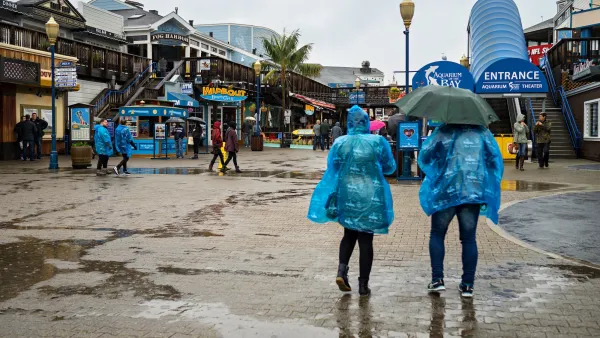
Rain gardens keep up to 99% of pollutants out of San Francisco Bay
The city's roadside rain gardens soak up stormwater and filter out dozens of harmful micropollutants.
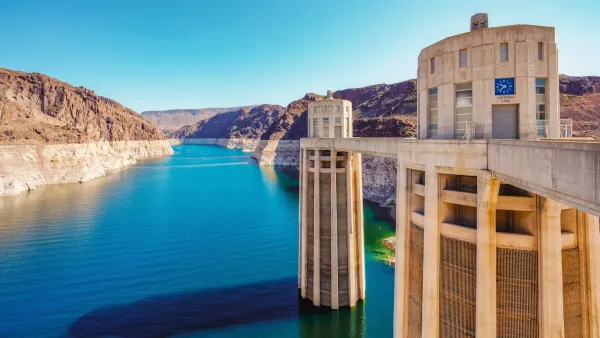
Federal proposal calls for mandatory water cuts to Arizona, California and Nevada
The Bureau of Reclamation stepped in after states failed to come to an agreement over Colorado River water use reductions.

Drought is affecting all but 5 US states
Almost all of the United States faces moderate to severe drought at the start of an El Niño summer.

Planetizen Federal Action Tracker
A weekly monitor of how Trump’s orders and actions are impacting planners and planning in America.

Eastern Nebraska is running out of electricity
Data centers and electrification are straining eastern Nebraska’s grid, throttling economic development.

Study reveals best places in the U.S. for cycling, walking
New research from Streetlight Data examines bicycle and pedestrian miles per capita in the 100 largest U.S. cities by population.

DSA members accuse Mamdani of 'abandoning values' over housing redevelopment
New York City's mayor plans to replace about 2,000 units of public housing with private, mixed-income housing.

All sides of BRT debate unhappy with CDOT’s most recent move
The Colorado Department of Transportation is no longer considering center-running bus lanes for Colorado Boulevard.

Massachusetts bogs generate both power, and cranberries
Putting solar panels above farmland is one way Massachusetts is advancing toward its goal of net-zero carbon emissions by 2050.

FREE Course: Walkable City 1: Why Walkability?
After describing his path towards focusing on walkability as the essence of good planning, Jeff Speck marches through his five principal reasons for making more walkable places.
Reinventing Malls: Planning Alchemy—Turning Gray Fields Into Gold
The course focuses on the opportunities and imperatives that shape reinvention of mall sites.

City of Rosemead
Rutgers University, Edward J. Bloustein School of Planning and Public Policy
One Hundred Miles
University of Michigan School for Environment and Sustainability (SEAS)
Hunter College, City University of New York (CUNY)
The Architects Foundation
City of Cambridge
The Pocatello Development Authority
The Urban Renewal Agency of the City of Pocatello