A study of two cities at opposite ends of the urban spectrum demonstrate how density matters for a number of ecological services.


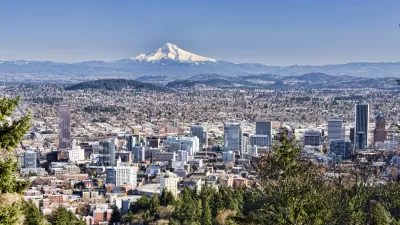
Rio de Janeiro is a tightly-packed city with large tracts of natural land surrounding it. Portland, Oregon intersperses many small parks throughout a sprawling urban landscape. A new study by a team of biology researchers finds that the Rio model sustains better natural services, including cleaning water and air, reducing noise, pest control, agriculture, carbon storage, and pollination. Denser cities with large adjoining parks also do a better job of mitigating the "heat island effect," a local temperature increase caused by the concentration of heat-absorbing metal and concrete.
The study finds, however, that less-dense cities with many small parks offer residents a better sense of well-being. As previously reported, there is evidence that walking in a natural setting is more beneficial to mental health than walking in an urban setting. Thus, "policymakers can improve dense cities' healthfulness, the researchers write, by adding some greenery in the form of sidewalk trees, green walls, and green roofs," Francie Diep writes.
Furthermore, Diep reports, "Moderate levels of development, like that of the suburbs, made natural lands lose their services at a disproportionately fast rate, compared to intense development."
Read the full story: Why Denser Cities Are Better for People and the Environment

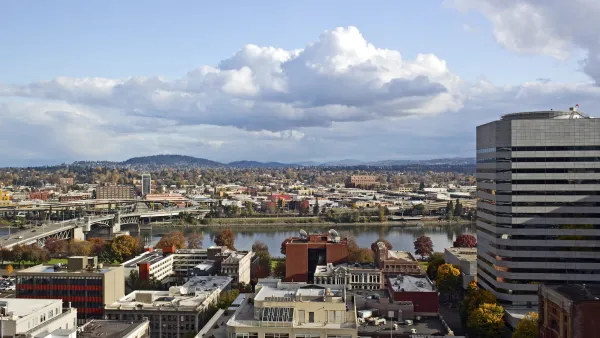
Portland approves expedited permitting for multifamily housing on the Eastside
A city council resolution requires staff to prepare a plan for speeding up rezoning for multifamily projects.

Study: Nearly Half of Portland TOD Residents Commute by Transit
People living in transit-oriented developments are more likely to ditch the car and opt for transit or walking, new research shows.
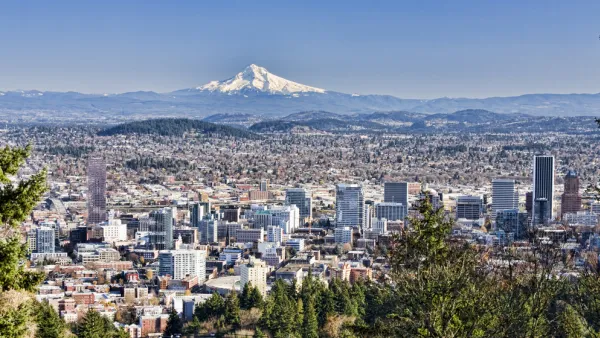
Portland Approves ‘Residential Infill Project – Part 2' to Add New Forms of Residential Density
The city of Portland is already building upon the historic work of the Residential Infill Project, approved by the city in August 2021, with a new slate of zoning changes dubbed the ‘Residential Infill Project – Part 2.”

Planetizen Federal Action Tracker
A weekly monitor of how Trump’s orders and actions are impacting planners and planning in America.

Amtrak, CN end decades-long dispute with eight-year agreement
The new operating agreement establishes an updated framework for the companies to work together, including processes to resolve disputes.

Northwest rail fans eager for Sept. 30 debut of Amtrak’s Airo fleet
Get ready for that new train smell and more seats. But they won’t go faster or run more frequently on the Cascades route in Washington and Oregon.

Brightline Florida files for bankruptcy
The transit company is over $5 billion in debt.

St. Louis Metro to test if single-car trains can reduce operating costs, maintain rider satisfaction
The pilot program will run from October to spring 2027, and begin with one single-car train operating on Metrolink’s Red and Blue lines.

Pennsylvania is building data centers in abandoned mines
Housing data centers in mines provides an alternative to destroying local forests and may spare residents from data centers’ noise and air pollution.

FREE Course: Walkable City 1: Why Walkability?
After describing his path towards focusing on walkability as the essence of good planning, Jeff Speck marches through his five principal reasons for making more walkable places.
Reinventing Malls: Planning Alchemy—Turning Gray Fields Into Gold
The course focuses on the opportunities and imperatives that shape reinvention of mall sites.

City of Thousand Oaks
City of Wisconsin Rapids
Harvard University Graduate School of Design
The Architects Foundation
University of Cincinnati Online
The Pocatello Development Authority
The Urban Renewal Agency of the City of Pocatello