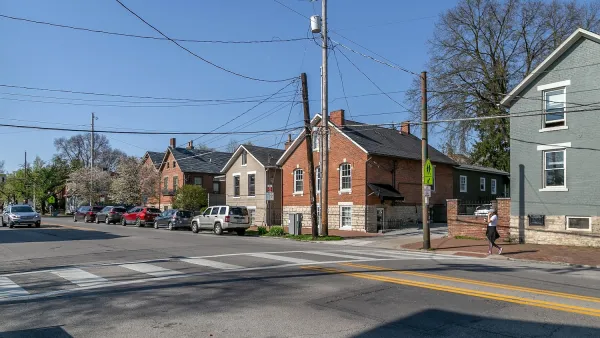
Columbus is surprisingly suburban, given that the city is the largest in population in the state of Ohio. Maybe that perception comes from the fact that it’s also the largest in size in the state?


"According to Community Research Partners’ latest study, 54 percent of Columbus is considered suburban, based on criteria established for ZIP codes by the real-estate website Trulia," reports Mark Ferenchik. For comparison's sake, on the same scale, Chicago is 100 percent urban and Nashville is 82 percent suburban.
After noting that Columbus's large footprint allows for subdivisions with larger lot sizes, the article goes on to discuss whether the future of Columbus is likely to be so suburban.
"The question going forward is how much the Columbus map will change in the next 20 to 30 years as urban neighborhoods are developed and the philosophy of how cities and suburbs should grow evolves," according to Ferenchik.
Read the full story: Study: Columbus area has a suburban feel

Columbus Introduces New Rules Allowing ADUs in all Residential Districts
The city’s recent zoning code updates include new rules for secondary housing units.

It’s Unanimous: Columbus Approves Density-Friendly Zoning Changes
Columbus has approved six zoning code amendments, which include height limit increases from three stories to 16 and eliminate parking requirements for large developments in 12,300 parcels along major transportation corridors.

Columbus Zoning Reform Proposal Garners Varied Responses
Proponents of a new zoning designation say it will ease the housing crisis, while other residents worry about density, historic resources, and property taxes.

Planetizen Federal Action Tracker
A weekly monitor of how Trump’s orders and actions are impacting planners and planning in America.

Amtrak, CN end decades-long dispute with eight-year agreement
The new operating agreement establishes an updated framework for the companies to work together, including processes to resolve disputes.

Nation's most wind-powered state turns to coal as data centers increase energy demand
For the first time in decades, Iowa has increased its generation of coal power.

Alabama scores up to $2.5 billion federal loan for largest infrastructure project in state’s history
The Mobile River Bridge and Bayway Project aims to ease congestion at Alabama’s worst bottleneck.

Trump is considering data centers on 6 states' public land — some state officials say they had no idea
If the administration approves the proposed projects, data center and data center-related developments will cover 17,600 acres of public land.

Despite court ruling, Trump is keeping nearly all wind projects in the US on hold
At least 110 wind energy projects have not heard from the government since a federal judge ruled that the Trump administration's freeze on wind turbine clearances was likely illegal.

FREE Course: Walkable City 1: Why Walkability?
After describing his path towards focusing on walkability as the essence of good planning, Jeff Speck marches through his five principal reasons for making more walkable places.
Reinventing Malls: Planning Alchemy—Turning Gray Fields Into Gold
The course focuses on the opportunities and imperatives that shape reinvention of mall sites.

KFH Group Inc.
Greater Baltimore Committee
Eagle County Government
The Architects Foundation
University of Cincinnati Online
The Pocatello Development Authority
The Urban Renewal Agency of the City of Pocatello