A new article in the Journal of Planning Education and Research (@JPER7) by Hongwei Dong of California State University, Fresno, asks whether New Urbanist developments were more resilient in terms of recovering from the 2008 real estate crash.



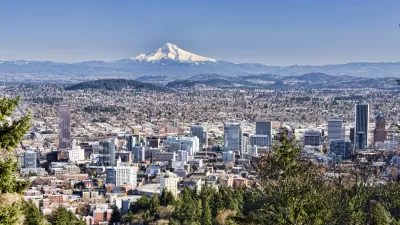
In the 2000s, it was commonplace to hear from real estate experts that rising home prices were close to a sure bet. However, the 2008 crisis in the U.S. housing market followed by a slow recovery in many metropolitan areas, raised awareness of the real possibility that market downturns can erode home equity.
The question of what planners can do to create communities that are resilient to housing market downturns is receiving increasing attention. Previous cross sectional studies indicate that New Urbanist homes command premiums compared to similar homes in traditional post-war subdivisions. A new article in JPER (free until March 15) by Hongwei Dong of California State University, Fresno, asks whether New Urbanist developments have been more resilient in terms of recovering from the 2008 real estate crash.
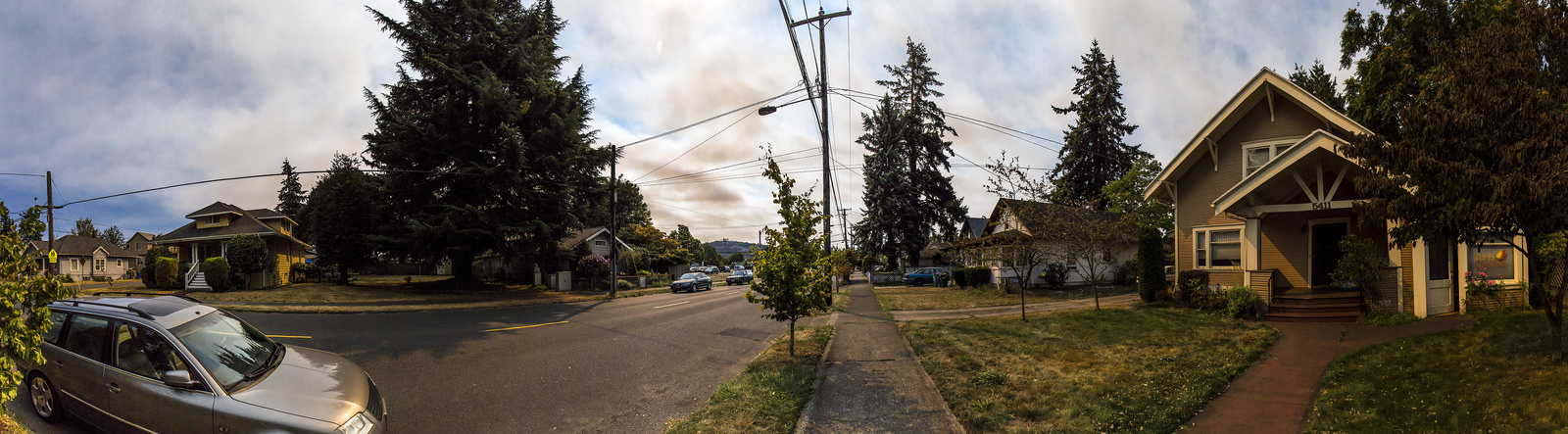
Smokey Sky Mall (Image by Twelvizm)
Dong focuses on three counties in Metro Portland, Oregon, where he had access to sales prices for single family homes sold both in the period before the real-estate crash and during the recovery. New Urbanism is often identified as a design movement, but because there are so few New Urbanist developments, Dong investigates a host of land use, transportation, social, and demographic characteristics that relate to design characteristics advocated for by New Urbanists (e.g., street connectivity, land use mix, transit, and greater residential density).
Among the measures analyzed by Dong, mixed land uses did not impact values significantly, and density had a very minimal negative impact. Interestingly, school quality was also slightly negative, which might be explained by pre-bust bubble conditions in good districts. Homes in communities that were close to central Portland had the most price resilience. These were most often single-family homes located in walkable communities, with interconnected street networks, and sidewalks. Interestingly, being near downtown was important, but access to transit was mixed, and areas with only good bus service, without other New Urbanist amenities, showed less resilience.

However, the study suggests that synergistic effects exist between different dimensions of New Urbanist development. Neighborhoods that show not only smarter land use patterns and denser transit service but also good access to light rail transit and high-quality bike routes helped single-family homes sustain their values in the recession.

One interesting future question is whether Portland’s downtown draw is unique. Would it extend to a declining industrial city, such as Detroit, or a sprawling Sun Belt one, such as Atlanta? Finally, New Urbanism is a design movement, and often includes master planned communities. An interesting extension of this research would be to compare the performance of these communities to traditional ones.
Blog post by Thomas Douthat, and Dr. Hongwei Dong of Fresno State.
You can also follow @JPER7 on Twitter or like us on Facebook.com/JPERPlanning.

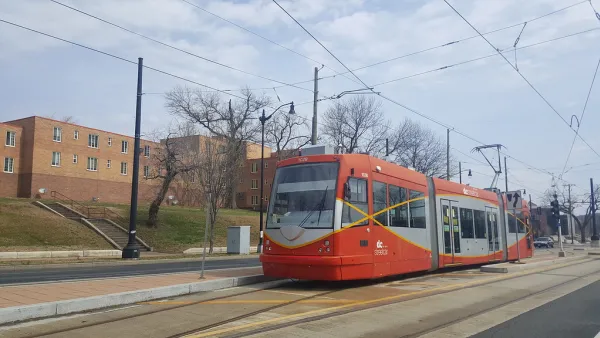
Research Casts Doubt on the Economic Development Clout of Streetcar Investments
New research is ambivalent about the potential for streetcar investments to reap promised economic development rewards.
Does Portland's Urban Growth Need a Course Correction?
To curb suburban "sprawl on steroids" and foster higher density infill in Portland, a shift in planning strategy is needed, according to Rick Potestio, the principal of Potestio Studio, an architecture and design firm based in the city.
Study Evaluates Protected Bike Lanes in the United States
The National Institute for Transportation and Communities released a new study this week called "Lessons from the Green Lanes: Evaluating Protected Bike Lanes in the U.S."

Planetizen Federal Action Tracker
A weekly monitor of how Trump’s orders and actions are impacting planners and planning in America.

The state-sanctioned urbicide of Austin
People don’t kill cities. Freeways do.

US to reduce Colorado River water deliveries to Mexico
A new Colorado Treaty amendment reduces Mexico’s Colorado River water allocation by 250,000 acre feet.

Brightline West’s future may rely on $6 billion federal loan
The company has until Nov. 2 to make a $400 million equity investment into its proposed high-speed rail line.

LA Metro’s ultimatum: no extra buses for LA28 if federal funding isn’t imminently secured
If Metro does not provide additional buses, LA28 organizers will have to find a new way to manage Olympic traffic. LA28’s budget does not include a line item for transit.

Colorado’s Largest Data Center Could Rise Next to Homes — Without a Public Hearing
The proposed campus would consume 11 times the power of Denver International Airport; as it has across the country, opposition mounts.

FREE Course: Walkable City 1: Why Walkability?
After describing his path towards focusing on walkability as the essence of good planning, Jeff Speck marches through his five principal reasons for making more walkable places.
Reinventing Malls: Planning Alchemy—Turning Gray Fields Into Gold
The course focuses on the opportunities and imperatives that shape reinvention of mall sites.

Eagle County Government
Harvard University Graduate School of Design
Nashville Planning Department
The Architects Foundation
University of Cincinnati Online
The Pocatello Development Authority
The Urban Renewal Agency of the City of Pocatello
Journal of the American Planning Association

