Conversations about fair housing and place-based work too often lead to a perceived need to defend turf. Reece and Kriesberg got together instead to talk about common ground, using Rooflines as a hub for debate!


A robust debate erupted on Shelterforce in response to Miriam Axel-Lute's article, "The Dangerous Rhetoric of Escaping to Opportunity," with strongly worded opinions flowing from both sides of the mobility and place based debate.
As practitioners who were involved in this vigorous conversation and referenced in the article, we had a series of private discussions about our perspectives and concerns regarding the place vs mobility debate.
Our productive conversations illustrate one of the major challenges in this debate: We spend too little time in quiet, off-the-record dialogue based on mutual respect with a goal of deepening our understanding, and too much time engaged in public debates designed to drive policy agendas based on long-standing organizational agendas...
Read the full story: Housing Equity’s Future: Moving from Debate to Productive Dialogue


Oregon cities are excluding a key tool that could help their housing goals: maps
An effort to use geospatial analysis to understand how housing and access to opportunity are distributed in Oregon cities has largely stalled.

How HUD is dismantling fair housing enforcement
Fair housing law has never been easy to enforce. But HUD's proposal to eliminate the use of disparate impact analysis will remove another crucial tool for doing so.
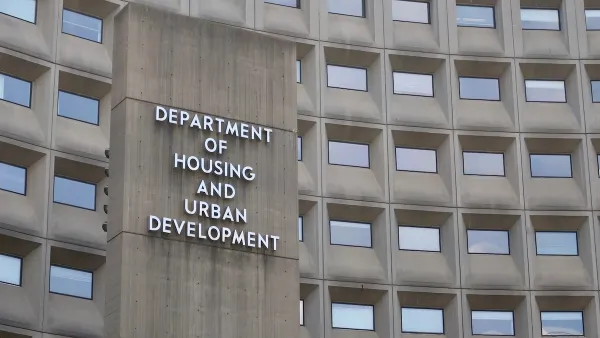
HUD Whistleblowers: Agency is ‘Systematically Undermining’ Fair Housing Laws
HUD employees say the agency has decimated the Office of Fair Housing, reducing staff by 70 percent, and forced a gag order that prevents them from effectively enforcing fair housing and civil rights laws.

Planetizen Federal Action Tracker
A weekly monitor of how Trump’s orders and actions are impacting planners and planning in America.

‘Going backwards:’ Baltimore mayor, students rally against state's transit funding plan
Maryland's proposed six-year plan provides no funding for Baltimore’s BMORE bus program and reduces its road maintenance funding.

Detroit to transform waterfront with $2.2 billion investment
Developers will convert about 18 acres of unused parking lot space into civic spaces.

HUD, USDA agree on framework to simplify housing environmental review standards
Their agreement is a requirement of the 21st Century ROAD to Housing Act.

Cost of water rising at a faster pace than inflation, median household income
California and Maryland residents have seen their water bills grow especially high.

NYC building owners overwhelmingly comply with new emissions limits
The New York City Department of Buildings is fining owners who did not file emissions reports.

FREE Course: Walkable City 1: Why Walkability?
After describing his path towards focusing on walkability as the essence of good planning, Jeff Speck marches through his five principal reasons for making more walkable places.
Reinventing Malls: Planning Alchemy—Turning Gray Fields Into Gold
The course focuses on the opportunities and imperatives that shape reinvention of mall sites.

City of Thousand Oaks
City of Wisconsin Rapids
Harvard University Graduate School of Design
The Architects Foundation
University of Cincinnati Online
Northern Illinois Transit Authority (NITA)
The Pocatello Development Authority
The Urban Renewal Agency of the City of Pocatello