Developer Nick Kujawa shares his experience with mix-use development, and provides commentary on a new Community Builders report, "RESTORE: Commercial and Mixed-Use Development Trends in the Rocky Mountain West."


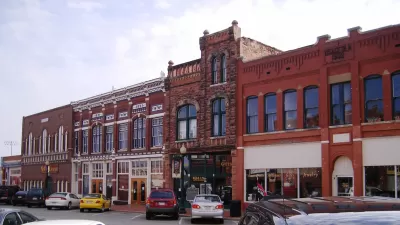
In the June Community Builders webinar, we were fortunate to be joined by Nick Kujawa, president of Kujawa Development, LLC. One of Kujawa’s projects, the Sears Building in historic uptown Butte, Montana was a featured case study in the recent report, RESTORE: Commercial and Mixed-Use Development Trends in the Rocky Mountain West.
Nick shared his experience with mixed-use development, and commentary on the RESTORE report. Here are his responses to our questions:
Q: Please share a little bit about the Historic Sears Building renovation and talk about what drew you to this project.
A: Our mission at Kujawa development, is to foster sustainable environments through thoughtful development. Whether it’s a historic building or new construction, we spend a lot of time trying to figure out what the market needs, and how we can provide that with the best building possible. In some cases, it means not doing a building.
I am from Butte, so there is a long history of our family being involved in Butte. I had been in New York City, practicing as a real estate attorney, when my father let me know about this building. At the time had been vacant for over 30 years. The city had taken it for back taxes. They had put a roof on it and sealed up the windows. When we bought it, you could stand on the 5th floor and see seven stories down into the basement.
What drew me to this project in particular was a feeling of connectedness to the history of the town that I grew up in, especially when I was living in New York City at the time. But also the realization that my money would go a lot further in the Rocky Mountain West than it could on the east coast, and I would have a much more lasting impact.
So this project was a catalyst for me leaving the “white shoe” real estate law firm that I was at, and coming out West and doing this kind of work.
Read the full story: RESTORE: A Developer's Perspective
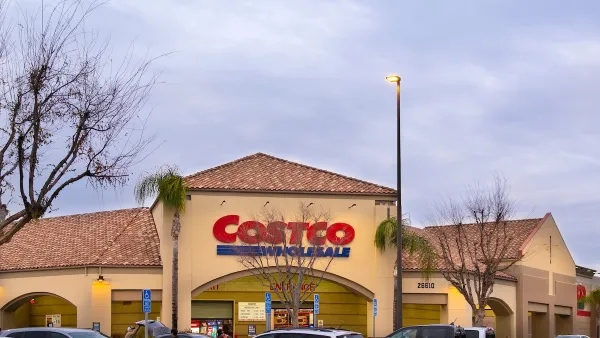
When Your Neighbor is a Big-Box Store
Taking advantage of state and local density bonuses and streamlining measures, beloved big-box retailer Costco is getting into the housing business
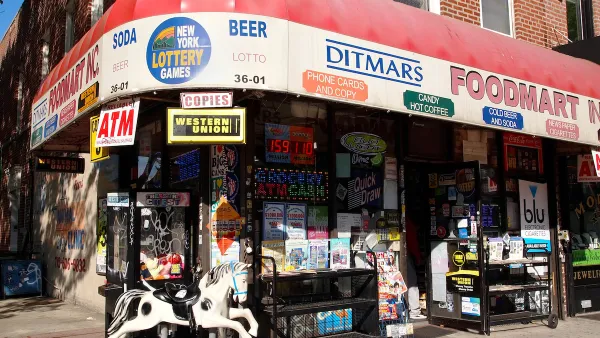
Bring Back the Corner Store
‘Accessory commercial units’ were once common across U.S. towns and cities. Now, zoning regulations make them illegal in many places.
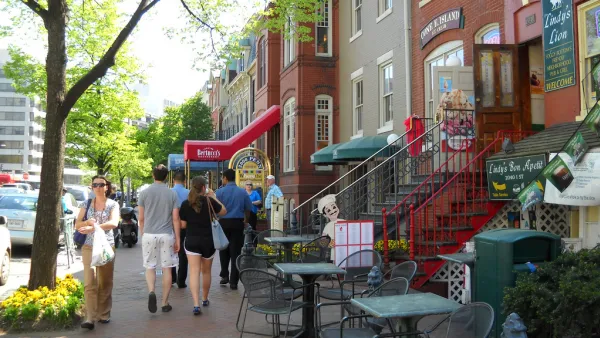
Mixed Use Could Lower Neighborhood Crime Rates
New research shows areas with a heavy concentration of commercial offices experience 40 percent higher crime rates than neighborhoods that mix residential and commercial uses.

Planetizen Federal Action Tracker
A weekly monitor of how Trump’s orders and actions are impacting planners and planning in America.

California plans to bury El Niño’s downpour
If the state plays its cards right, it may be able to store a billion acre-feet of El Niño’s water in aquifers.

Desperate measures: Advocates weigh draining Lake Powell to fill Colorado River
Draining the reservoir could reduce evaporation losses by a couple hundred thousand acre-feet.

Arizona, Wisconsin, Pennsylvania hope to finally advance climate goals post-midterms
The three states have spent years under Republican or divided control.

Democrats’ victory may threaten act to expedite energy projects
Democrats may decide to vote against the Bipartisan American Affordability and Jobs Act, and negotiate a more favorable bill once the 120th Congress begins.

Voters choose public transit, approve $31 billion in funding
Approved projects include $101,000 for reduced-cost transit in a Michigan town and $14 billion for regional transit in the San Francisco Bay Area.

FREE Course: Walkable City 1: Why Walkability?
After describing his path towards focusing on walkability as the essence of good planning, Jeff Speck marches through his five principal reasons for making more walkable places.
Reinventing Malls: Planning Alchemy—Turning Gray Fields Into Gold
The course focuses on the opportunities and imperatives that shape reinvention of mall sites.

City of Rosemead
Rutgers University, Edward J. Bloustein School of Planning and Public Policy
One Hundred Miles
University of Michigan School for Environment and Sustainability (SEAS)
Hunter College, City University of New York (CUNY)
The Architects Foundation
City of Cambridge
Montrose County
The Pocatello Development Authority