Baseball fans who thronged new stadiums in the 1990s regardless of thequality of the teams are proving more discriminating in the 2000s, accordingto The New York Times. If you build it, they will come, says the article - but only for a while.


Of the 13 parks that opened in the last 13 years, attendance has declined at 11 of them. Only Safeco Field in Seattle and Pacific Bell Park in San Francisco are packing in the fans, and both of those teams are enjoying on-field success. "The notion that a new park is a panacea has been disproven," said Steve Greenberg, the former deputy commissioner of baseball and the managing director at Allen & Company, a media and sports investment banking firm. "I think a new park is one factor, but clearly the market, the performance of the team and the overall aura of baseball are other factors." However baseball executives insist that teams with new parks are better off than they would have been if they had stayed in their old stadiums. The Times article does not analyze the financial impact on cities and states who helped build the ballparks in return for a share of revenue.
Thanks to Dateline APA
Read the full story: New Parks Lose Magic Quickly


Planetizen Federal Action Tracker
A weekly monitor of how Trump’s orders and actions are impacting planners and planning in America.

Northwest rail fans eager for Sept. 30 debut of Amtrak’s Airo fleet
Get ready for that new train smell and more seats. But they won’t go faster or run more frequently on the Cascades route in Washington and Oregon.
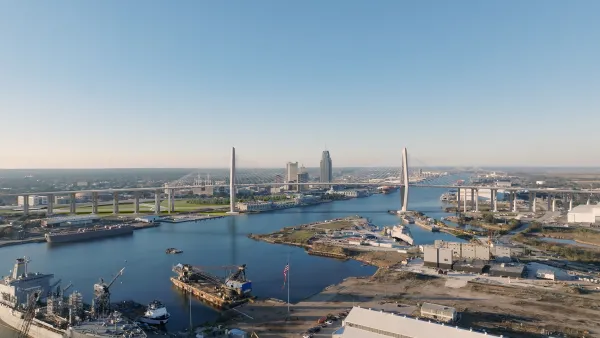
Alabama scores up to $2.5 billion federal loan for largest infrastructure project in state’s history
The Mobile River Bridge and Bayway Project aims to ease congestion at Alabama’s worst bottleneck.

Novel study finds extreme state-by-state disparity in housing construction timelines
The first comprehensive working paper on U.S. construction timelines also found that the permitting process for multi-family projects has slowed nationwide.

California may destroy its beaches trying to save homes from El Niño
Boulders and seawalls can protect homes from waves, but ultimately destroy sandy beaches.

California high-speed rail accomplishes only one legislative goal in 2026
The majority of the agency's failed pitches were never developed into written proposals.

FREE Course: Walkable City 1: Why Walkability?
After describing his path towards focusing on walkability as the essence of good planning, Jeff Speck marches through his five principal reasons for making more walkable places.
Reinventing Malls: Planning Alchemy—Turning Gray Fields Into Gold
The course focuses on the opportunities and imperatives that shape reinvention of mall sites.

City of Thousand Oaks
City of Wisconsin Rapids
Harvard University Graduate School of Design
The Architects Foundation
University of Cincinnati Online
Northern Illinois Transit Authority (NITA)
The Pocatello Development Authority
The Urban Renewal Agency of the City of Pocatello