A hedge fund manager recently took it upon himself to bring 20 goats into Detroit as an experiment of urban agriculture. The city quickly shipped the herd off, but fans of goats wonder why these animals shouldn't have a place in the city.


Maanvi Singh examines the possibility of keeping goats in the city of Detroit, which has a prohibition on keeping farm animals in the city. "Fans of these weed-munching animals point out that goats are an eco-friendly landscaping option, their meat is a staple in diets around the world and their milk makes for some delicious cheese. It also helps that they're totally adorable."
Singh's examination of the goat question follows on a controversy in Detroit from earlier in June, when "Mark Spitznagel, the founder of the $6 billion hedge fund Universa Investments, on Thursday brought 20 goats to graze among abandoned homes and general detritus in Brightmoor, one of Detroit’s most blighted neighborhoods," according to an earlier article by Alexandra Stevenson.
The plan for the Idyll Farms Detroit project, as it's known, was to "enlist the help of the community — paying previously unemployed adults and enlisting the help of local youths to herd the baby goats — and he plans to build portable housing for the goats in addition to pens and electric fencing. At the end of the summer, Mr. Spitznagel said, he will sell the goats to Detroit butchers and give the proceeds back to the community."
Alas, the experiment lasted only two days before the city cried nay, and the goats will be slaughtered.
Leonard Pollara, who helped Spitznagel implement Detroit's aborted goat invasion, "says they will continue to lobby the local government to allow city goats," according to the article by Singh. Pollara is also quoted: "[while] Detroit is in a dire situation…this is an absolutely amazing opportunity to redefine how agriculture happens in urban environments."
Read the full story: Goats In The City? Making A Case For Detroit's Munching Mowers
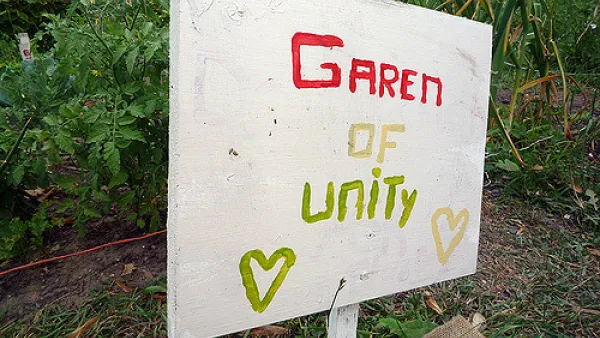
No Connection Between Gardens and Gentrification in Detroit, Study Says
Research from late 2021 documented the footprint of urban gardens in Detroit, finding evidence of inequities but not gentrification.
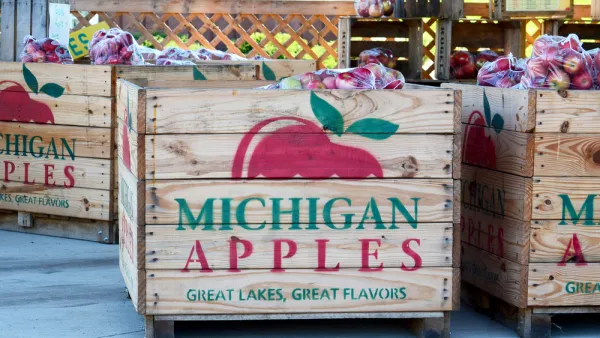
Urban Orchard in East Detroit Trying to Be a Good Neighbor
When Wolverine Human Services bought 11 acres of East Detroit planning to remove abandoned houses for a U-Pick Orchard, neighbors protested. Now they've pivoted and aim to provide a resource to the community rather than run an agro-business.
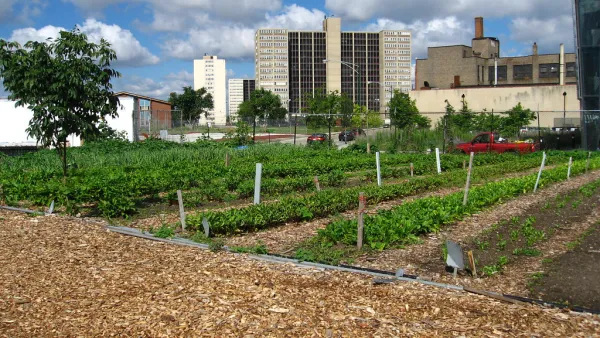
Detroit Gives Go-Ahead to Controversial Urban Farm Project
By a narrow vote, Detroit's City Council has given approval for the city to sell 140 acres of vacant land to financial services business owner John Hantz for the creation of an urban agriculture project. Some are calling the deal a "land grab."

Washington state to charge fee to drivers with fuel-efficient cars
Revenue from the fee will go towards supporting the state’s highways.

Illinois considers spending $1 billion in taxpayer money on data center
A quantum computing campus and data center are currently under construction in Chicago.

Trump to blast ‘hydrocarbon highway’ through ‘world’s longest art gallery’
Environmental and historic preservation groups are suing to stop the project.

Boston City Council votes to no longer mandate parking in residential developments
The Boston Zoning Commission still needs to approve the proposal.

Passengers in New York, California lift off in air taxis
Two air taxi companies have received a Special Airworthiness Market Survey Certificate, which allows them to service passengers.

MTA to upgrade subway signals for entire network by 2050
This is the first time New York City has planned to modernize subway signals in the Bronx.

FREE Course: Walkable City 1: Why Walkability?
After describing his path towards focusing on walkability as the essence of good planning, Jeff Speck marches through his five principal reasons for making more walkable places.
Reinventing Malls: Planning Alchemy—Turning Gray Fields Into Gold
The course focuses on the opportunities and imperatives that shape reinvention of mall sites.

City of Charlotte
City of Rosemead
Rutgers University, Edward J. Bloustein School of Planning and Public Policy
University of Michigan School for Environment and Sustainability (SEAS)
Hunter College, City University of New York (CUNY)
The Architects Foundation
University District Partnership