Participatory budgeting (PB) has been tried on a limited local level in several cities across the United States. A new White House initiative indicates the practice may become a common way of determining how to distribute certain federal funds.


In its second Open Government National Plan of Action [PDF], which was released this week, the White House "signals [its] support for participatory budgeting, an approach to the assignment of government funds that asks citizens to first come up with good ideas for potential spending projects and then — in a rare demonstration of direct democracy — vote to decide which contenders are worthy of funding," reports Nancy Scola.
Though the administration's thinking on the practice is said to be in its early days, "the inclusion of the model in the White House’s plan implies that the administration sees participatory budgeting as a plank in a fully fledged open government approach," writes Scola. "More than that, [a spokesperson] noted that the White House highlighted the availability of federal funds — community block grants, specifically — to fill the pool of monies that PB could potentially divvy up. That suggests an intriguing model: Actual voters managing robust federal funds on an ultra-local level."
FULL STORY: White House Gives Participatory Budgeting a Boost

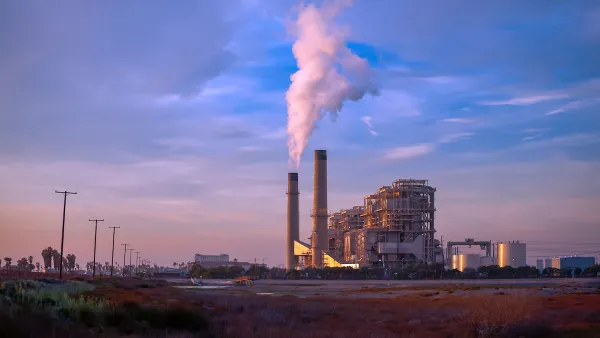
Power Plants: A Win for the EPA
New rules from the US Environmental Protection Agency to regulate greenhouse gas emissions from fossil fuel-fired power plants survived an attempt by 25 Republican-led states to block their implementation while their case is litigated.
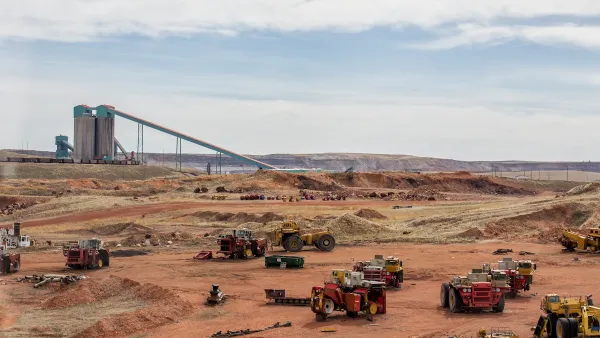
A Win for ‘Keep it in the Ground’
Coal mining in Wyoming will take a major hit as a result of a U.S. Department of Interior plan to cease future leasing of coal mines in the nation's most productive coal mining basin. The decision casts a spotlight on the presidential election.

Supreme Court Guts the U.S. EPA’s Ability to Limit Carbon Emissions
The consequences of this ruling have long been foretold. With the U.S. Environmental Protection Agency now officially barred from the fight against climate change, Congress will have to act to reduce carbon emissions.

Planetizen Federal Action Tracker
A weekly monitor of how Trump’s orders and actions are impacting planners and planning in America.

The state-sanctioned urbicide of Austin
People don’t kill cities. Freeways do.

US to reduce Colorado River water deliveries to Mexico
A new Colorado Treaty amendment reduces Mexico’s Colorado River water allocation by 250,000 acre feet.

5 New England states march closer to 800 megawatt wind energy project
Securing federal approval for the project may be complicated under the Trump administration, which has historically been hostile towards domestic wind power.

Baltimore to break ground on $50 million Transit Priority Project
The project will bring faster bus trips, safer streets and better bike connections to Baltimore.

Airbnb launches $250 million 'last-dollar financing' housing accelerator, makes first investment in Austin
The company will put $6.4 million towards affordable housing development in Texas’ capital.

FREE Course: Walkable City 1: Why Walkability?
After describing his path towards focusing on walkability as the essence of good planning, Jeff Speck marches through his five principal reasons for making more walkable places.
Reinventing Malls: Planning Alchemy—Turning Gray Fields Into Gold
The course focuses on the opportunities and imperatives that shape reinvention of mall sites.

Eagle County Government
Harvard University Graduate School of Design
Nashville Planning Department
The Architects Foundation
University of Cincinnati Online
The Pocatello Development Authority
The Urban Renewal Agency of the City of Pocatello
Journal of the American Planning Association