Greenways, streetcars, and adaptive re-use projects are among the conceptual, as well as in-progress, initiatives profiled by Ashley Woods.


“Detroit is bankrupt,” writes Woods. “Blocks once filled by families are all but dormant, and major roads remain lined with shuttered buildings that used to be shops, restaurants, bars and factories.”
“Yet change is brewing in the Motor City. New projects are targeting investment in hotspots like downtown and Midtown, and the city's neighborhoods could see major transformations under long-term plans like Detroit Future City.”
“Some of those changes are a long way off, but others are already under way -- enough that we can take a peek at 18 examples of the Detroit of the future...”
Read the full story: This Is What Detroit Could Look Like In 2033 ... And Beyond
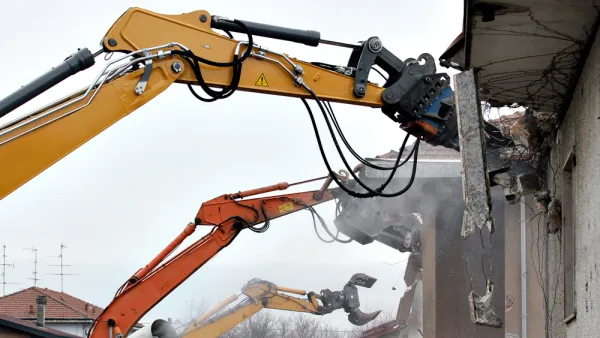
$160 Million in Bond Funding for Demolitions on the Ballot in Detroit
Proposal N, on the ballot for Detroit voters next week, will provide $160 million in bond funding for demolitions and $90 million to mothball homes for future rehab, but, according to this opinion, it won't solve the city's blight challenges.
New Additions Coming to the Detroit Skyline
A $310 million project in Midtown Detroit continues the development momentum of Detroit's urban core.

Potential Height of Dan Gilbert's Detroit Skyscraper Rises Again
The final height of the tower that will become Detroit's tallest building may exceed 900 feet. The tower and its complex are expected to include retail, office, residential, exhibit, and event space.

Planetizen Federal Action Tracker
A weekly monitor of how Trump’s orders and actions are impacting planners and planning in America.

Eastern Nebraska is running out of electricity
Data centers and electrification are straining eastern Nebraska’s grid, throttling economic development.

Study reveals best places in the U.S. for cycling, walking
New research from Streetlight Data examines bicycle and pedestrian miles per capita in the 100 largest U.S. cities by population.

Next-generation nuclear reactors are coming to Texas
The reactors will not require towering containment structures thanks to new safety features.

California distributes $1.3 billion to prevent transit service cuts, bolster projects
Twenty-eight projects across California received a portion of the funding.

Pennsylvania Democrats have 15 affordability, clean energy bills for flipped state Senate
Bills in consideration include a bill supporting geothermal energy and a bill supporting solar on warehouses.

FREE Course: Walkable City 1: Why Walkability?
After describing his path towards focusing on walkability as the essence of good planning, Jeff Speck marches through his five principal reasons for making more walkable places.
Reinventing Malls: Planning Alchemy—Turning Gray Fields Into Gold
The course focuses on the opportunities and imperatives that shape reinvention of mall sites.

City of Charlotte
City of Rosemead
Rutgers University, Edward J. Bloustein School of Planning and Public Policy
University of Michigan School for Environment and Sustainability (SEAS)
Hunter College, City University of New York (CUNY)
The Architects Foundation
City of Cambridge
The Pocatello Development Authority
The Urban Renewal Agency of the City of Pocatello